Let’s be honest: many people enter this field because they “love books.” But in an exam hall, loving a good story won’t help you calculate a Royalty Statement or explain the technicalities of International Standard Book Numbers (ISBN). The Fundamentals of Publishing and Book Trade is where art meets cold, hard commerce.
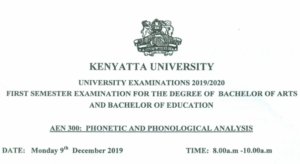
Below is the exam paper download link
Past Paper On Fundamentals Of Publishing And Book Trade For Revision
Above is the exam paper download link
If you’re preparing for your finals, you’ve likely realized that this unit is a massive blend of law, marketing, supply chain management, and creative judgment. It’s about understanding the journey a thought takes from an author’s head to a reader’s bedside table.
To help you get your “Industry Professional” mindset on, we’ve tackled the high-yield questions that define the publishing syllabus. Plus, we’ve provided a direct link to download a full Fundamentals of Publishing past paper at the bottom of this page.

Your Publishing Revision: The Questions That Define the Trade
Q: What is the real difference between “Editorial” and “Production”?
This is the heart of the house. Editorial is about content—shaping the story, fact-checking, and ensuring the tone is right. Production is about the physical (or digital) object—choosing paper weights, binding styles, and managing the typesetting process. In an exam, if a question asks about “Quality Control,” you need to mention both: editorial accuracy and physical durability.
Q: Why is “Copyright” considered the currency of the book trade?
Without copyright, a publisher has nothing to sell. Copyright protects the “expression of an idea,” not the idea itself. In your revision, make sure you can explain the difference between Assigning rights (giving them away entirely) and Licensing rights (allowing a publisher to use them for a specific time or territory). Almost every past paper has a question on the Berne Convention or Infringement.
Q: What exactly happens in the “Supply Chain” of a book?
The “Book Trade” part of this unit focuses on how books move. It starts with the Publisher, goes to the Distributor (who handles the logistics), then to the Wholesaler (who sells in bulk), and finally to the Retailer (your local bookstore or Amazon). Understanding “Returns”—where bookstores send unsold copies back for a refund—is a crucial, and often tricky, part of the exam.
Q: How has “Digital Publishing” changed the traditional gatekeeping model?
In the old days, publishers were the “Gatekeepers.” Now, with Self-Publishing and Print-on-Demand (POD), the barriers are down. However, the Fundamentals remain. Even a digital book needs a “Metadata” strategy—keywords, categories, and price points—to be discoverable. If the exam asks about the future of the trade, mention the shift from “Units Sold” to “Access Subscriptions.”

Strategy: How to Use the Past Paper for Maximum Gain
Don’t just read the questions; act like a Publishing Director. If you want to move from a passing grade to an A, follow this protocol:
-
The Anatomy of a Book: Take a physical book and identify the Verso and Recto pages, the Half-title, and the Imprint. Past papers often ask you to label these parts.
-
The Financial Logic: Practice a simple royalty calculation. If a book sells for $20$ at a $10\%$ royalty on the “Net Receipts” (after a $50\%$ bookseller discount), how much does the author get? Doing this math now prevents a “brain freeze” during the exam.
-
The Marketing Mix: When a question asks how to promote a “Niche Academic Title” vs. a “Mass Market Thriller,” be specific. Talk about Direct Marketing for the former and Social Media Influencers for the latter.

Ready to Master the Book Trade?
Publishing is a resilient, fascinating industry that balances the intangible value of ideas with the tangible costs of ink and paper. Mastering the fundamentals is what separates a “fan” from a professional. The best way to find your gaps is to face the exact questions that have challenged students before you.
Back to Mpya News Home page: Education, Fashion, Law, business and sports
Last updated on: March 9, 2026
New information gained / new value takehome
- Let’s be honest: many people enter this field because they “love books.
- ” But in an exam hall, loving a good story won’t help you calculate a Royalty Statement or explain the technicalities of International Standard Book Numbers (ISBN).
- The Fundamentals of Publishing and Book Trade is where art meets cold, hard commerce.
- Below is the exam paper download link Past Paper On Fundamentals Of Publishing And Book Trade For Revision Above is the exam paper download linkRelated Read: Download Past Paper On Leadership And Management In Nursing I For Revision If you’re preparing for your finals, you’ve likely realized that this unit is a massive blend of law, marketing, supply chain management, and creative judgment.
- It’s about understanding the journey a thought takes from an author’s head to a reader’s bedside table.
This content was developed using AI as part of our research process. To ensure absolute accuracy, all information has been rigorously fact-checked and validated by our human editor, Alex Munene.
External resource 1: Google Scholar Academic Papers
External resource 2: Khan Academy Test Prep
Reference 1: KNEC National Examinations
Reference 2: JSTOR Academic Archive
Reference 3: Shulefiti Revision Materials
Photo credit: instagram.com