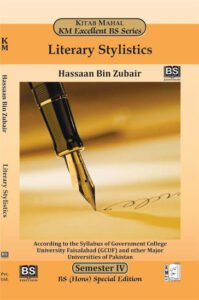
Let’s be honest: sitting down to study Theory of Literature and Stylistics often feels like trying to untangle a ball of yarn in a dark room. One minute you’re navigating the formalist structures of a poem, and the next, you’re drowning in post-structuralist critiques that seem to defy logic.
Below is the exam paper download link
Past Paper On Theory Of Literature And Stylistics For Revision
Above is the exam paper download link
If your exam is looming and your notes look like a chaotic collection of “isms” and linguistic jargon, you aren’t alone. The secret to surviving (and actually acing) this unit isn’t just re-reading the textbook—it’s about seeing how these theories actually show up on the page.
To help you get there, we’ve curated the ultimate revision resource. Below, we break down the big questions and provide a direct link to a past paper that will transform your study sessions.
Is studying past papers really better than reading the syllabus?
Think of the syllabus as a map and the past paper as the actual terrain. You can know where the mountains are, but until you try to climb them, you don’t know where the slippery rocks are.


Theory of Literature is notoriously dense. A past paper forces you to stop absorbing information and start applying it. It shifts your brain from passive reading to active problem-solving. When you see a question asking you to apply Marxist Criticism to a specific passage, you realize very quickly if you actually understand the concept or if you just memorized a definition.
What are the “Big Three” themes I should expect in Stylistics?
While every exam varies, Stylistics usually leans heavily on three pillars:
-
Foregrounding: How does a writer make certain words or images stand out? (Think deviation and parallelism).
-
Point of View: How does the narrative perspective manipulate the reader’s empathy?
-
Diction and Syntax: Why did the author choose a “staccato” sentence structure instead of a flowing, periodic one?
If you can master these, you’ve already won half the battle.
Why does “Theory” feel so disconnected from the actual books we read?
It feels that way because theory is a lens. Imagine wearing a pair of red-tinted glasses; the world looks red. Switch to blue, and everything changes. Literary Theory is just a set of glasses.


Whether it’s Feminism, Psychoanalysis, or New Historicism, the theory is there to help you find meanings that aren’t visible to the naked eye. The past paper we’ve linked below includes questions that bridge this gap, asking you to take a “cold” piece of text and view it through these specific lenses.
How should I use this past paper for maximum impact?
Don’t just read the questions and think, “Yeah, I could probably answer that.” That’s a trap!
-
Time yourself: Set a timer for 60 minutes and try to outline three major essays.
-
Focus on the verbs: Does the question ask you to Identify, Analyze, or Critique? There is a massive difference in the marks allocated to each.
-
Check the Stylistics section: Practice phonetic and grammatical transcribing if the paper calls for it—these are easy points if you are precise.
Ready to Level Up Your Revision?
Stop scrolling through endless PDF folders and get straight to the gold. Use the link below to view and download the comprehensive Theory of Literature and Stylistics Past Paper.
Download the Past Paper for Revision Here (Link placeholder)
What’s the biggest mistake students make in this exam?
The “Kitchen Sink” approach. Students often try to dump every single thing they know about Jacques Derrida or Mikhail Bakhtin into one paragraph.

The examiners aren’t looking for a Wikipedia entry; they want to see application. If the question asks about Deconstruction, don’t just define it—show how the text contradicts itself. Use the past paper to practice being surgical with your knowledge, not just bulky.
Back to Mpya News Home page: Education, Fashion, Law, business and sports
Last updated on: February 11, 2026
New information gained / new value takehome
- Let’s be honest: sitting down to study Theory of Literature and Stylistics often feels like trying to untangle a ball of yarn in a dark room.
- One minute you’re navigating the formalist structures of a poem, and the next, you’re drowning in post-structuralist critiques that seem to defy logic.
- Below is the exam paper download link Past Paper On Theory Of Literature And Stylistics For Revision Above is the exam paper download linkRelated Read: Download Past Paper On Human Anatomy III For Revision If your exam is looming and your notes look like a chaotic collection of “isms” and linguistic jargon, you aren’t alone.
- The secret to surviving (and actually acing) this unit isn’t just re-reading the textbook—it’s about seeing how these theories actually show up on the page.
- To help you get there, we’ve curated the ultimate revision resource.
This content was developed using AI as part of our research process. To ensure absolute accuracy, all information has been rigorously fact-checked and validated by our human editor, Collins Murithi.
External resource 1: Google Scholar Academic Papers
External resource 2: Khan Academy Test Prep
Reference 1: KNEC National Examinations
Reference 2: JSTOR Academic Archive
Reference 3: Shulefiti Revision Materials
Photo credit: instagram.com