Let’s be real: studying Literature and Gender isn’t like memorizing dates in a history class. It’s about unlearning the way you’ve been taught to see the world. When you step into that exam hall, the examiner isn’t just looking for a plot summary of The Color Purple or A Doll’s House; they want to see if you can dismantle the social scaffolding that built those stories.
Below is the exam paper download link
Past Paper On Literature And Gender For Revision
Above is the exam paper download link
If you’re feeling a bit lost in the sea of “the male gaze,” “patriarchal bargains,” and “queer theory,” take a breath. The best way to ground these airy concepts is to see how they are tested. Below, we’ve tackled the burning questions students have about this unit and provided a direct path to the revision materials you need.


Why is a past paper better than just re-reading the primary texts?
Reading the book tells you the story; a past paper tells you the argument. In a Literature and Gender exam, the “story” is secondary to the theoretical framework.
A past paper forces you to synthesize. It might ask you to compare the domestic confinement in Victorian poetry to modern dystopian fiction. If you only re-read the books, you’re stuck in a vacuum. If you practice with the paper linked below, you start building the connective tissue between different eras of gendered expression.
What are the “Red Flags” examiners look for in Gender studies?
The biggest pitfall? Being too “essentialist.” If your essay suggests that all women write a certain way because they are women, or all men in literature are naturally aggressive, you’re going to lose marks.
Examiners want to see you discuss gender as a performance or a social construct. They want you to use terms like Intersectionality—understanding how race, class, and gender collide. Using a past paper helps you spot these nuances in the question phrasing so you don’t fall into the trap of oversimplification.
Is it all about Feminism, or does “Gender” cover more?
It’s a common mistake to think this unit is “Women’s Studies” under a different name. While feminist critique is a massive pillar, a high-scoring student also looks at Masculinity Studies.
How does “toxic masculinity” trap male characters? How do authors subvert the “hero” archetype? A good revision session involves looking at both sides of the coin. The past paper we’ve provided includes sections that challenge you to analyze male-coded spaces and the subversion of traditional fatherhood roles.

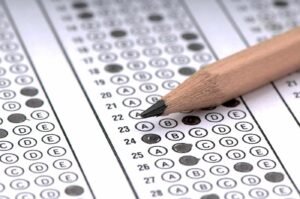
Ready to Test Your Knowledge?
Don’t wait until the night before the exam to realize you don’t know how to structure a comparative gender analysis. Use the link below to download the full Literature and Gender Past Paper and get ahead of the curve.
Download the Literature and Gender Revision Past Paper Here (Link placeholder)
How should I structure my answers to stand out?
-
The Theoretical Hook: Start with a heavy hitter. Mention Simone de Beauvoir’s “One is not born, but rather becomes, a woman” if it fits the prompt.
-
The Close Reading: Don’t just talk about big ideas; look at the metaphors. Does the author use “locked doors” or “veils”?
-
The Subversion: Always ask, “How does this text fight back?” Even if a character ends up defeated, the act of resistance is what earns you the ‘A’.




Can I pass if I haven’t read every single secondary critic?
You don’t need to be a walking library, but you do need “The Essentials.” Pick three major critics—perhaps Virginia Woolf, Judith Butler, and Bell Hooks—and learn how to apply their core ideas to almost any text. When you sit down with our past paper, try to “plug” these critics into different questions to see which ones are the most versatile for your specific syllabus.
Back to Mpya News Home page: Education, Fashion, Law, business and sports
Last updated on: February 11, 2026
New information gained / new value takehome
- Let’s be real: studying Literature and Gender isn’t like memorizing dates in a history class.
- It’s about unlearning the way you’ve been taught to see the world.
- When you step into that exam hall, the examiner isn’t just looking for a plot summary of The Color Purple or A Doll’s House; they want to see if you can dismantle the social scaffolding that built those stories.
- Below is the exam paper download link Past Paper On Literature And Gender For Revision Above is the exam paper download linkRelated Read: Download Past Paper Gender Analysis Frameworks For Revision If you’re feeling a bit lost in the sea of “the male gaze,” “patriarchal bargains,” and “queer theory,” take a breath.
- The best way to ground these airy concepts is to see how they are tested.
This content was developed using AI as part of our research process. To ensure absolute accuracy, all information has been rigorously fact-checked and validated by our human editor, Collins Murithi.
External resource 1: Google Scholar Academic Papers
External resource 2: Khan Academy Test Prep
Reference 1: KNEC National Examinations
Reference 2: JSTOR Academic Archive
Reference 3: Shulefiti Revision Materials
Photo credit: instagram.com