Let’s be honest: Biology is a subject that can easily drown a student in a sea of Latin names and complex diagrams. As a teacher, your job is to act as a bridge—taking the microscopic world of the cell or the massive scale of an ecosystem and making it tangible.
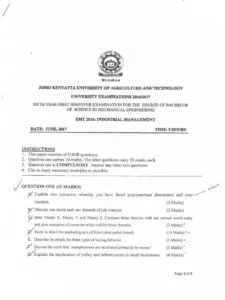
Below is the Exam paper download link
Past Paper On Methods Of Teaching Biology For Revision
Above is the exam paper download link
Methods of Teaching Biology is the “how-to” manual for this transformation. It isn’t just about knowing the Krebs cycle; it’s about knowing how to explain it so a teenager doesn’t fall asleep. Whether you are a student-teacher prepping for your finals or a professional looking for fresh instructional strategies, understanding the pedagogy of life science is critical. To help you get exam-ready, we’ve tackled the high-frequency questions that consistently appear in recent past papers.
The Revision Q&A: Cracking the Biology Pedagogy Code
Q: Why is the ‘Inquiry-Based Approach’ superior to rote memorization in Biology? In Biology, facts change, but the scientific method is forever. Inquiry-based learning forces students to act like real biologists. Instead of memorizing that “plants need light,” you give them two beans and a dark cupboard and let them observe the results.
In an exam, if a question asks how to improve “learner engagement,” the answer is always to move away from the chalkboard and toward the lab bench.
Q: How do you use ‘Analogies’ to teach abstract biological concepts? Biology is full of things we can’t see. A classic past paper question might ask you to explain a concept using an analogy. For example, comparing the Cell Membrane to a “security guard” or the Mitochondria to a “power plant.” The key is to explain that while analogies help understanding, they have limits—a cell isn’t literally a factory, and students need to know where the comparison ends.
Q: What is the ‘5E Instructional Model’ and how does it apply to a lesson on Osmosis? The 5E model is the gold standard for science lesson planning. Examiners love to see you break a lesson down into these stages:

-
Engage: Drop a shriveled raisin in water. Ask: “Why does it get fat?”
-
Explore: Let students set up potato-strip experiments.
-
Explain: Introduce the formal definitions of semi-permeable membranes and solute concentration.
-
Elaborate: Ask them why we don’t give thirsty shipwrecked people seawater to drink.
-
Evaluate: A quick diagram quiz to check for understanding.
Q: What are the unique challenges of a ‘Biology Field Trip’ and how do you manage them? Unlike a Chemistry lab, Biology often happens outdoors. Past papers frequently test your Management Skills here. Your answer should focus on:
-
Pre-visit: Scouting the location for hazards (snakes, steep slopes).
-
Instructional Design: Giving students a specific “task sheet” so they aren’t just walking in the woods.
-
policy-page-at-mpya-news/" title="Ethics">Ethics: Teaching the “Leave No Trace” principle—don’t kill the specimens you are studying!
The Power of the Past Paper: Your Biological Roadmap
You can read about “Constructivism” all day, but teaching is a practical craft. You won’t know if you’ve truly mastered Pedagogical Content Knowledge (PCK) until you try to draft a marking scheme or a laboratory safety protocol under a 45-minute timer.

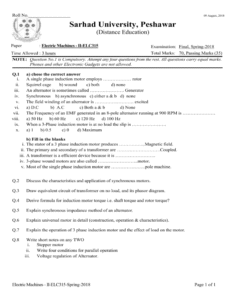
By downloading our Methods of Teaching Biology past paper, you will:
-
Master Assessment: Practice writing “Higher Order Thinking” questions based on Bloom’s Taxonomy.
-
Refine Your Lab Management: Learn how to justify the use of a “Biuret Test” vs. a “Sudan III” test in a classroom setting.
-
Spot the Trends: You’ll notice that questions on ICT Integration (using virtual dissections) and Competency-Based Curricula are huge in 2026.
Download Your Revision Material Here
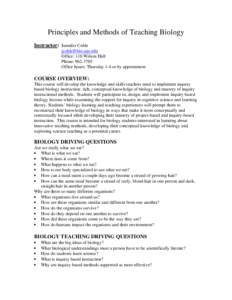
Ready to move from a student of life to a master of instruction? Don’t leave your pedagogy grades to “natural selection.” The best way to build your confidence is to tackle the instructional puzzles that have challenged educators for decades. Use the link below to download a curated past paper.
[Click Here to Download the Methods of Teaching Biology Past Paper PDF]
A Quick Parting Tip: The ‘Concrete to Abstract’ Rule
Whenever you’re asked how to introduce a new biological topic, always start with the Concrete (a real leaf, a live insect, or a human pulse) before moving to the Abstract (molecular formulas or genetic coding). Showing the examiner that you understand the “learner’s journey” is the fastest way to earn a distinction!
Back to Mpya News Home page: Education, Fashion, Law, business and sports
Last updated on: February 6, 2026
New information gained / new value takehome
- Instead of memorizing that “plants need light,” you give them two beans and a dark cupboard and let them observe the results.
- ” The key is to explain that while analogies help understanding, they have limits—a cell isn’t literally a factory, and students need to know where the comparison ends.
- Q: What are the unique challenges of a ‘Biology Field Trip’ and how do you manage them?
- Back to Mpya News Home page: Education, Fashion, Law, business and sports Last updated on: February 6, 2026Mpya News Sitemap .
- News Education Rankings Reference 2: SNHU Distance Learning Reference 3: GCU University Programs Photo credit: instagram.
This content was developed using AI as part of our research process. To ensure absolute accuracy, all information has been rigorously fact-checked and validated by our human editor, Collins Murithi.