Let’s be honest: most of us choose Physical Education because we love the sweat, the adrenaline, and the competition. But when the whistle blows for the theory exam, the game changes. Suddenly, you aren’t just shooting a three-pointer; you’re explaining the biomechanics of the jump shot. You aren’t just spiking a ball; you’re detailing the FIVB regulations for court dimensions.
Below is the exam paper download link
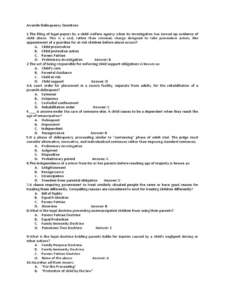
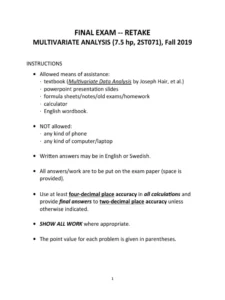
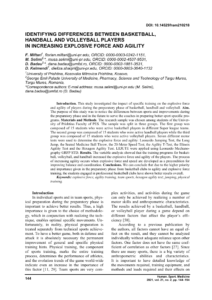
Past Paper On Basketball Handball And Volleyball (Theory) For Revision
Above is the exam paper download link
Studying the theory of Basketball, Handball, and Volleyball is about understanding the “laws of the game.” It’s the difference between playing by instinct and playing with a strategic mind. To help you transition from the court to the desk, we’ve tackled the big “high-point” questions that frequently trip up students in their finals.
The Revision Q&A: Cracking the Game Code
Q: In Basketball, what is the difference between a ‘Violation’ and a ‘Foul’? This is a staple for any P.E. theory paper.
-
Violation: This is a technical error that doesn’t involve contact—think traveling, double dribble, or the 24-second shot clock expiring. The penalty is usually just loss of possession.
-
Foul: This involves illegal physical contact (pushing, tripping) or unsportsmanlike conduct. These can lead to free throws and, eventually, disqualification.

Q: What is the ‘6-0’ defense in Handball, and when is it used? In Handball theory, defensive formations are king. The 6-0 defense is when all six court players stand along the 6-meter goal area line. It’s a “wall” strategy used to block long-range shots and prevent the pivot from getting space. If a past paper asks how to counter a tall, powerful attacking team, the 6-0 is your go-to answer.
Q: How does the ‘Libero’ change the strategy in Volleyball? The Libero is the “defensive specialist” wearing a different colored jersey. They can only play in the back row and cannot serve, spike, or block. In an exam, if you are asked about specialized roles, explain that the Libero allows a team to have a player who is elite at “digging” and passing without using up a regular substitution.
Q: What are the ‘Officiating Signals’ I need to know? You can almost guarantee a question where you have to identify a referee’s hand signal. Whether it’s the “crossed arms” for a substitution in Volleyball or the “rotated fists” for traveling in Basketball, you need to visualize these. Officiating is about communication without words—master the signals, and you master the rules.
The Power of the Past Paper: Your Tactical Roadmap
You can watch highlights on YouTube all day, but sports theory is a technical discipline. You need to know how to draw a court diagram to scale or justify a tactical substitution under a 45-minute timer.
By downloading our Ball Games theory past paper, you will:
-
Master the Dimensions: Practice labeling the “3-point arc,” the “7-meter line,” and the “attack line” until it’s muscle memory.
-
Refine Your Rules: Learn the nuances, like the “3-step rule” in Handball vs. the “2-step” rhythm in a Basketball layup.
-
Spot the Trends: You’ll notice that questions on VAR (Video Assistant Referee) technology and injury prevention (ACL tears) are becoming standard in 2026 papers.
Download Your Revision Material Here
Ready to move from a player to a scholar of the game? Don’t leave your grades to “shot in the dark” guesses. The best way to build your confidence is to tackle the tactical puzzles that have challenged athletes for years. Use the link below to download a curated past paper on Basketball, Handball, and Volleyball.
[Click Here to Download the Basketball, Handball, and Volleyball Theory Past Paper]

A Quick Parting Tip: The ‘Rotation’ Rule
Whenever you are writing about Volleyball, always mention Rotation. Remember, players move clockwise when they win the serve, but the positions are numbered counter-clockwise (Position 1 is back-right). Explaining this distinction is a surefire way to show the examiner you have a deep, technical understanding of the game!
Back to Mpya News Home page: Education, Fashion, Law, business and sports
Last updated on: February 5, 2026

New information gained / new value takehome
- Let’s be honest: most of us choose Physical Education because we love the sweat, the adrenaline, and the competition.
- Back to Mpya News Home page: Education, Fashion, Law, business and sports Last updated on: February 5, 2026Mpya News Sitemap .
- News Education Rankings Reference 2: SNHU Distance Learning Reference 3: GCU University Programs Photo credit: instagram.
This content was developed using AI as part of our research process. To ensure absolute accuracy, all information has been rigorously fact-checked and validated by our human editor, Collins Murithi.

