Let’s be honest: studying Human Anatomy can feel like trying to memorize a map of a city where all the streets are named in Latin. When you add Physical Activity into the mix, it’s no longer just about where the “Biceps Brachii” is—it’s about how that muscle behaves during a 100-meter sprint versus a yoga session.
Below is the exam paper download link
Past Paper On Human Anatomy And Physical Activity For Revision
Above is the exam paper download link
This subject is the foundation of sports science. It is the study of the most complex machine on Earth: the human body. If you are preparing for a final exam, you need to move beyond simple labels and start thinking about functional anatomy. How do the lungs, heart, and muscles work as a team? To help you synchronize your systems, we’ve tackled the big “high-yield” questions found in recent revision papers.
The Revision Q&A: Cracking the Physiological Code
Q: What is the difference between ‘Slow-Twitch’ and ‘Fast-Twitch’ muscle fibers? This is a staple for any P.E. or Anatomy paper.
-
Type I (Slow-Twitch): These are the “marathon runners.” They use oxygen efficiently for energy and are resistant to fatigue.
-
Type II (Fast-Twitch): These are the “sprinters.” They provide explosive power but tire out quickly.
In an exam, if a question asks why a long-distance cyclist has a different physique than a powerlifter, your answer should center on these fiber types.


Q: How does ‘Cardiac Output’ change during intense exercise? Cardiac output is the volume of blood pumped by the heart per minute. It is calculated by multiplying Stroke Volume (blood per beat) by Heart Rate (beats per minute). During activity, both numbers skyrocket to deliver oxygen to working muscles. If you see a past paper question about “Aerobic Adaptation,” discuss how an athlete’s heart actually becomes a more efficient pump over time.
Q: What are the three types of ‘Muscular Contractions’ I need to know? Don’t just say a muscle “shortens.” Be specific:
-
-
Concentric: The muscle shortens under tension (e.g., the “up” phase of a bicep curl).
-
Eccentric: The muscle lengthens under tension (e.g., lowering the weight in a controlled way).
-
Isometric: The muscle stays the same length (e.g., holding a plank or a wall sit).
-
Q: Why is the ‘Skeletal System’ more than just a frame for movement? While bones provide levers for muscles to pull on, examiners also look for the “hidden” roles. Bones produce red blood cells (in the marrow) and store vital minerals like calcium. If you get a question about “Bone Density,” make sure to mention how weight-bearing exercise (like running or lifting) strengthens the skeleton through Wolff’s Law.
The Power of the Past Paper: Your Anatomical Roadmap
You can read a textbook for hours, but Anatomy is a visual and logical discipline. You won’t know if you’ve truly mastered the Respiratory Exchange Ratio or the Sliding Filament Theory until you try to explain them under exam conditions.
By downloading our Human Anatomy and Physical Activity past paper, you will:

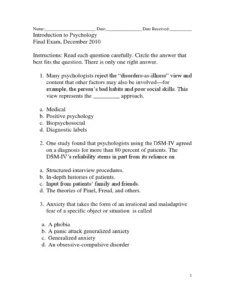
-
Master the Terminology: Practice using terms like Vasodilation, Hypertrophy, Agonist, and Antagonist correctly.
-
Refine Your Diagrams: Many papers ask you to label the heart or the lungs. Practicing these drawings at home ensures you don’t blank out during the test.
-
Identify Trends: You’ll notice that questions on Overtraining Syndrome and Lactic Acid Thresholds are becoming very common in 2026.
Download Your Revision Material Here
Ready to turn your “body of knowledge” into a distinction? Don’t leave your grades to chance. The best way to build your confidence is to tackle the physiological puzzles that have challenged students for years. Use the link below to download a curated past paper.
[Click Here to Download the Human Anatomy and Physical Activity Past Paper]


A Quick Parting Tip: The ‘Antagonistic Pairs’ Rule
Whenever you describe a movement, like kicking a ball, never mention just one muscle. Muscles always work in pairs. If the Quadriceps are the “Agonist” (contracting), the Hamstrings must be the “Antagonist” (relaxing). Mentioning this relationship is a surefire way to show the examiner you understand the mechanics of motion!
Back to Mpya News Home page: Education, Fashion, Law, business and sports


Last updated on: February 5, 2026
New information gained / new value takehome
- It is calculated by multiplying Stroke Volume (blood per beat) by Heart Rate (beats per minute).
- Practicing these drawings at home ensures you don’t blank out during the test.
- Back to Mpya News Home page: Education, Fashion, Law, business and sports Last updated on: February 5, 2026Mpya News Sitemap .
- News Education Rankings Reference 2: SNHU Distance Learning Reference 3: GCU University Programs Photo credit: instagram.
This content was developed using AI as part of our research process. To ensure absolute accuracy, all information has been rigorously fact-checked and validated by our human editor, Collins Murithi.