When you think of the word “bombshell,” one name usually sits at the top of the list: Candice Swanepoel. For over a decade, this South African powerhouse hasn’t just worn bikinis—she has defined them. Whether she was strutting down a glitter-covered runway or posing on the shores of St. Barts, Candice has a way of making every piece of swimwear look like a work of art.

But what exactly are the moments that stopped the world in its tracks? Today, we’re breaking down the 10 most iconic bikini and swimwear moments of Candice Swanepoel’s career in a fun, interactive Q&A style.

Let’s get into the sun-drenched archives!


1. The $10 Million Masterpiece: The Royal Fantasy Bra (2013)

Q: Can a bra actually be considered a bikini moment?

A: When it looks like this, absolutely! While technically lingerie, the 2013 Royal Fantasy Bra was styled as a high-fashion swim-adjacent look for the Victoria’s Secret Fashion Show.

Why is it iconic?

Designed by Mouawad, this piece featured over 4,200 precious gems, including rubies, diamonds, and yellow sapphires, all set in 18-karat gold. At the center sat a massive 52-carat pear-shaped ruby. Candice didn’t just walk the runway; she carried the weight of a small island’s GDP on her shoulders with total grace.

 Iconic Bikini Moments by Candice Swanepoel


2. The Red “Bombshell” Bikini (VS Swim 2011)

Q: Which shoot officially put Candice on the map as the “Swim Queen”?

A: Most fans point to the 2011 Victoria’s Secret Swim Catalogue cover.

The Look:

Clad in a simple, vibrant red push-up bikini against the turquoise waters of St. Barts, Candice embodied the classic “California Girl” aesthetic—despite being from South Africa. This moment solidified her status as the face of the brand’s multi-million dollar swimwear line.


3. The Birth of “Tropic of C” (2018)

Q: When did Candice transition from model to mogul?

A: In 2018, when she launched her own brand, Tropic of C.

The Moment:

The initial campaign featured Candice in a minimalist, high-cut black “Praia” bikini. It was a departure from the heavy padding of the VS era, leaning into sustainability and earthy, high-fashion silhouettes. It proved she didn’t need the glitter; she was the glow.

 Iconic Bikini Moments by Candice Swanepoel


4. The 2014 “Golden Angel” Runway

Q: How do you top a $10 million bra?

A: By becoming a literal golden statue.

The Details:

During the 2014 Victoria’s Secret Fashion Show in London, Candice opened the “Gilded Angels” segment. She wore a shimmering gold bikini-style bodysuit paired with massive, intricate golden wings. This look is often cited by fashion historians as one of the most balanced “Wings vs. Swim” looks in the show’s history.


5. The “Crochet” Boho-Chic Moment (2012)

Q: Was Candice part of the 2010s crochet trend?

A: She didn’t just join it; she led it.

The Shoot:

In 2012, Candice was photographed in a colorful, handmade-style crochet bikini for a VS Swim special. It was a softer, more “boho-chic” side of her that resonated with a younger audience and helped drive the DIY-swimwear trend that dominated Pinterest for years.

 Iconic Bikini Moments by Candice Swanepoel


6. The “Ocelot” Print Evolution (2021)

Q: What is her most famous animal print look?

A: It has to be the “Ocelot” print from her Tropic of C collection.

Why is this look different?


7. The 2017 Return to the Runway

Q: Why was the 2017 VS Fashion Show so emotional?

A: Because it was Candice’s big return after giving birth to her first son.

The Look:

Walking the runway in Shanghai, she wore a fierce, punk-inspired red and black plaid bikini set. She proved to the world that “model-off-duty” and “motherhood” only added to her power. The confidence in her stride that year was unmatched.


8. The “Sporty” Color-Block (2015)

Q: Did Candice ever do the “Athleisure” swim look?

A: Yes, and she made it look effortless.

The Vibe:

In 2015, the “neoprene” trend was huge. Candice fronted a campaign in a zip-up, color-blocked neon bikini. It moved away from the “sexy” trope and toward a “functional and fit” vibe, showing off her incredible athleticism.


9. The Metallic “Serpentine” Shoot in Italy (2021)

Q: What is her most artistic swim shoot?

A: Her 2021 trip to Puglia, Italy.

The Visuals:

Photographed by Eduardo Bravin, Candice wore a metallic, shimmering “Serpentine” fabric bikini that looked like liquid mercury under the Italian sun. This shoot was less about selling a product and more about fine art photography, blending her silhouette with the ancient stone architecture of Italy.


10. The Iconic 2013 “VS Swim” TV Special

Q: What was the “Bikinis & Bruno Mars” moment?

A: In 2013, Victoria’s Secret produced a televised swim special.

The Scene:

Candice was the star, frolicking on the beach to the sounds of Bruno Mars. She wore a simple white string bikini—the most basic of all swimwear—and reminded us that sometimes, simplicity is the ultimate sophistication. It remains one of the most-watched clips in swimwear history.


The Secret to the “Candice Look”

Q: How does she make every bikini look so iconic?

A: It’s a mix of three things:

  1. Confidence: She owns the outfit; the outfit doesn’t own her.

  2. Movement: Having started as a dancer, her poses are fluid and athletic.

  3. policy-page-at-mpya-news/" title="Ethics">Ethics: In recent years, her focus on eco-friendly fabrics has given her bikini moments a deeper meaning.


Frequently Asked Questions (FAQ)

What is Candice Swanepoel’s swimwear brand called?

Her brand is called Tropic of C, which focuses on sustainable materials and high-fashion, minimalist designs.

 Iconic Bikini Moments by Candice Swanepoel

Which Victoria’s Secret Angel wore the $10 million bra?

Candice Swanepoel wore the “Royal Fantasy Bra” in 2013.

Is Candice Swanepoel still modeling in 2026?

Yes! As of 2026, Candice remains a top-tier fashion icon, balancing her brand Tropic of C with high-profile editorial shoots and philanthropic work.

How can I get the “Candice” beach glow?

Candice often credits a diet rich in antioxidants, heavy use of SPF, and her favorite coconut oil-based products for her signature radiant skin.

Back to Mpya News Home page: Education, Fashion, Law, business and sports

Last updated on: April 13, 2026

External resource 1: Summersalt Official

External resource 2: Hunza G Collection

Reference 1: Monday Swimwear Fit Guide

Reference 2: Eres Paris Luxury Swim

Reference 3: Vitamin A Sustainability


Photo credit: instagram.com

New information gained / new value takehome

  • When you think of the word “bombshell,” one name usually sits at the top of the list: Candice Swanepoel.
  • For over a decade, this South African powerhouse hasn’t just worn bikinis—she has defined them.
  • Whether she was strutting down a glitter-covered runway or posing on the shores of St.
  • Barts, Candice has a way of making every piece of swimwear look like a work of art.
  • But what exactly are the moments that stopped the world in its tracks?
Verified Content

This content was developed using AI as part of our research process. To ensure absolute accuracy, all information has been rigorously fact-checked and validated by our human editor, Collins Murithi.

About

Digital entrepreneur and content specialist at MPYA News, focused on delivering high-quality insights and resources.

Latest Posts

Download Past Paper On Educational Communication and Information Technology For Revision

Educational Communication and Information Technology is an important subject for...

Educational Communication and Information Technology is an essential subject for students pursuing education and teaching-related courses. It explores how communication skills, instructional resources, and modern technologies contribute to effective teaching and learning. Students preparing for examinations can use Educational Communication and Information Technology past papers alongside lecture notes, textbooks, and revision questions to strengthen their understanding. What is Educational Communication and Information Technology? Educational Communication and Information Technology refers to the application of communication principles and technological tools in educational settings. It helps teachers deliver information effectively and enables learners to access, process, and share knowledge through different channels. The subject includes communication processes, instructional media, computer applications, internet services, multimedia, e-learning, and digital educational resources. Why are Educational Communication and Information Technology past papers important? Past papers help students practise answering examination questions and become familiar with different question formats. They can also help learners identify areas that need more revision and improve their ability to manage examination time. Practising Educational Communication and Information Technology past exam papers alongside course notes can make preparation more organised. Which topics should students revise? Students should revise the main topics covered in their syllabus. These may include: Meaning and importance of communication in education Elements and models of communication Barriers to effective communication Verbal and non-verbal communication Instructional media and teaching aids Computer applications in education Internet services and digital learning resources Multimedia and e-learning Educational broadcasting Advantages and challenges of educational technology These topics provide a useful starting point for Educational Communication and Information Technology revision questions. What is the communication process? The communication process involves the exchange of information between a sender and a receiver. The sender develops a message, selects a channel, and transmits the information. The receiver interprets the message and may provide feedback. In a classroom, for example, a teacher explains a concept, learners listen and interpret the information, and their questions or responses provide feedback. What are the main elements of communication? The main elements include the sender, message, encoding, channel, receiver, decoding, feedback, and context. Noise can interfere with the process and affect understanding. Students should know the functions of these elements because they are useful when answering Educational Communication and Information Technology exam questions. What is the difference between verbal and non-verbal communication? Verbal communication uses spoken or written words to convey information. Examples include classroom discussions, lectures, textbooks, and written instructions. Non-verbal communication involves conveying meaning through gestures, facial expressions, posture, eye contact, and other visual signals. Teachers often use both forms to explain concepts and interact with learners. What are the barriers to effective communication? Communication barriers are factors that prevent a message from being transmitted or understood clearly. Examples include language differences, poor listening, unclear explanations, excessive classroom noise, cultural differences, and technical difficulties. Teachers can reduce these barriers by using clear language, encouraging questions, choosing suitable communication channels, and checking learners’ understanding. What is instructional media? Instructional media refers to materials and resources used to support teaching and learning. Examples include charts, diagrams, maps, models, photographs, audio recordings, videos, projectors, and computers. The appropriate teaching aid depends on the lesson objectives, subject content, learners’ needs, and available resources. How does information technology support education? Information technology supports education by helping users create, store, process, retrieve, and share information. Computers, mobile devices, digital platforms, and internet services can support research, classroom teaching, communication, assessment, and access to learning materials. However, effective use requires suitable resources, digital skills, and appropriate planning. What is e-learning? E-learning is the delivery or support of learning through electronic and digital technologies. It may involve virtual classrooms, online lessons, learning management systems, electronic textbooks, recorded lectures, and online assignments. Students preparing Educational Communication and Information Technology questions and answers should understand the meaning, benefits, and limitations of e-learning. What are the advantages and disadvantages of educational technology? Educational technology can improve access to information, support interactive lessons, encourage collaboration, and provide flexible learning opportunities. It can also help teachers present complex concepts through images, audio, and video. Possible disadvantages include high equipment costs, unreliable internet connections, unequal access to devices, technical problems, and distractions. Students should be able to discuss both benefits and challenges. How can students use past papers effectively? Students should attempt Educational Communication and Information Technology past papers before looking at their notes. After completing a paper, they can review mistakes, revisit difficult topics, and practise similar questions. Searching for Educational Communication and Information Technology past papers PDF can help students locate additional revision resources through authorised educational sources. How should students answer examination questions? Students should read each question carefully and identify the instruction. Words such as “define,” “explain,” “discuss,” “outline,” and “compare” require different responses. For essay questions, students should introduce the topic, explain each main point clearly, provide relevant examples where appropriate, and finish with a conclusion. Conclusion Preparing with Educational Communication and Information Technology past papers, exam questions, revision notes, and textbooks can help students develop a better understanding of the subject. Consistent revision and timed practice can improve knowledge, answer organisation, and examination skills.Educational Communication and Information Technology is an essential subject for students pursuing education and teaching-related courses. It explores how communication skills, instructional resources, and modern technologies contribute to effective teaching and learning. Students preparing for examinations can use Educational Communication and Information Technology past papers alongside lecture notes, textbooks, and revision questions to strengthen their understanding. What is Educational Communication and Information Technology? Educational Communication and Information Technology refers to the application of communication principles and technological tools in educational settings. It helps teachers deliver information effectively and enables learners to access, process, and share knowledge through different channels. The subject includes communication processes, instructional media, computer applications, internet services, multimedia, e-learning, and digital educational resources. Why are Educational Communication and Information Technology past papers important? Past papers help students practise answering examination questions and become familiar with different question formats. They can also help learners identify areas that need more revision and improve their ability to manage examination time. Practising Educational Communication and Information Technology past exam papers alongside course notes can make preparation more organised. Which topics should students revise? Students should revise the main topics covered in their syllabus. These may include: Meaning and importance of communication in education Elements and models of communication Barriers to effective communication Verbal and non-verbal communication Instructional media and teaching aids Computer applications in education Internet services and digital learning resources Multimedia and e-learning Educational broadcasting Advantages and challenges of educational technology These topics provide a useful starting point for Educational Communication and Information Technology revision questions. What is the communication process? The communication process involves the exchange of information between a sender and a receiver. The sender develops a message, selects a channel, and transmits the information. The receiver interprets the message and may provide feedback. In a classroom, for example, a teacher explains a concept, learners listen and interpret the information, and their questions or responses provide feedback. What are the main elements of communication? The main elements include the sender, message, encoding, channel, receiver, decoding, feedback, and context. Noise can interfere with the process and affect understanding. Students should know the functions of these elements because they are useful when answering Educational Communication and Information Technology exam questions. What is the difference between verbal and non-verbal communication? Verbal communication uses spoken or written words to convey information. Examples include classroom discussions, lectures, textbooks, and written instructions. Non-verbal communication involves conveying meaning through gestures, facial expressions, posture, eye contact, and other visual signals. Teachers often use both forms to explain concepts and interact with learners. What are the barriers to effective communication? Communication barriers are factors that prevent a message from being transmitted or understood clearly. Examples include language differences, poor listening, unclear explanations, excessive classroom noise, cultural differences, and technical difficulties. Teachers can reduce these barriers by using clear language, encouraging questions, choosing suitable communication channels, and checking learners’ understanding. What is instructional media? Instructional media refers to materials and resources used to support teaching and learning. Examples include charts, diagrams, maps, models, photographs, audio recordings, videos, projectors, and computers. The appropriate teaching aid depends on the lesson objectives, subject content, learners’ needs, and available resources. How does information technology support education? Information technology supports education by helping users create, store, process, retrieve, and share information. Computers, mobile devices, digital platforms, and internet services can support research, classroom teaching, communication, assessment, and access to learning materials. However, effective use requires suitable resources, digital skills, and appropriate planning. What is e-learning? E-learning is the delivery or support of learning through electronic and digital technologies. It may involve virtual classrooms, online lessons, learning management systems, electronic textbooks, recorded lectures, and online assignments. Students preparing Educational Communication and Information Technology questions and answers should understand the meaning, benefits, and limitations of e-learning. What are the advantages and disadvantages of educational technology? Educational technology can improve access to information, support interactive lessons, encourage collaboration, and provide flexible learning opportunities. It can also help teachers present complex concepts through images, audio, and video. Possible disadvantages include high equipment costs, unreliable internet connections, unequal access to devices, technical problems, and distractions. Students should be able to discuss both benefits and challenges. How can students use past papers effectively? Students should attempt Educational Communication and Information Technology past papers before looking at their notes. After completing a paper, they can review mistakes, revisit difficult topics, and practise similar questions. Searching for Educational Communication and Information Technology past papers PDF can help students locate additional revision resources through authorised educational sources. How should students answer examination questions? Students should read each question carefully and identify the instruction. Words such as “define,” “explain,” “discuss,” “outline,” and “compare” require different responses. For essay questions, students should introduce the topic, explain each main point clearly, provide relevant examples where appropriate, and finish with a conclusion. Conclusion Preparing with Educational Communication and Information Technology past papers, exam questions, revision notes, and textbooks can help students develop

Educational Communication and Information Technology is an important subject for...

Download Past Paper On Introduction to the Study of Language For Revision

Are you looking for Introduction to the Study of Language...

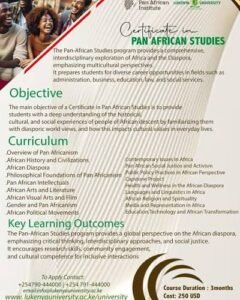
images 35 Download Past Paper On Studies in African Diaspora and Pan-Africanism for Revision

Download Past Paper On Studies in African Diaspora and Pan-Africanism for Revision

Are you looking for Studies in African Diaspora and Pan-Africanism...