Let’s be honest: Scholarly Journals Publishing is the “high-altitude” territory of the media world. This isn’t about catchy headlines or viral tweets; it’s about the slow, meticulous, and often grueling process of validating human knowledge. If you’re enrolled in this unit, you know it’s a unique beast that balances academic integrity with the brutal realities of subscription costs and digital infrastructure.
Below is the exam paper download link
Past Paper On Scholarly Journals Publishing For Revision
Above is the exam paper download link
If you’re preparing for your finals, you’ve likely realized that this unit is a heavy mix of policy-page-at-mpya-news/" title="Ethics">ethics, technology, and economics. One minute you’re discussing the “Double-Blind” peer review process, and the next you’re trying to understand the “Big Deal” library bundles that keep university budgets in a vice grip.

To help you get into the “Managing Editor” mindset, we’ve tackled the high-yield questions that define the syllabus. Plus, we’ve provided a direct link to download a full Scholarly Journals Publishing revision past paper at the bottom of this page.
Your Revision Q&A: Deciphering the Journal Lifecycle
Q: What is the “Peer Review” process, and why is it the “gold standard”? This is the heart of the unit. Peer review is the quality-control filter where experts in the same field evaluate a researcher’s work before it’s published. In an exam, make sure you can distinguish between Single-Blind (reviewer knows the author), Double-Blind (neither knows each other), and Open Peer Review. The goal is to ensure the “Scientific Method” was followed and to weed out “predatory” or low-quality research.
Q: What is “Open Access” (OA), and how do “Gold” and “Green” models differ? Open Access is the movement to make research free for everyone to read. In the Gold OA model, the author (or their institution) pays an “Article Processing Charge” (APC) up front so the article is free immediately. In Green OA, the author publishes in a traditional journal but “self-archives” a version in a university repository. Expect a question on the “Serial Crisis”—where the cost of journals rose faster than library budgets.
Q: How do we measure a journal’s “Success”? (The Impact Factor) The most common metric you’ll face in an exam is the Journal Impact Factor (JIF). It’s calculated based on how many times articles from that journal were cited in other papers over a specific period (usually two years). However, be ready to critique this—does a high citation count always mean high quality, or just that the topic is “trendy”?
Q: What is the “Editorial Board,” and what is their role? The Editorial Board consists of senior scholars who provide the journal’s “Strategic Direction.” They don’t just proofread; they decide the scope of the journal, recruit high-quality submissions, and mediate disputes between authors and reviewers. In a consultancy-style exam question, the Editorial Board is your primary tool for building a journal’s reputation.
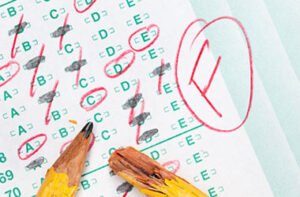

Strategy: How to Use the Past Paper for Maximum Gain
Don’t just read the questions; act like a Journal Publisher. If you want to move from a passing grade to an A, follow this “Academic” protocol:
-
The Ethics Case Study: Look for questions about “Plagiarism” or “Image Manipulation.” Practice explaining the role of COPE (Committee on Publication Ethics). If a researcher fakes their data, what is the publisher’s legal and moral obligation?
-
The Digital Transition: Be ready to discuss Metadata (like DOIs) and Indexing (like Scopus or Web of Science). If a journal isn’t indexed, it basically doesn’t exist to the global scientific community.
-
The Business Logic: Practice explaining the “Hybrid” model—where a traditional subscription journal allows individual authors to pay for Open Access. Why do libraries find this “Double-Dipping” controversial?
Ready to Master the Science of the Journal?
Scholarly publishing is a resilient, prestigious, and rapidly evolving industry. It is the gatekeeper of progress. By working through a past paper, you’ll start to see that the “complexity” of academic publishing is what makes it so vital to modern society.

We’ve curated a comprehensive revision paper that covers everything from Bibliometrics and Altmetrics to Copyright Transfer Agreements and XML workflows.
Back to Mpya News Home page: Education, Fashion, Law, business and sports
Last updated on: March 9, 2026
New information gained / new value takehome
- Let’s be honest: Scholarly Journals Publishing is the “high-altitude” territory of the media world.
- This isn’t about catchy headlines or viral tweets; it’s about the slow, meticulous, and often grueling process of validating human knowledge.
- If you’re enrolled in this unit, you know it’s a unique beast that balances academic integrity with the brutal realities of subscription costs and digital infrastructure.
- Below is the exam paper download link Past Paper On Scholarly Journals Publishing For Revision Above is the exam paper download linkRelated Read: Download Past Paper On Histology For Revision If you’re preparing for your finals, you’ve likely realized that this unit is a heavy mix of ethics, technology, and economics.
- One minute you’re discussing the “Double-Blind” peer review process, and the next you’re trying to understand the “Big Deal” library bundles that keep university budgets in a vice grip.
This content was developed using AI as part of our research process. To ensure absolute accuracy, all information has been rigorously fact-checked and validated by our human editor, Alex Munene.
External resource 1: Google Scholar Academic Papers
External resource 2: Khan Academy Test Prep
Reference 1: KNEC National Examinations
Reference 2: JSTOR Academic Archive
Reference 3: Shulefiti Revision Materials
Photo credit: instagram.com