What a lovely day it is. My phone is just running over various TikTok videos from people I have no idea of as I finish various tasks on my laptop… Suddenly, my attention is drawn to a video featuring a lady with a sweet sound, sweeter than what I have been listening to in the past few minutes.

It turns out that the voice I heard matches the Lady’s looks. ”Damn, this lady is beautiful,” I blush as I go ahead to actually follow the lady on TikTok and watch a couple of her other videos.

Ladies and gentlemen, allow me to introduce you to one of the brilliant Kenyan minds that I have yet to meet, Brightstar Kasyoka. Here is her story:

bd2765bd6b1e28fa Meet Brightstar Kasyoka, a Kenyan Young star in the <a href=Fashion Industry" width="300" height="158" title="Meet Brightstar Kasyoka, a Kenyan Young star in the Fashion Industry 4 Meet Brightstar Kasyoka, a Kenyan Young star in the Fashion Industry" srcset="https://mpyanews.com/wp-content/uploads/2022/09/bd2765bd6b1e28fa-300x158.jpg 300w, https://mpyanews.com/wp-content/uploads/2022/09/bd2765bd6b1e28fa-1024x538.jpg 1024w, https://mpyanews.com/wp-content/uploads/2022/09/bd2765bd6b1e28fa-768x403.jpg 768w, https://mpyanews.com/wp-content/uploads/2022/09/bd2765bd6b1e28fa.jpg 1200w" sizes="(max-width: 300px) 100vw, 300px" />

Who is Brightstar Kasyoka:

Brightstar is one of the brilliant minds in Kenya. She is a graduate of Maseno University and one of the most influential Kenyans currently o the rise.

WhatsApp Image 2022 09 01 at 6.06.17 PM Meet Brightstar Kasyoka, a Kenyan Young star in the Fashion Industry

Brightstar Kasyoka’s Education Journey:

Being one of the brightest ladies in Kenya, she got a scholarship with her high school education and later joined Maseno University.

She is a holder of a degree in political science from the same university, where she also served as a student leader.

WhatsApp Image 2022 09 01 at 6.06.17 PM 1 Meet Brightstar Kasyoka, a Kenyan Young star in the Fashion Industry

Brightstar Kasyoka Leadership Positions:

She is a recipient of many local and international awards, having served in higher ranks and having traversed through many continents of the world.

WhatsApp Image 2022 09 01 at 6.06.18 PM Meet Brightstar Kasyoka, a Kenyan Young star in the Fashion Industry

What did her Mum do to her?

Kasyoka’s mom gave birth to her at the tender age of 17. In fact, Kasyoka confused her mum for her sister.

After having an accident that hurt one of her hands, Kasyoka’s mother was not happy with the new hand of her daughter.

She later abandoned the daughter three years after birth, leaving Kasyoka to be raised by her grandfather, who served as a security guard.

Brightstar Kasyoka Businesses:

If you are a lover of suits and nice-fitting clothes, she is the right person to reach out to. She has two companies that are currently doing excellent, one of which is a breakthrough in the fashion Industry.

Brightstar Kasyoka social media handles:

Instagram: @brightstarkasyoka

Facebook: Brightstar kasyoka

Tiktok: Brightstar kasyoka

Photo credit:

FAQ ANSWERS

1. Who is Brightstar Kasyoka?

Brightstar Kasyoka is a Kenyan fashion designer and entrepreneur, best known as the founder of Star Tailored Designs.

Her company specializes in custom-made suits, casual wear, and African attire for both men and women.

Beyond fashion, she is dedicated to philanthropy, supporting street children and needy families through her foundation.

2. What inspired Brightstar to venture into the fashion industry?

Brightstar ventured into fashion as a means to combat depression. She found solace and purpose in designing, which not only uplifted her spirits but also allowed her to express her creativity.

Her journey has been an inspiration to many facing mental health challenges.

3. How has Brightstar overcome challenges related to her physical impairment?

Despite having an impaired hand, Brightstar has not let this deter her ambitions. Initially, she struggled with public appearances and photoshoots due to societal perceptions.

Over time, she built her confidence, embracing her uniqueness, and now proudly showcases her designs and personal story, inspiring many in the process.

4. What products and services does Star Tailored Designs offer?

Star Tailored Designs offers a range of fashion products, including custom-made suits, casual wear, African attire, and branded hoodies. The company caters to both men and women, ensuring personalized designs that meet individual client preferences.

5. How does Brightstar contribute to the community through her business?

Profits from Star Tailored Designs support a foundation dedicated to helping street children and needy families.

The foundation provides shelter, food, and education to these children, offering them a second chance at life. Currently, they support 20 children and families, with plans to expand their reach.

6. What recognition has Brightstar received for her work in fashion?

Brightstar has been nominated for the Fashionpreneur Of The Year (Under 30) category in Kenya.

This nomination acknowledges her innovative designs, entrepreneurial spirit, and positive impact on the community through her philanthropic efforts.

7. Where can one follow Brightstar Kasyoka’s latest designs and updates?

Brightstar actively shares her latest designs, projects, and personal journeys on her social media platforms.

You can follow her on Facebook at Brightstar Kasyoka and on TikTok, where she showcases her fashion creations and engages with her audience.

Back to Mpya News Home page: Education, Fashion, Law, business and sports

FAQs and Answers:

Last updated on: February 4, 2025

New information gained / new value takehome

  • After having an accident that hurt one of her hands, Kasyoka’s mother was not happy with the new hand of her daughter.
  • Over time, she built her confidence, embracing her uniqueness, and now proudly showcases her designs and personal story, inspiring many in the process.
  • Back to Mpya News Home page: Education, Fashion, Law, business and sports facebook.
Verified Content

This content was developed using AI as part of our research process. To ensure absolute accuracy, all information has been rigorously fact-checked and validated by our human editor, mpyanews.

External resource 1: BBC World News Coverage

External resource 2: Reuters Global Agency

Reference 1: The New York Times International

Reference 2: Al Jazeera News Updates

Reference 3: Associated Press Official


Photo credit: instagram.com

About

Mpya News is the winner of global website of the year

Latest Posts

Download Past Paper On Educational Communication and Information Technology For Revision

Educational Communication and Information Technology is an important subject for...

Educational Communication and Information Technology is an essential subject for students pursuing education and teaching-related courses. It explores how communication skills, instructional resources, and modern technologies contribute to effective teaching and learning. Students preparing for examinations can use Educational Communication and Information Technology past papers alongside lecture notes, textbooks, and revision questions to strengthen their understanding. What is Educational Communication and Information Technology? Educational Communication and Information Technology refers to the application of communication principles and technological tools in educational settings. It helps teachers deliver information effectively and enables learners to access, process, and share knowledge through different channels. The subject includes communication processes, instructional media, computer applications, internet services, multimedia, e-learning, and digital educational resources. Why are Educational Communication and Information Technology past papers important? Past papers help students practise answering examination questions and become familiar with different question formats. They can also help learners identify areas that need more revision and improve their ability to manage examination time. Practising Educational Communication and Information Technology past exam papers alongside course notes can make preparation more organised. Which topics should students revise? Students should revise the main topics covered in their syllabus. These may include: Meaning and importance of communication in education Elements and models of communication Barriers to effective communication Verbal and non-verbal communication Instructional media and teaching aids Computer applications in education Internet services and digital learning resources Multimedia and e-learning Educational broadcasting Advantages and challenges of educational technology These topics provide a useful starting point for Educational Communication and Information Technology revision questions. What is the communication process? The communication process involves the exchange of information between a sender and a receiver. The sender develops a message, selects a channel, and transmits the information. The receiver interprets the message and may provide feedback. In a classroom, for example, a teacher explains a concept, learners listen and interpret the information, and their questions or responses provide feedback. What are the main elements of communication? The main elements include the sender, message, encoding, channel, receiver, decoding, feedback, and context. Noise can interfere with the process and affect understanding. Students should know the functions of these elements because they are useful when answering Educational Communication and Information Technology exam questions. What is the difference between verbal and non-verbal communication? Verbal communication uses spoken or written words to convey information. Examples include classroom discussions, lectures, textbooks, and written instructions. Non-verbal communication involves conveying meaning through gestures, facial expressions, posture, eye contact, and other visual signals. Teachers often use both forms to explain concepts and interact with learners. What are the barriers to effective communication? Communication barriers are factors that prevent a message from being transmitted or understood clearly. Examples include language differences, poor listening, unclear explanations, excessive classroom noise, cultural differences, and technical difficulties. Teachers can reduce these barriers by using clear language, encouraging questions, choosing suitable communication channels, and checking learners’ understanding. What is instructional media? Instructional media refers to materials and resources used to support teaching and learning. Examples include charts, diagrams, maps, models, photographs, audio recordings, videos, projectors, and computers. The appropriate teaching aid depends on the lesson objectives, subject content, learners’ needs, and available resources. How does information technology support education? Information technology supports education by helping users create, store, process, retrieve, and share information. Computers, mobile devices, digital platforms, and internet services can support research, classroom teaching, communication, assessment, and access to learning materials. However, effective use requires suitable resources, digital skills, and appropriate planning. What is e-learning? E-learning is the delivery or support of learning through electronic and digital technologies. It may involve virtual classrooms, online lessons, learning management systems, electronic textbooks, recorded lectures, and online assignments. Students preparing Educational Communication and Information Technology questions and answers should understand the meaning, benefits, and limitations of e-learning. What are the advantages and disadvantages of educational technology? Educational technology can improve access to information, support interactive lessons, encourage collaboration, and provide flexible learning opportunities. It can also help teachers present complex concepts through images, audio, and video. Possible disadvantages include high equipment costs, unreliable internet connections, unequal access to devices, technical problems, and distractions. Students should be able to discuss both benefits and challenges. How can students use past papers effectively? Students should attempt Educational Communication and Information Technology past papers before looking at their notes. After completing a paper, they can review mistakes, revisit difficult topics, and practise similar questions. Searching for Educational Communication and Information Technology past papers PDF can help students locate additional revision resources through authorised educational sources. How should students answer examination questions? Students should read each question carefully and identify the instruction. Words such as “define,” “explain,” “discuss,” “outline,” and “compare” require different responses. For essay questions, students should introduce the topic, explain each main point clearly, provide relevant examples where appropriate, and finish with a conclusion. Conclusion Preparing with Educational Communication and Information Technology past papers, exam questions, revision notes, and textbooks can help students develop a better understanding of the subject. Consistent revision and timed practice can improve knowledge, answer organisation, and examination skills.Educational Communication and Information Technology is an essential subject for students pursuing education and teaching-related courses. It explores how communication skills, instructional resources, and modern technologies contribute to effective teaching and learning. Students preparing for examinations can use Educational Communication and Information Technology past papers alongside lecture notes, textbooks, and revision questions to strengthen their understanding. What is Educational Communication and Information Technology? Educational Communication and Information Technology refers to the application of communication principles and technological tools in educational settings. It helps teachers deliver information effectively and enables learners to access, process, and share knowledge through different channels. The subject includes communication processes, instructional media, computer applications, internet services, multimedia, e-learning, and digital educational resources. Why are Educational Communication and Information Technology past papers important? Past papers help students practise answering examination questions and become familiar with different question formats. They can also help learners identify areas that need more revision and improve their ability to manage examination time. Practising Educational Communication and Information Technology past exam papers alongside course notes can make preparation more organised. Which topics should students revise? Students should revise the main topics covered in their syllabus. These may include: Meaning and importance of communication in education Elements and models of communication Barriers to effective communication Verbal and non-verbal communication Instructional media and teaching aids Computer applications in education Internet services and digital learning resources Multimedia and e-learning Educational broadcasting Advantages and challenges of educational technology These topics provide a useful starting point for Educational Communication and Information Technology revision questions. What is the communication process? The communication process involves the exchange of information between a sender and a receiver. The sender develops a message, selects a channel, and transmits the information. The receiver interprets the message and may provide feedback. In a classroom, for example, a teacher explains a concept, learners listen and interpret the information, and their questions or responses provide feedback. What are the main elements of communication? The main elements include the sender, message, encoding, channel, receiver, decoding, feedback, and context. Noise can interfere with the process and affect understanding. Students should know the functions of these elements because they are useful when answering Educational Communication and Information Technology exam questions. What is the difference between verbal and non-verbal communication? Verbal communication uses spoken or written words to convey information. Examples include classroom discussions, lectures, textbooks, and written instructions. Non-verbal communication involves conveying meaning through gestures, facial expressions, posture, eye contact, and other visual signals. Teachers often use both forms to explain concepts and interact with learners. What are the barriers to effective communication? Communication barriers are factors that prevent a message from being transmitted or understood clearly. Examples include language differences, poor listening, unclear explanations, excessive classroom noise, cultural differences, and technical difficulties. Teachers can reduce these barriers by using clear language, encouraging questions, choosing suitable communication channels, and checking learners’ understanding. What is instructional media? Instructional media refers to materials and resources used to support teaching and learning. Examples include charts, diagrams, maps, models, photographs, audio recordings, videos, projectors, and computers. The appropriate teaching aid depends on the lesson objectives, subject content, learners’ needs, and available resources. How does information technology support education? Information technology supports education by helping users create, store, process, retrieve, and share information. Computers, mobile devices, digital platforms, and internet services can support research, classroom teaching, communication, assessment, and access to learning materials. However, effective use requires suitable resources, digital skills, and appropriate planning. What is e-learning? E-learning is the delivery or support of learning through electronic and digital technologies. It may involve virtual classrooms, online lessons, learning management systems, electronic textbooks, recorded lectures, and online assignments. Students preparing Educational Communication and Information Technology questions and answers should understand the meaning, benefits, and limitations of e-learning. What are the advantages and disadvantages of educational technology? Educational technology can improve access to information, support interactive lessons, encourage collaboration, and provide flexible learning opportunities. It can also help teachers present complex concepts through images, audio, and video. Possible disadvantages include high equipment costs, unreliable internet connections, unequal access to devices, technical problems, and distractions. Students should be able to discuss both benefits and challenges. How can students use past papers effectively? Students should attempt Educational Communication and Information Technology past papers before looking at their notes. After completing a paper, they can review mistakes, revisit difficult topics, and practise similar questions. Searching for Educational Communication and Information Technology past papers PDF can help students locate additional revision resources through authorised educational sources. How should students answer examination questions? Students should read each question carefully and identify the instruction. Words such as “define,” “explain,” “discuss,” “outline,” and “compare” require different responses. For essay questions, students should introduce the topic, explain each main point clearly, provide relevant examples where appropriate, and finish with a conclusion. Conclusion Preparing with Educational Communication and Information Technology past papers, exam questions, revision notes, and textbooks can help students develop

Educational Communication and Information Technology is an important subject for...

Download Past Paper On Introduction to the Study of Language For Revision

Are you looking for Introduction to the Study of Language...

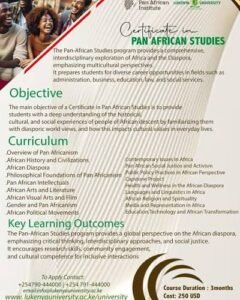
images 35 Download Past Paper On Studies in African Diaspora and Pan-Africanism for Revision

Download Past Paper On Studies in African Diaspora and Pan-Africanism for Revision

Are you looking for Studies in African Diaspora and Pan-Africanism...