Anna Mani: In the annals of scientific history, certain individuals stand out not only for their groundbreaking contributions but also for the lasting impact they have left on the world. Anna Mani, an Indian physicist and meteorologist, is one such luminary whose fame endures long after her time. Here are 17 reasons why Anna Mani continues to be celebrated and remembered:

1. Pioneering Woman in Science: Anna Mani
Anna Mani broke barriers as a woman in the male-dominated field of science during the mid-20th century. Her trailblazing career served as an inspiration for countless aspiring female scientists.
2. Meteorological Maverick:
Mani made significant contributions to meteorology, particularly in the study of atmospheric sciences. Her work advanced our understanding of weather patterns and climatic conditions.
3. Instrumental Innovations:
Mani was instrumental in developing several meteorological instruments that played a crucial role in enhancing weather forecasting capabilities. Her inventions continue to impact meteorological research today.
4. Educational Advocate: Anna Mani
Throughout her career, Anna Mani was a strong advocate for education. Her passion for learning and commitment to education left an indelible mark on generations of students.
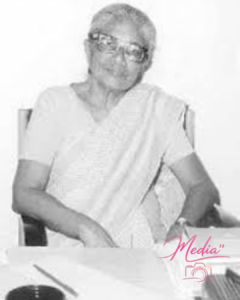
5. Prolific Researcher:
Mani’s extensive research output, spanning various aspects of atmospheric science, solidified her reputation as a prolific researcher. Her work laid the foundation for future studies in meteorology.
6. Global Collaboration:
Anna Mani’s collaborations with international scientists fostered a global exchange of ideas and knowledge, contributing to the advancement of meteorological research on a worldwide scale.
7. Government Service: Anna Mani
Mani’s dedicated service to the Indian government, including her tenure at the India Meteorological Department, showcased her commitment to applying scientific knowledge for the betterment of society.
8. Recognition of Excellence:
Anna Mani received numerous awards and honors during her lifetime, including the Padma Bhushan, one of India’s highest civilian awards, recognizing her exceptional contributions to science.
9. Multifaceted Talent:
Beyond meteorology, Mani demonstrated her versatility by engaging in diverse scientific disciplines, proving that her intellect knew no bounds.

10. Commitment to Public Understanding: Anna Mani
Mani played a pivotal role in disseminating scientific knowledge to the public. Her efforts to bridge the gap between scientific research and public understanding showcased her commitment to science communication.
11. Legacy in Libraries:
The Anna Mani Archive, established to preserve her papers, documents, and research, ensures that her legacy remains accessible to scholars, researchers, and the public.
12. Inspiration for Future Generations:
Anna Mani’s life story serves as an inspiration for young scientists, particularly women, encouraging them to pursue their passion for science despite societal norms and challenges.
13. Trailblazer for Indian Scientists: Anna Mani
Mani’s achievements paved the way for future generations of Indian scientists, proving that excellence knows no geographical or gender boundaries.
14. Ethical Leadership:
Throughout her career, Anna Mani exemplified ethical leadership, emphasizing the importance of integrity and moral responsibility in scientific endeavors.
15. Influence on Climate Science:
Mani’s work on atmospheric sciences, including her studies on cloud physics, continues to be relevant in the context of modern climate science and global climate change.
16. International Recognition: Anna Mani
Mani’s contributions to meteorology were recognized not only in India but also on the international stage, highlighting the global impact of her scientific endeavors.
17. Cultural Icon:
Anna Mani’s legacy extends beyond the realm of science, making her a cultural icon in India. Her life story is celebrated not only for her scientific achievements but also for her role in breaking societal norms and fostering a culture of scientific inquiry.
Anna Mani’s enduring fame can be attributed to her ground breaking contributions to science, her dedication to education, and her trailblazing spirit that continues to inspire generations of scientists worldwide. Her legacy is a testament to the transformative power of passion, perseverance, and a commitment to advancing human knowledge.
Frequently Asked Questions
1. Who was Anna Mani?
Anna Mani (1918–2001) was a pioneering Indian physicist and meteorologist. Often referred to as the “Weather Woman of India,” she broke significant gender barriers to become one of the country’s foremost scientists, eventually serving as the Deputy Director General of the India Meteorological Department (IMD).
2. Why is Anna Mani considered a timeless figure in science?
She remains timeless because her research laid the foundational groundwork for independent India’s weather forecasting, ozone monitoring, and clean energy infrastructure. Her transition from basic physics to highly practical, nation-building atmospheric science serves as a permanent blueprint for impactful research.
3. What were her major contributions to Indian meteorology?
Before Anna Mani, India relied almost entirely on imported, expensive instruments to record weather data. She standardized the manufacturing of more than 100 different meteorological instruments in India, making the nation self-reliant in weather tracking and high-altitude atmospheric measurements.

4. How did she contribute to renewable energy before it was a global trend?
Decades before climate change and green tech became global priorities, Anna Mani recognized the potential of alternative energy. In the 1950s and 60s, she set up a vast network of stations across India to measure solar radiation and wind patterns, effectively mapping out the data India uses today for its massive solar and wind farms.
5. What was her connection to Nobel Laureate Sir C.V. Raman?
After earning her physics degree, she won a research scholarship to work under Sir C.V. Raman at the Indian Institute of Science (IISc) in Bengaluru. During her time in his lab, she focused extensively on the optical properties of rubies and diamonds, publishing five solo research papers.
6. Did Anna Mani face gender discrimination during her career?
Yes. Despite her brilliant research at IISc, she was denied a formal Ph.D. degree simply because she did not possess an official master’s degree in physics (despite holding an honors bachelor’s degree). Furthermore, she worked in an era when the scientific community was overwhelmingly male, a barrier she overcame through sheer excellence and determination.
7. Where did she study abroad?
In 1945, she won a government internship that allowed her to study at Imperial College London. There, she specialized in meteorological instrumentation, learning the precise calibration and manufacturing techniques that she would later bring back to revolutionize India’s weather systems.
8. What is her significance to global ozone research?
Anna Mani was an early pioneer in atmospheric ozone measurement. She developed an indigenous instrument called the ozonesonde to measure profiles of atmospheric ozone. This allowed India to contribute vital data to global atmospheric studies, earning her deep respect within the World Meteorological Organization (WMO).
9. Why is she an important role model for women in STEM?
Anna Mani refused to be defined or limited by her gender. When asked about being a woman scientist, she famously dismissed the notion that gender had anything to do with intellect or capability, asserting that hard work and passion for science were all that mattered.
10. Where was Anna Mani born?
She was born on August 23, 1918, in Peerumedu, Travancore (now part of Kerala, India) into a traditional, upper-middle-class family.
11. How did Mahatma Gandhi influence her life?
During her youth, she was deeply moved by Mahatma Gandhi’s nationalist movement. Inspired by his values of self-reliance and simplicity, she chose to wear only khadi (handspun cotton garments) for the rest of her life, a philosophy that later mirrored her scientific push for Indian technological self-reliance.
12. What book did she reject on her eighth birthday?
In a famous anecdote that highlighted her early intellectual curiosity, Anna Mani refused a traditional gift of diamond earrings for her eighth birthday, demanding a complete set of the Encyclopaedia Britannica instead.
13. What executive positions did she hold?
She joined the India Meteorological Department in 1948 and climbed the ranks to become the Deputy Director General. After retiring from the government, she served as a trustee and researcher at the Raman Research Institute in Bengaluru and established a field laboratory for solar and wind energy research.
14. Did she write any influential books?
Yes, she authored several definitive reference texts on solar and wind energy mapping in India. Notable works include Handbook of Solar Radiation Data for India (1980) and Wind Energy Data for India (1983), which remain crucial for modern climate and energy engineers.
15. What awards and honors did she receive?
She was awarded the prestigious K.R. Ramanathan Medal by the Indian National Science Academy (INSA) in 1987 for her monumental contributions to atmospheric sciences. The World Meteorological Organization also honored her on her birth centenary, recognizing her global legacy.

16. How did Google honor her legacy?
On August 23, 2022, Google dedicated a high-profile “Google Doodle” to Anna Mani on what would have been her 104th birthday, introducing her pioneering work to millions of internet users worldwide.
17. What was her philosophy regarding scientific work?
She held an uncompromising standard for precision. Anna Mani famously believed that “wrong data is worse than no data,” ensuring that every instrument manufactured under her watch met rigid international policy-page-at-mpya-news/" title="Standards">standards.
18. Did she ever marry?
No, Anna Mani chose to remain unmarried, completely dedicating her entire life, energy, and focus to her scientific pursuits, mentoring younger researchers, and building India’s scientific infrastructure.
19. When did she pass away?
Anna Mani passed away on August 16, 2001, in Thiruvananthapuram, Kerala, leaving behind an invaluable legacy that continues to influence modern meteorology and environmental policy.
20. How does her work impact India today?
Every time you look at a modern Indian weather report, check air quality indices, or see a newly installed solar array or wind farm, you are witnessing the living legacy of Anna Mani’s foundational data and scientific vision.
WRITTEN BY COLLINS
Back to Mpya News Home page: Education, Fashion, Law, business and sports
Last updated on: June 11, 2026
New information gained / new value takehome
- Meteorological Maverick: Mani made significant contributions to meteorology, particularly in the study of atmospheric sciences.
- Multifaceted Talent: Beyond meteorology, Mani demonstrated her versatility by engaging in diverse scientific disciplines, proving that her intellect knew no bounds.
- Legacy in Libraries: The Anna Mani Archive, established to preserve her papers, documents, and research, ensures that her legacy remains accessible to scholars, researchers, and the public.
- She remains timeless because her research laid the foundational groundwork for independent India’s weather forecasting, ozone monitoring, and clean energy infrastructure.
- How did she contribute to renewable energy before it was a global trend?
- degree simply because she did not possess an official master’s degree in physics (despite holding an honors bachelor’s degree).
- Why is she an important role model for women in STEM?
This content was developed using AI as part of our research process. To ensure absolute accuracy, all information has been rigorously fact-checked and validated by our human editor, Collins Murithi.
External resource 1: BBC World News Coverage
External resource 2: Reuters Global Agency
Reference 1: The New York Times International
Reference 2: Al Jazeera News Updates
Reference 3: Associated Press Official
Photo credit: instagram.com