Are you ready to strengthen your understanding of genome organization? I recently discovered an amazing resource that transformed my exam preparation: the Genome Organization Past Paper. Here’s how it helped me and how it can help you.
BELOW IS THE PAST PAPER DOWNLOAD LINK:
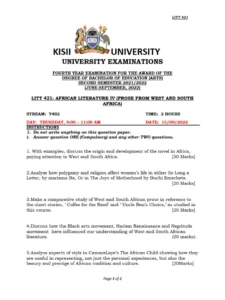
Genome Organization Past Paper for Revision
ABOVE IS THE PAST PAPER DOWNLOAD LINK:
Source credit: Masinde Muliro University

I started by asking myself: What are the fundamental principles of genome organization that I must master? This past paper covers essential topics such as chromosomal structure, gene mapping, DNA packaging, and regulatory elements. By attempting the questions, I could identify gaps in my knowledge and focus my revision effectively.
One of the first questions I tackled was: How is DNA packaged within the nucleus, and what role do histones play? Answering this required me to recall details about nucleosomes, chromatin fibers, and higher-order folding. Working through this question reinforced my memory and made it easier to visualize DNA organization in the cell.
Next, I asked myself: What are the differences between prokaryotic and eukaryotic genome organization? The past paper included examples that prompted me to compare operons, introns, exons, and regulatory sequences. Practicing these comparisons helped me clarify concepts that often appear confusing in textbooks.
Another critical area I focused on was gene mapping. I challenged myself with: How do linkage maps, physical maps, and genome sequencing help in understanding genome structure? Using the past paper, I simulated exam conditions and practiced explaining techniques like restriction mapping and sequence assembly. This boosted my confidence in tackling similar questions under time pressure.
The past paper also included scenario-based questions that made me think critically: If a chromosomal inversion occurs, how might it affect gene expression or recombination? Working through these scenarios helped me develop analytical skills and anticipate potential exam questions.
I also explored questions on repetitive sequences and non-coding DNA: What roles do satellite DNA, transposons, and regulatory elements play in genome organization? Answering these questions reinforced my understanding of genome complexity and the functional significance of non-coding regions.
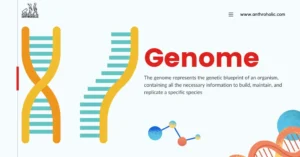
Finally, the past paper encouraged me to consider broader applications: How does genome organization influence gene regulation, evolution, and biotechnology research? Linking theoretical knowledge to practical applications improved my ability to provide comprehensive answers and think like a molecular biologist.
Downloading and revising with the Genome Organization Past Paper was a turning point in my exam preparation. It helped me identify weak areas, practice time management, and build confidence in answering a wide variety of questions.
If you’re serious about excelling in your exams, I highly recommend downloading this past paper. It’s a structured, practical, and student-friendly resource that allows you to engage actively with key concepts rather than passively reading notes.
Have you tried using past papers to boost your revision? I found that asking myself questions, reasoning through answers, and simulating exam conditions made a huge difference in my performance. Don’t just memorize—practice, analyze, and master the essentials of genome organization!
Back to Mpya News Home page: Education, Fashion, Law, business and sports
Last updated on: December 17, 2025
New information gained / new value takehome
- I recently discovered an amazing resource that transformed my exam preparation: the Genome Organization Past Paper.
- This past paper covers essential topics such as chromosomal structure, gene mapping, DNA packaging, and regulatory elements.
- If you’re serious about excelling in your exams, I highly recommend downloading this past paper.
- It’s a structured, practical, and student-friendly resource that allows you to engage actively with key concepts rather than passively reading notes.
- Don’t just memorize—practice, analyze, and master the essentials of genome organization!
This content was developed using AI as part of our research process. To ensure absolute accuracy, all information has been rigorously fact-checked and validated by our human editor, Alex Munene.