Let’s be honest: Philosophy of Religion is probably the only subject where “I don’t know” is a valid starting point, provided you can explain why you don’t know in 2,000 words. It’s not a Sunday school class; it’s a rigorous interrogation of the most profound concepts in human history. You aren’t just talking about faith; you’re debating the nature of existence, the limits of language, and the terrifying reality of suffering.
Below is the exam paper download link
Past Paper On Philosophy Of Religion For Revision
Above is the exam paper download link
When exam season hits, the sheer weight of the arguments—Anselm, Aquinas, Hume, Paley—can feel like a mountain. But here is the secret: Philosophy is about logic and structure. The best way to stop your brain from spinning is to see how these abstract ideas are turned into concrete exam questions. To help you move from “existential crisis” to “exam success,” we’ve tackled the high-yield questions found in recent past papers.
The Revision Q&A: Deconstructing the Divine
Q: What is the ‘Ontological Argument’ and why does it feel like a word game? This is St. Anselm’s famous “a priori” argument. He defines God as “that than which nothing greater can be conceived.” He argues that it is greater to exist in reality than just in the mind; therefore, if God is the greatest thing imaginable, God must exist.
In an exam, you’ll likely be asked to provide Gaunilo’s critique. Gaunilo used the “Perfect Island” analogy to show that you can’t just define things into existence.
Q: How does the ‘Problem of Evil’ challenge the concept of an All-Powerful God? This is the “Inconsistent Triad” popularized by Epicurus and later J.L. Mackie. If God is All-Powerful (Omnipotent) and All-Good (Omnibenevolent), why does evil exist?
-
Logical Problem: The existence of God and evil is a contradiction.
-
Evidential Problem: The amount of pointless suffering (like a forest fire) makes God’s existence unlikely.

When answering, make sure to discuss Theodicies—like the Free Will Defense or Irenaeus’ “Soul-Making” argument.
Q: What is the ‘Teleological Argument’ (The Argument from Design)? William Paley famously used the “Watchmaker” analogy. If you found a watch on a heath, you’d assume it had a designer because of its complexity. He argued the universe is even more complex, so it must have a Grand Designer.
In your revision, pay close attention to David Hume’s criticisms. He argued the universe is more like a vegetable than a watch, and even if there is a designer, they might be a “stupid mechanic” or a group of gods.
Q: Can we use ‘Human Language’ to describe a Divine Being? This is the Religious Language debate. Is calling God “Good” the same as calling a human “Good”?
-
Via Negativa: We can only say what God is not (e.g., God is not finite).
-
Analogy (Aquinas): We use words as analogies to God’s nature.
-
Symbol (Tillich): Religious language functions like a flag—it points to a reality beyond itself.
The Power of the Past Paper: Your Philosophical Roadmap
You can read The Brothers Karamazov all day, but Philosophy of Religion is a technical discipline. You need to know how to identify a “circular argument” or justify a “non-cognitive” approach to language under a 45-minute timer.

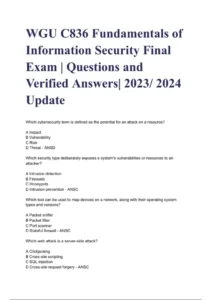
By downloading our Philosophy of Religion past paper, you will:
-
Master the Terminology: Practice using terms like Aseity, Theodicy, Contingency, and Falsification correctly.
-
Refine Your Evaluation: Learn how to not just describe a theory, but to “critically assess” it by weighing strengths against weaknesses.
-
Identify Trends: You’ll notice that questions on Miracles and Religious Experience (William James) are recurring favorites in 2026.
Download Your Revision Material Here
Ready to turn your contemplations into a distinction? Don’t leave your grades to “divine intervention.” The best way to build your confidence is to tackle the logical puzzles that have challenged the world’s greatest thinkers for centuries. Use the link below to download a curated past paper.
[Click Here to Download the Philosophy of Religion Past Paper PDF]


A Quick Parting Tip: The ‘Ockham’s Razor’ Rule
Whenever you are evaluating an argument for God’s existence versus a scientific one, mention Ockham’s Razor. It’s the principle that the simplest explanation is usually the best one. Does the universe need a complex God to explain it, or is “it just is” a simpler answer? Dropping this into your conclusion shows the examiner you have “analytical flair!”
Back to Mpya News Home page: Education, Fashion, Law, business and sports
Last updated on: February 6, 2026
New information gained / new value takehome
- If you found a watch on a heath, you’d assume it had a designer because of its complexity.
- ”Back to Mpya News Home page: Education, Fashion, Law, business and sports Last updated on: February 6, 2026Mpya News Sitemap .
- News Education Rankings Reference 2: SNHU Distance Learning Reference 3: GCU University Programs Photo credit: instagram.
This content was developed using AI as part of our research process. To ensure absolute accuracy, all information has been rigorously fact-checked and validated by our human editor, Collins Murithi.