Let’s be honest: Introduction to Psychology is often the most exciting class on the schedule, but it’s also a massive “info-dump.” One week you’re talking about the biology of the brain, and the next, you’re debating whether humans are born “blank slates” or pre-programmed by evolution.
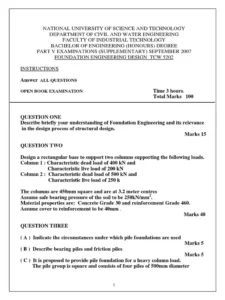
Below is the exam paper download link
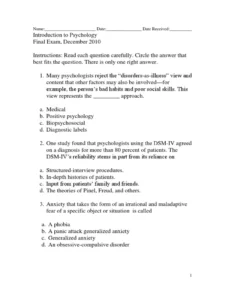
Past Paper On Introduction To Psychology For Revision
Above is the exam paper download link
When exam season hits, the sheer volume of names—Piaget, Skinner, Freud, Maslow—can make your head spin. But here’s the trick: Psychology isn’t just about memorizing people; it’s about understanding patterns. The best way to stop feeling overwhelmed is to see how these theories are actually tested. To help you move from “just reading” to “actively mastering,” we’ve tackled the foundational questions that anchor every intro past paper.
The Revision Q&A: Understanding the Human Blueprint
Q: What is the real difference between ‘Nature’ and ‘Nurture’? This is the ultimate psychology debate.
-
Nature: Argues that your behavior is baked into your DNA. (e.g., You’re tall because your parents are).
-
Nurture: Argues that you are a product of your environment and experiences. (e.g., You like jazz because it played in your house as a child). In an exam, the “A-grade” answer is almost always Interactionism—the idea that our genes provide the potential, but our environment flips the switch.
Q: How do I distinguish between ‘Classical’ and ‘Operant’ Conditioning? This is a classic “trap” question.
-
Classical (Pavlov): It’s about involuntary reflexes. A dog hears a bell and salivates because it associates the sound with food.
-
Operant (Skinner): It’s about voluntary behavior. You study hard because you want the “reward” of an A, or you stop speeding because you don’t want the “punishment” of a fine.
Q: What are the ‘Big Five’ Personality Traits? If you see a question about personality, remember the acronym OCEAN:
-
-
Openness: Curiosity and creativity.
-
Conscientiousness: Organization and work ethic.
-
Extraversion: Energy from social interaction.
-
Agreeableness: Compassion and cooperation.
-
Neuroticism: Emotional instability or anxiety.
-
Q: Why is the ‘Limbic System’ called the emotional brain? In the biological psychology section, you’ll likely have to identify brain parts. The Limbic System—specifically the Amygdala (fear/emotion) and the Hippocampus (memory)—is what makes us feel. If you’re asked how stress affects memory, focus on how these two parts interact.
The Power of the Past Paper: Your Strategy for Success
You can read about “Cognitive Dissonance” until your eyes glaze over, but Psychology is a social science that requires application. You need to know how to spot a “confounding variable” in a study or how to explain a “defense mechanism” in a case study under a 45-minute timer.
By downloading our Introduction to Psychology past paper, you will:
-
Master the Jargon: Practice using terms like Self-Actualization, Neuroplasticity, and Cognitive Biases correctly.
-
Refine Your Logic: Learn how to critique a famous study (like Milgram’s Obedience experiment) by looking at its policy-page-at-mpya-news/" title="Ethics">Ethics and Validity.
-
Identify Trends: You’ll notice that questions on Mental Health Awareness and Positive Psychology are becoming standard features in 2026.
Download Your Revision Material Here
Ready to turn your curiosity into a distinction? Don’t leave your performance to the “unconscious.” The best way to build your confidence is to tackle the mental puzzles that have challenged students for decades. Use the link below to download a curated Introduction to Psychology past paper.
[Click Here to Download the Introduction to Psychology Past Paper]
A Quick Parting Tip: The ‘Bystander Effect’ Rule
Whenever you are asked about social behavior, remember the Bystander Effect. It’s the idea that the more people who witness an emergency, the less likely any one person is to help. Mentioning “Diffusion of Responsibility” as the cause is a surefire way to show the examiner you’ve moved beyond surface-level knowledge!
Back to Mpya News Home page: Education, Fashion, Law, business and sports
Last updated on: February 5, 2026
New information gained / new value takehome
- , You’re tall because your parents are).
- , You like jazz because it played in your house as a child).
- A dog hears a bell and salivates because it associates the sound with food.
- You study hard because you want the “reward” of an A, or you stop speeding because you don’t want the “punishment” of a fine.
- The Limbic System—specifically the Amygdala (fear/emotion) and the Hippocampus (memory)—is what makes us feel.
- Back to Mpya News Home page: Education, Fashion, Law, business and sports Last updated on: February 5, 2026Mpya News Sitemap .
- News Education Rankings Reference 2: SNHU Distance Learning Reference 3: GCU University Programs Photo credit: instagram.
This content was developed using AI as part of our research process. To ensure absolute accuracy, all information has been rigorously fact-checked and validated by our human editor, Collins Murithi.