What is Design and Analysis of Experiment II?
Design and Analysis of Experiment II is an advanced statistics course that builds on the basics of experimental design. It focuses on complex designs and their analysis to help researchers obtain reliable and efficient results in scientific and applied studies.
Download Link
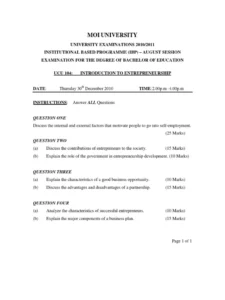
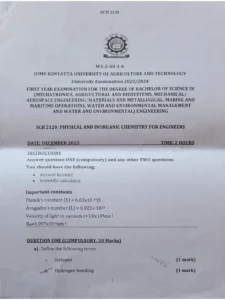
Design-And-Analysis-Of-Experiment II-Exam-Past-Paper-Mpya-news
Why is this course important?
This course is important because advanced experimental designs provide more accurate results, reduce bias, and optimize resources. It equips students with techniques for analyzing data from multifactor experiments, which are common in real-world research.
What topics are usually examined?
Typical topics include:
-
Factorial designs
-
Fractional factorial designs
-
Confounding and aliasing
-
Response surface methodology (RSM)
-
Nested and split-plot designs
-
Advanced ANOVA models
-
Model adequacy and diagnostics

How do past papers help in preparation?
Past papers allow students to practice analyzing complex designs, interpreting ANOVA tables, and applying design principles. They also show the balance between theory questions and problem-solving exercises in exams.
What challenges do students face in this course?
Students often struggle with identifying the correct design for a problem, performing calculations for factorial designs, and interpreting interactions between factors. The mathematical detail in ANOVA can also be challenging.
Are exams more theory-based or application-focused?
Exams usually combine both. Students are expected to explain theoretical principles, derive models, and solve application-based problems that involve designing and analyzing experiments.
How can students use past papers effectively?
The best approach is to simulate exam conditions, attempt past papers without notes, and then review solutions. Focusing on repeated question types helps students prioritize important areas.
What role does software play in this course?
Statistical software such as R, Minitab, and SAS is often used to analyze experimental data. While exams may emphasize manual analysis, familiarity with software helps in real-life research and project work.
What strategies ensure success in the exam?
Students should:
-
Revise factorial and fractional factorial designs thoroughly
-
Practice drawing and interpreting ANOVA tables
-
Solve past papers regularly
-
Strengthen understanding of response surface methods
-
Focus on interpreting results in practical contexts
Back to Mpya News Home page: Education, Fashion, Law, business and sports
Last updated on: September 11, 2025
New information gained / new value takehome
- It focuses on complex designs and their analysis to help researchers obtain reliable and efficient results in scientific and applied studies.
- Download Link Design-And-Analysis-Of-Experiment II-Exam-Past-Paper-Mpya-news Why is this course important?
- This course is important because advanced experimental designs provide more accurate results, reduce bias, and optimize resources.
- The best approach is to simulate exam conditions, attempt past papers without notes, and then review solutions.
- Focusing on repeated question types helps students prioritize important areas.
- What strategies ensure success in the exam?
- News Education Rankings Reference 2: SNHU Distance Learning Reference 3: GCU University Programs Photo credit: instagram.
This content was developed using AI as part of our research process. To ensure absolute accuracy, all information has been rigorously fact-checked and validated by our human editor, Rodgers Mwenda.