Let’s be honest: knowing that the French Revolution started in 1789 is one thing, but knowing how to explain the causes of that revolution to a room full of rowdy teenagers is a completely different skill set. If you are a student-teacher, History Subject Methods is the unit that shifts you from being a “buff” who loves dates and battles to a professional educator who can build critical thinkers.
Below is the exam paper download link
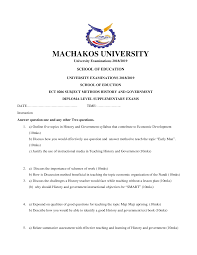
Past Paper On History Subject Methods For Revision
Above is the exam paper download link
Teaching History is a delicate art. It’s not about rote memorization; it’s about Historical Inquiry. It’s about teaching students how to weigh evidence, detect bias, and understand that the “truth” often depends on who is telling the story. However, because this unit is so theory-heavy, the exams can feel like a minefield.
To help you move from a student mindset to a teacher mindset, we’ve put together a specialized Q&A session based on the questions that appear year after year, followed by a link to download a full revision paper.
Bringing History to Life: Revision Q&A
Q1: What is the difference between “Chronological” and “Thematic” approaches to teaching History?
A: This is a fundamental exam question.
-
Chronological Approach: You teach events in the order they happened (e.g., Stone Age to Iron Age). It helps students understand cause and effect over time.
-
Thematic Approach: You pick a theme (e.g., “Revolution” or “Medicine”) and track it across different eras. This is great for showing how specific human experiences evolve.
Q2: Why is “Source Analysis” the most important skill in a History classroom?
A: History isn’t just a story; it’s an investigation. By giving students primary sources (like a soldier’s diary) and secondary sources (like a textbook), you teach them to look for Bias, Perspective, and Reliability. In an exam, if you are asked to design a lesson on sources, make sure to mention the “Five Ws”: Who wrote it, What does it say, Where was it written, When, and Why?
Q3: How do you use “Oral Traditions” as a teaching resource in the African History context?
A: This is a high-frequency question in regional papers. Oral traditions—proverbs, myths, and songs—are vital because they preserve the history of societies that may not have used written scripts. A high-scoring answer will discuss the challenge of Objectivity and how a teacher should encourage students to cross-reference oral accounts with archaeological or written evidence.
Q4: What is “Set Induction” and how would you apply it to a lesson on ‘The Cold War’?
A: Set induction is the “hook” at the start of the lesson. For the Cold War, you might start by showing two different posters—one from the USA and one from the USSR—and ask students to describe how each makes them feel. This immediate visual stimulus captures their interest before you dive into the complex politics of the Iron Curtain.
Why You Should Practice with This Past Paper
In a History Methods paper, you aren’t being tested on your memory of the Roman Empire; you are being tested on your Instructional Design. Here is why the download below is a game-changer:
-
Mastering the Lesson Plan: You will almost certainly be asked to “Draft a 40-minute lesson plan for a Form 1 class on Migration.” You need to know how to structure your “Teacher’s Activity” vs. “Learner’s Activity” columns.
-
Evaluating Instructional Aids: Past papers help you think beyond the textbook. You’ll learn to suggest using maps, documentaries, local museum visits, and even digital archives.
-
Timing Your Essays: History methods papers are often “essay-heavy.” Practicing with a real paper helps you learn how to summarize a 20-mark point without running out of time for the 5-mark definitions.
Your Free Revision Resource
Ready to stop “reading about teaching” and start “preparing to teach”? We have curated a high-standard History Subject Methods Past Paper to help you refine your pedagogical approach and boost your exam confidence.
[Download: History Subject Methods Revision Past Paper (PDF)]
(Pro-tip: When revising, don’t just read the answers. Practice sketching a “Concept Map” for a topic like ‘Decolonization.’ If you can visualize the connections between events on paper, you can do it on a chalkboard for your students!)
Final Thoughts
History is the memory of the human race. By mastering these methods, you are preparing to help the next generation understand where they came from so they can decide where they are going. Download the paper, test your timing, and walk into that exam room ready to lead.