If there is one person who knows how to command the attention of the digital world, it’s Anastasiya Kvitko. Often dubbed the “Russian Kim Kardashian,” Anastasiya has built an empire on her gravity-defying curves and her unapologetically bold fashion choices. With over 12 million followers watching her every move, she has become the gold standard for “curvy-glam” aesthetics in 2026.

But what makes her bikini posts go so viral? Is it the exotic locations? The high-end designer labels? Or the sheer confidence she radiates in every frame? Today, we’re counting down 8 jaw-dropping bikini snaps that didn’t just trend—they practically melted the servers.

Let’s dive into the world of Kvitko-core!


1. The “Liquid Gold” Metallic: Is This the Most Luxurious Look Ever?

In a shoot that looked like it was pulled straight from the pages of a luxury lifestyle magazine, Anastasiya appeared in a metallic gold bikini that mimicked the look of liquid metal.

Why did this snap go viral?

Gold is the color of royalty and luxury. On Anastasiya, the reflective fabric highlighted her silhouette in a way that felt almost sculptural. In 2026, the “metallic” trend is all about high-shine impact, and this photo is the blueprint.

What’s the style secret?

It’s all about the reflectivity. The suit caught the Mediterranean sun perfectly, making her skin appear to glow from within. It’s a bold, high-stakes look that only someone with her level of confidence can truly pull off.

Jaw-Dropping Bikini Snaps by Anastasiya Kvitko


2. The Micro-Neon Trend: How Small Can a Bikini Actually Go?

Anastasiya is famous for pushing the boundaries of traditional swimwear. One of her most-liked photos features her in an electric lime-green micro-bikini that left very little to the imagination.

Why is everyone talking about this one?

It’s the “shock factor.” While micro-bikinis have been around for a while, Anastasiya’s ability to pair such a daring cut with high-fashion accessories (like oversized designer shades) elevates the look from “beachwear” to “statement art.”

Is neon green still the “It” color?

Absolutely. In 2026, vibrant, high-visibility colors are used to signify energy and presence. If you want to be the center of attention, lime green is the way to go.


3. The Classic “Black Widow” One-Piece: Can a Monokini Be This Hot?

While she’s known for two-pieces, one of her most sophisticated snaps features a black monokini with sheer mesh panels and a plunging neckline.

Why did fans love this departure from the norm?

It offered a sense of mystery. The mesh panels created an “optical illusion” effect, emphasizing her waist-to-hip ratio while providing a bit more structure. It proved that you don’t need to wear a string bikini to be the hottest person on the beach.

Key Features:

  1. Mesh Detail: Adds a “high-fashion” edge.

  2. Deep-V Cut: Elongates the torso.

  3. Matte Black Fabric: Offers a timeless, “Bond Girl” aesthetic.Jaw-Dropping Bikini Snaps by Anastasiya Kvitko


4. The “Cottage-Core” Floral: Does Anastasiya Do “Soft” Style?

Believe it or not, Anastasiya recently surprised her audience with a delicate, pink floral bikini featuring dainty ruffles. It was a complete pivot from her usual “vamp” aesthetic.

Why was this look so interactive?

It felt relatable and human. Fans loved seeing a softer side of the model. The comment section was flooded with people calling it her “most beautiful” look because it felt light, airy, and perfect for a casual summer day.

How to get the look:

Look for Liberty-print florals and soft pastel bases. Even if you have a bold physique like Anastasiya, ruffles can add a touch of whimsy that balances out the intensity of the look.


5. The High-Waisted Retro Vibe: Is the 90s Revival Still Happening?

Anastasiya paid homage to the 90s supermodel era with a high-waisted, white thong bikini that sat high on the hip bones.

Why is the “High-Cut” so popular?

It’s a masterclass in geometry. By pulling the straps up past the hips, you create the illusion of infinitely long legs. For a woman with Anastasiya’s curves, this cut emphasizes the “hourglass” shape in a way that traditional low-rise bottoms simply can’t.

Jaw-Dropping Bikini Snaps by Anastasiya Kvitko


6. The “Buried in Bling” Bikini: Can You Wear Jewelry as Swimwear?

One of her most “jaw-dropping” moments involved a bikini made almost entirely of rhinestones and silver chains. It was less about swimming and more about the ultimate “flex.”

Was this for a brand collab?

Yes, this was part of a major 2026 collaboration with a luxury jewelry house. The post trended because it challenged the idea of what “swimwear” is. It was essentially wearable jewelry, and it sparkled brilliantly in her poolside video.


7. The Deep Ocean Blue: Why Does This Shade Work So Well?

Posing on a yacht in Dubai, Anastasiya wore a rich, royal blue bikini that matched the Persian Gulf perfectly.

Why is this photo a “Must-See”?

It’s the color theory. Royal blue is a universal “power color.” It looks incredible on all skin tones and provides a sophisticated contrast to the typical oranges and yellows of summer. It’s a “boss” look for a woman who runs her own brand.


8. The Animal Print Legend: Is Leopard Still the King of the Jungle?

No Kvitko list would be complete without her iconic leopard print snap. Standing against a lush tropical backdrop, she looked like a force of nature.

Why do animal prints keep coming back?

Because they never truly left. Leopard print is a “neutral” in the world of high-glamour fashion. Anastasiya’s version featured a wrap-around top that added extra detail to her midriff, making it one of the most screenshotted looks of her career.

Jaw-Dropping Bikini Snaps by Anastasiya Kvitko


Conclusion: The Secret to the Kvitko Appeal

Anastasiya Kvitko’s bikini snaps go viral because she understands the power of proportions and confidence. She doesn’t follow trends; she adapts them to fit her unique brand of glamour. Whether she’s in a simple white string bikini or a diamond-encrusted masterpiece, she remains the undisputed queen of the “jaw-dropping” snap.

Frequently Asked Questions (FAQ)

Q: What is Anastasiya Kvitko’s workout routine? A: She is known for her “curves-first” approach, focusing heavily on weight training and glute isolation exercises, while maintaining a very clean diet to keep her waist snatched.

Q: Where can I buy the bikinis she wears? A: She is a primary ambassador for Fashion Nova, but she also frequently wears high-end pieces from Philipp Plein and Dolce & Gabbana.

Q: How does she deal with the “Russian Kim Kardashian” comparison? A: She has stated in interviews that while she finds the comparison flattering, she believes her look is natural and unique to her own heritage and fitness journey.

Q: What is the best tip for taking photos like Anastasiya? A: Lighting and angles! She always shoots during “Golden Hour” and knows exactly how to position her body to highlight her favorite features.

Back to Mpya News Home page: Education, Fashion, Law, business and sports

Last updated on: April 9, 2026

External resource 1: Summersalt Official

External resource 2: Hunza G Collection

Reference 1: Monday Swimwear Fit Guide

Reference 2: Eres Paris Luxury Swim

Reference 3: Vitamin A Sustainability


Photo credit: instagram.com

New information gained / new value takehome

  • Key Features: Mesh Detail: Adds a “high-fashion” edge.
  • The comment section was flooded with people calling it her “most beautiful” look because it felt light, airy, and perfect for a casual summer day.
  • The post trended because it challenged the idea of what “swimwear” is.
  • It was essentially wearable jewelry, and it sparkled brilliantly in her poolside video.
  • Conclusion: The Secret to the Kvitko Appeal Anastasiya Kvitko’s bikini snaps go viral because she understands the power of proportions and confidence.
  • She doesn’t follow trends; she adapts them to fit her unique brand of glamour.
  • A: She has stated in interviews that while she finds the comparison flattering, she believes her look is natural and unique to her own heritage and fitness journey.
  • Q: What is the best tip for taking photos like Anastasiya?
  • Back to Mpya News Home page: Education, Fashion, Law, business and sports Last updated on: April 9, 2026Mpya News Sitemap .
Verified Content

This content was developed using AI as part of our research process. To ensure absolute accuracy, all information has been rigorously fact-checked and validated by our human editor, Collins Murithi.

About

Digital entrepreneur and content specialist at MPYA News, focused on delivering high-quality insights and resources.

Latest Posts

Download Past Paper On Educational Communication and Information Technology For Revision

Educational Communication and Information Technology is an important subject for...

Educational Communication and Information Technology is an essential subject for students pursuing education and teaching-related courses. It explores how communication skills, instructional resources, and modern technologies contribute to effective teaching and learning. Students preparing for examinations can use Educational Communication and Information Technology past papers alongside lecture notes, textbooks, and revision questions to strengthen their understanding. What is Educational Communication and Information Technology? Educational Communication and Information Technology refers to the application of communication principles and technological tools in educational settings. It helps teachers deliver information effectively and enables learners to access, process, and share knowledge through different channels. The subject includes communication processes, instructional media, computer applications, internet services, multimedia, e-learning, and digital educational resources. Why are Educational Communication and Information Technology past papers important? Past papers help students practise answering examination questions and become familiar with different question formats. They can also help learners identify areas that need more revision and improve their ability to manage examination time. Practising Educational Communication and Information Technology past exam papers alongside course notes can make preparation more organised. Which topics should students revise? Students should revise the main topics covered in their syllabus. These may include: Meaning and importance of communication in education Elements and models of communication Barriers to effective communication Verbal and non-verbal communication Instructional media and teaching aids Computer applications in education Internet services and digital learning resources Multimedia and e-learning Educational broadcasting Advantages and challenges of educational technology These topics provide a useful starting point for Educational Communication and Information Technology revision questions. What is the communication process? The communication process involves the exchange of information between a sender and a receiver. The sender develops a message, selects a channel, and transmits the information. The receiver interprets the message and may provide feedback. In a classroom, for example, a teacher explains a concept, learners listen and interpret the information, and their questions or responses provide feedback. What are the main elements of communication? The main elements include the sender, message, encoding, channel, receiver, decoding, feedback, and context. Noise can interfere with the process and affect understanding. Students should know the functions of these elements because they are useful when answering Educational Communication and Information Technology exam questions. What is the difference between verbal and non-verbal communication? Verbal communication uses spoken or written words to convey information. Examples include classroom discussions, lectures, textbooks, and written instructions. Non-verbal communication involves conveying meaning through gestures, facial expressions, posture, eye contact, and other visual signals. Teachers often use both forms to explain concepts and interact with learners. What are the barriers to effective communication? Communication barriers are factors that prevent a message from being transmitted or understood clearly. Examples include language differences, poor listening, unclear explanations, excessive classroom noise, cultural differences, and technical difficulties. Teachers can reduce these barriers by using clear language, encouraging questions, choosing suitable communication channels, and checking learners’ understanding. What is instructional media? Instructional media refers to materials and resources used to support teaching and learning. Examples include charts, diagrams, maps, models, photographs, audio recordings, videos, projectors, and computers. The appropriate teaching aid depends on the lesson objectives, subject content, learners’ needs, and available resources. How does information technology support education? Information technology supports education by helping users create, store, process, retrieve, and share information. Computers, mobile devices, digital platforms, and internet services can support research, classroom teaching, communication, assessment, and access to learning materials. However, effective use requires suitable resources, digital skills, and appropriate planning. What is e-learning? E-learning is the delivery or support of learning through electronic and digital technologies. It may involve virtual classrooms, online lessons, learning management systems, electronic textbooks, recorded lectures, and online assignments. Students preparing Educational Communication and Information Technology questions and answers should understand the meaning, benefits, and limitations of e-learning. What are the advantages and disadvantages of educational technology? Educational technology can improve access to information, support interactive lessons, encourage collaboration, and provide flexible learning opportunities. It can also help teachers present complex concepts through images, audio, and video. Possible disadvantages include high equipment costs, unreliable internet connections, unequal access to devices, technical problems, and distractions. Students should be able to discuss both benefits and challenges. How can students use past papers effectively? Students should attempt Educational Communication and Information Technology past papers before looking at their notes. After completing a paper, they can review mistakes, revisit difficult topics, and practise similar questions. Searching for Educational Communication and Information Technology past papers PDF can help students locate additional revision resources through authorised educational sources. How should students answer examination questions? Students should read each question carefully and identify the instruction. Words such as “define,” “explain,” “discuss,” “outline,” and “compare” require different responses. For essay questions, students should introduce the topic, explain each main point clearly, provide relevant examples where appropriate, and finish with a conclusion. Conclusion Preparing with Educational Communication and Information Technology past papers, exam questions, revision notes, and textbooks can help students develop a better understanding of the subject. Consistent revision and timed practice can improve knowledge, answer organisation, and examination skills.Educational Communication and Information Technology is an essential subject for students pursuing education and teaching-related courses. It explores how communication skills, instructional resources, and modern technologies contribute to effective teaching and learning. Students preparing for examinations can use Educational Communication and Information Technology past papers alongside lecture notes, textbooks, and revision questions to strengthen their understanding. What is Educational Communication and Information Technology? Educational Communication and Information Technology refers to the application of communication principles and technological tools in educational settings. It helps teachers deliver information effectively and enables learners to access, process, and share knowledge through different channels. The subject includes communication processes, instructional media, computer applications, internet services, multimedia, e-learning, and digital educational resources. Why are Educational Communication and Information Technology past papers important? Past papers help students practise answering examination questions and become familiar with different question formats. They can also help learners identify areas that need more revision and improve their ability to manage examination time. Practising Educational Communication and Information Technology past exam papers alongside course notes can make preparation more organised. Which topics should students revise? Students should revise the main topics covered in their syllabus. These may include: Meaning and importance of communication in education Elements and models of communication Barriers to effective communication Verbal and non-verbal communication Instructional media and teaching aids Computer applications in education Internet services and digital learning resources Multimedia and e-learning Educational broadcasting Advantages and challenges of educational technology These topics provide a useful starting point for Educational Communication and Information Technology revision questions. What is the communication process? The communication process involves the exchange of information between a sender and a receiver. The sender develops a message, selects a channel, and transmits the information. The receiver interprets the message and may provide feedback. In a classroom, for example, a teacher explains a concept, learners listen and interpret the information, and their questions or responses provide feedback. What are the main elements of communication? The main elements include the sender, message, encoding, channel, receiver, decoding, feedback, and context. Noise can interfere with the process and affect understanding. Students should know the functions of these elements because they are useful when answering Educational Communication and Information Technology exam questions. What is the difference between verbal and non-verbal communication? Verbal communication uses spoken or written words to convey information. Examples include classroom discussions, lectures, textbooks, and written instructions. Non-verbal communication involves conveying meaning through gestures, facial expressions, posture, eye contact, and other visual signals. Teachers often use both forms to explain concepts and interact with learners. What are the barriers to effective communication? Communication barriers are factors that prevent a message from being transmitted or understood clearly. Examples include language differences, poor listening, unclear explanations, excessive classroom noise, cultural differences, and technical difficulties. Teachers can reduce these barriers by using clear language, encouraging questions, choosing suitable communication channels, and checking learners’ understanding. What is instructional media? Instructional media refers to materials and resources used to support teaching and learning. Examples include charts, diagrams, maps, models, photographs, audio recordings, videos, projectors, and computers. The appropriate teaching aid depends on the lesson objectives, subject content, learners’ needs, and available resources. How does information technology support education? Information technology supports education by helping users create, store, process, retrieve, and share information. Computers, mobile devices, digital platforms, and internet services can support research, classroom teaching, communication, assessment, and access to learning materials. However, effective use requires suitable resources, digital skills, and appropriate planning. What is e-learning? E-learning is the delivery or support of learning through electronic and digital technologies. It may involve virtual classrooms, online lessons, learning management systems, electronic textbooks, recorded lectures, and online assignments. Students preparing Educational Communication and Information Technology questions and answers should understand the meaning, benefits, and limitations of e-learning. What are the advantages and disadvantages of educational technology? Educational technology can improve access to information, support interactive lessons, encourage collaboration, and provide flexible learning opportunities. It can also help teachers present complex concepts through images, audio, and video. Possible disadvantages include high equipment costs, unreliable internet connections, unequal access to devices, technical problems, and distractions. Students should be able to discuss both benefits and challenges. How can students use past papers effectively? Students should attempt Educational Communication and Information Technology past papers before looking at their notes. After completing a paper, they can review mistakes, revisit difficult topics, and practise similar questions. Searching for Educational Communication and Information Technology past papers PDF can help students locate additional revision resources through authorised educational sources. How should students answer examination questions? Students should read each question carefully and identify the instruction. Words such as “define,” “explain,” “discuss,” “outline,” and “compare” require different responses. For essay questions, students should introduce the topic, explain each main point clearly, provide relevant examples where appropriate, and finish with a conclusion. Conclusion Preparing with Educational Communication and Information Technology past papers, exam questions, revision notes, and textbooks can help students develop

Educational Communication and Information Technology is an important subject for...

Download Past Paper On Introduction to the Study of Language For Revision

Are you looking for Introduction to the Study of Language...

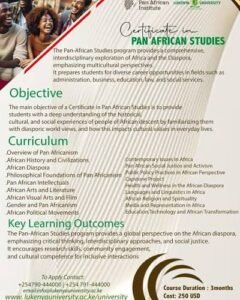
images 35 Download Past Paper On Studies in African Diaspora and Pan-Africanism for Revision

Download Past Paper On Studies in African Diaspora and Pan-Africanism for Revision

Are you looking for Studies in African Diaspora and Pan-Africanism...