If there is one celebrity who perfectly captures the spirit of “Miami energy,” it’s Camila Cabello. In 2026, as she continues to dominate the pop charts with her edgy C,XOXO era, Camila has solidified her status as the ultimate “Bikini Guru.” Whether she’s serving city-girl chic at Fashion Week or relaxing on a tropical shore, her swimwear choices are always a masterclass in confidence.

What fans love most about Camila isn’t just the high-fashion labels; it’s her authenticity. She has been vocal about body positivity, taking a stand against paparazzi culture and reminding her millions of followers that a “real” body is a beautiful body.

Bikini Snaps by Camila Cabello Fans Love

Let’s dive into 6 rare and trending bikini moments that have captured the hearts of fans worldwide.


1. The “Tranquilo” Red Hot Set: Why Did This 2026 Snap Go Viral?

In February 2026, Camila sent social media into a frenzy with a carousel of photos from a tropical island getaway. The standout image featured her leaning against a palm tree in a vibrant, fiery red string bikini.

Why do fans consider this a “Rare” look?

While Camila often wears edgy streetwear, this post felt like a return to pure, carefree vacation vibes. The bikini featured a chic gold ring at the center of the triangle top, adding a touch of luxury to the simple silhouette. She captioned the post, “Tranquilo Bobby, tranquilo,” radiating a sense of peace that fans found incredibly infectious.

How to get the “Tranquilo” glow:

Camila paired the red set with seashell earrings and salty, natural beach waves. To recreate this, skip the heavy makeup and let the bold color of the swimsuit do the heavy lifting for your aesthetic.

Bikini Snaps by Camila Cabello Fans Love


2. The “Miu Miu” Layered Look: Can You Wear a Polo to the Beach?

In one of her most creative style pivots of 2026, Camila took a standard bikini shot and turned it into a high-fashion editorial. She layered a striped Miu Miu polo top over a red bikini, finished with a see-through crochet minidress.

Why is this look trending right now?

It’s the ultimate “Resort-Core” evolution. Fans loved the “Office Siren” meets “Beach Babe” energy. It proved that your bikini doesn’t have to be the whole outfit—it can be the base for a multi-dimensional, high-fashion look.


3. The Retro Polka Dot Selfie: Is the “Pin-Up” Style Back?

Just this past March, Camila shared a mirror selfie in a white and black polka dot bikini, paired with a matching headscarf. The look was a direct nod to 1950s retro glam, but with a modern, cheeky twist.

Why did fans love the accessory choice?

The matching headscarf was the “chef’s kiss” moment. It gave the look a vintage “Italian Riviera” feel that stood out among the sea of minimalist string bikinis on Instagram. It showed that Camila isn’t afraid to play with themes and eras.

Key Elements of the Look:

  1. Classic Print: Polka dots add instant personality.

  2. Coordinated Scarf: Protects the hair while adding style points.

  3. Gold Hoops: Chunky jewelry adds a modern “Miami” edge.


4. The “C,XOXO” Metallic Moment: Is the Bikini the New Shirt?

During the height of her C,XOXO album cycle, Camila pioneered a specific trend: wearing metallic bikini tops as actual shirts. One of the rarest snaps from this era features her in a shimmering silver triangle top paired with baggy blue jeans.

Why was this moment so influential?

It defined the “Hyper-Pop” aesthetic of 2024 and 2025. Fans obsessed over the crossover between swimwear and streetwear. It was edgy, futuristic, and perfectly captured the “I LUV IT” energy of her new musical direction.


5. The “Ruched Balconette” in Black: Why Is This Silhouette a Fan Favorite?

In an April 2025 post, Camila swapped the tiny strings for a black balconette-style bikini. The top featured ruched cups and a sweetheart neckline, offering a more structured and romantic look.

Why is this cut so popular?

The balconette offers incredible support and a classic “Old Hollywood” silhouette. Fans praised this look for being both sophisticated and sexy, proving that a black bikini is never “basic” if the cut is right.


6. The “Nude Bandeau” and Body Positivity: Why Does This Snap Matter?

One of the most meaningful “snaps” in the Cabello archives isn’t a professional photo, but a candid moment in a nude-toned bandeau bikini. Camila used this post to speak openly about her journey with self-acceptance.

Why did this post resonate with so many people?

Camila shared that she spent years trying to “hold her core” for the paparazzi. By posting this carefree, unedited photo, she reclaimed her power. Fans adore this snap because it represents freedom—the freedom to be “happy, silly, and breathing” on the beach, just like she was as a child.


Bikini Snaps by Camila Cabello Fans Love


Conclusion: The Queen of Authenticity

Camila Cabello’s bikini moments are legendary not just because she’s a style icon, but because she uses those moments to connect with her fans on a human level. From high-fashion Miu Miu layers to candid body-positive selfies, she reminds us that the best thing you can wear to the beach is your own confidence.

Frequently Asked Questions (FAQ)

Q: Where can I find the bikinis Camila wears?

A: She is a fan of a wide range of brands, from high-end labels like Miu Miu and Vivienne Westwood to beach-staple brands like Frankies Bikinis.

Q: How does Camila Cabello stay fit?

A: Camila works with personal trainer Jenna Willis 2 to 3 times a week, focusing on strength training, HIIT, and “bird dogs.” She also credits dancing and hiking for keeping her energy levels high.

Q: What is Camila’s stance on body positivity?

A: Camila is a leading voice for body acceptance in Hollywood. She has spoken out against “the culture’s thoughts” on what a healthy body should look like, advocating instead for self-care and mental health.

Q: Does she have a new album coming out?

A: Following the success of C,XOXO, Camila has been teasing new creative projects for late 2026, though she is currently enjoying her “Tranquilo” vacation mode!

Back to Mpya News Home page: Education, Fashion, Law, business and sports

Last updated on: April 11, 2026

External resource 1: Summersalt Official

External resource 2: Hunza G Collection

Reference 1: Monday Swimwear Fit Guide

Reference 2: Eres Paris Luxury Swim

Reference 3: Vitamin A Sustainability


Photo credit: instagram.com

New information gained / new value takehome

  • Key Elements of the Look: Classic Print: Polka dots add instant personality.
  • The “C,XOXO” Metallic Moment: Is the Bikini the New Shirt?
  • It was edgy, futuristic, and perfectly captured the “I LUV IT” energy of her new musical direction.
  • Fans adore this snap because it represents freedom—the freedom to be “happy, silly, and breathing” on the beach, just like she was as a child.
  • A: Following the success of C,XOXO, Camila has been teasing new creative projects for late 2026, though she is currently enjoying her “Tranquilo” vacation mode!
  • Back to Mpya News Home page: Education, Fashion, Law, business and sports Last updated on: April 11, 2026Mpya News Sitemap .
Verified Content

This content was developed using AI as part of our research process. To ensure absolute accuracy, all information has been rigorously fact-checked and validated by our human editor, Collins Murithi.

About

Digital entrepreneur and content specialist at MPYA News, focused on delivering high-quality insights and resources.

Latest Posts

Download Past Paper On Educational Communication and Information Technology For Revision

Educational Communication and Information Technology is an important subject for...

Educational Communication and Information Technology is an essential subject for students pursuing education and teaching-related courses. It explores how communication skills, instructional resources, and modern technologies contribute to effective teaching and learning. Students preparing for examinations can use Educational Communication and Information Technology past papers alongside lecture notes, textbooks, and revision questions to strengthen their understanding. What is Educational Communication and Information Technology? Educational Communication and Information Technology refers to the application of communication principles and technological tools in educational settings. It helps teachers deliver information effectively and enables learners to access, process, and share knowledge through different channels. The subject includes communication processes, instructional media, computer applications, internet services, multimedia, e-learning, and digital educational resources. Why are Educational Communication and Information Technology past papers important? Past papers help students practise answering examination questions and become familiar with different question formats. They can also help learners identify areas that need more revision and improve their ability to manage examination time. Practising Educational Communication and Information Technology past exam papers alongside course notes can make preparation more organised. Which topics should students revise? Students should revise the main topics covered in their syllabus. These may include: Meaning and importance of communication in education Elements and models of communication Barriers to effective communication Verbal and non-verbal communication Instructional media and teaching aids Computer applications in education Internet services and digital learning resources Multimedia and e-learning Educational broadcasting Advantages and challenges of educational technology These topics provide a useful starting point for Educational Communication and Information Technology revision questions. What is the communication process? The communication process involves the exchange of information between a sender and a receiver. The sender develops a message, selects a channel, and transmits the information. The receiver interprets the message and may provide feedback. In a classroom, for example, a teacher explains a concept, learners listen and interpret the information, and their questions or responses provide feedback. What are the main elements of communication? The main elements include the sender, message, encoding, channel, receiver, decoding, feedback, and context. Noise can interfere with the process and affect understanding. Students should know the functions of these elements because they are useful when answering Educational Communication and Information Technology exam questions. What is the difference between verbal and non-verbal communication? Verbal communication uses spoken or written words to convey information. Examples include classroom discussions, lectures, textbooks, and written instructions. Non-verbal communication involves conveying meaning through gestures, facial expressions, posture, eye contact, and other visual signals. Teachers often use both forms to explain concepts and interact with learners. What are the barriers to effective communication? Communication barriers are factors that prevent a message from being transmitted or understood clearly. Examples include language differences, poor listening, unclear explanations, excessive classroom noise, cultural differences, and technical difficulties. Teachers can reduce these barriers by using clear language, encouraging questions, choosing suitable communication channels, and checking learners’ understanding. What is instructional media? Instructional media refers to materials and resources used to support teaching and learning. Examples include charts, diagrams, maps, models, photographs, audio recordings, videos, projectors, and computers. The appropriate teaching aid depends on the lesson objectives, subject content, learners’ needs, and available resources. How does information technology support education? Information technology supports education by helping users create, store, process, retrieve, and share information. Computers, mobile devices, digital platforms, and internet services can support research, classroom teaching, communication, assessment, and access to learning materials. However, effective use requires suitable resources, digital skills, and appropriate planning. What is e-learning? E-learning is the delivery or support of learning through electronic and digital technologies. It may involve virtual classrooms, online lessons, learning management systems, electronic textbooks, recorded lectures, and online assignments. Students preparing Educational Communication and Information Technology questions and answers should understand the meaning, benefits, and limitations of e-learning. What are the advantages and disadvantages of educational technology? Educational technology can improve access to information, support interactive lessons, encourage collaboration, and provide flexible learning opportunities. It can also help teachers present complex concepts through images, audio, and video. Possible disadvantages include high equipment costs, unreliable internet connections, unequal access to devices, technical problems, and distractions. Students should be able to discuss both benefits and challenges. How can students use past papers effectively? Students should attempt Educational Communication and Information Technology past papers before looking at their notes. After completing a paper, they can review mistakes, revisit difficult topics, and practise similar questions. Searching for Educational Communication and Information Technology past papers PDF can help students locate additional revision resources through authorised educational sources. How should students answer examination questions? Students should read each question carefully and identify the instruction. Words such as “define,” “explain,” “discuss,” “outline,” and “compare” require different responses. For essay questions, students should introduce the topic, explain each main point clearly, provide relevant examples where appropriate, and finish with a conclusion. Conclusion Preparing with Educational Communication and Information Technology past papers, exam questions, revision notes, and textbooks can help students develop a better understanding of the subject. Consistent revision and timed practice can improve knowledge, answer organisation, and examination skills.Educational Communication and Information Technology is an essential subject for students pursuing education and teaching-related courses. It explores how communication skills, instructional resources, and modern technologies contribute to effective teaching and learning. Students preparing for examinations can use Educational Communication and Information Technology past papers alongside lecture notes, textbooks, and revision questions to strengthen their understanding. What is Educational Communication and Information Technology? Educational Communication and Information Technology refers to the application of communication principles and technological tools in educational settings. It helps teachers deliver information effectively and enables learners to access, process, and share knowledge through different channels. The subject includes communication processes, instructional media, computer applications, internet services, multimedia, e-learning, and digital educational resources. Why are Educational Communication and Information Technology past papers important? Past papers help students practise answering examination questions and become familiar with different question formats. They can also help learners identify areas that need more revision and improve their ability to manage examination time. Practising Educational Communication and Information Technology past exam papers alongside course notes can make preparation more organised. Which topics should students revise? Students should revise the main topics covered in their syllabus. These may include: Meaning and importance of communication in education Elements and models of communication Barriers to effective communication Verbal and non-verbal communication Instructional media and teaching aids Computer applications in education Internet services and digital learning resources Multimedia and e-learning Educational broadcasting Advantages and challenges of educational technology These topics provide a useful starting point for Educational Communication and Information Technology revision questions. What is the communication process? The communication process involves the exchange of information between a sender and a receiver. The sender develops a message, selects a channel, and transmits the information. The receiver interprets the message and may provide feedback. In a classroom, for example, a teacher explains a concept, learners listen and interpret the information, and their questions or responses provide feedback. What are the main elements of communication? The main elements include the sender, message, encoding, channel, receiver, decoding, feedback, and context. Noise can interfere with the process and affect understanding. Students should know the functions of these elements because they are useful when answering Educational Communication and Information Technology exam questions. What is the difference between verbal and non-verbal communication? Verbal communication uses spoken or written words to convey information. Examples include classroom discussions, lectures, textbooks, and written instructions. Non-verbal communication involves conveying meaning through gestures, facial expressions, posture, eye contact, and other visual signals. Teachers often use both forms to explain concepts and interact with learners. What are the barriers to effective communication? Communication barriers are factors that prevent a message from being transmitted or understood clearly. Examples include language differences, poor listening, unclear explanations, excessive classroom noise, cultural differences, and technical difficulties. Teachers can reduce these barriers by using clear language, encouraging questions, choosing suitable communication channels, and checking learners’ understanding. What is instructional media? Instructional media refers to materials and resources used to support teaching and learning. Examples include charts, diagrams, maps, models, photographs, audio recordings, videos, projectors, and computers. The appropriate teaching aid depends on the lesson objectives, subject content, learners’ needs, and available resources. How does information technology support education? Information technology supports education by helping users create, store, process, retrieve, and share information. Computers, mobile devices, digital platforms, and internet services can support research, classroom teaching, communication, assessment, and access to learning materials. However, effective use requires suitable resources, digital skills, and appropriate planning. What is e-learning? E-learning is the delivery or support of learning through electronic and digital technologies. It may involve virtual classrooms, online lessons, learning management systems, electronic textbooks, recorded lectures, and online assignments. Students preparing Educational Communication and Information Technology questions and answers should understand the meaning, benefits, and limitations of e-learning. What are the advantages and disadvantages of educational technology? Educational technology can improve access to information, support interactive lessons, encourage collaboration, and provide flexible learning opportunities. It can also help teachers present complex concepts through images, audio, and video. Possible disadvantages include high equipment costs, unreliable internet connections, unequal access to devices, technical problems, and distractions. Students should be able to discuss both benefits and challenges. How can students use past papers effectively? Students should attempt Educational Communication and Information Technology past papers before looking at their notes. After completing a paper, they can review mistakes, revisit difficult topics, and practise similar questions. Searching for Educational Communication and Information Technology past papers PDF can help students locate additional revision resources through authorised educational sources. How should students answer examination questions? Students should read each question carefully and identify the instruction. Words such as “define,” “explain,” “discuss,” “outline,” and “compare” require different responses. For essay questions, students should introduce the topic, explain each main point clearly, provide relevant examples where appropriate, and finish with a conclusion. Conclusion Preparing with Educational Communication and Information Technology past papers, exam questions, revision notes, and textbooks can help students develop

Educational Communication and Information Technology is an important subject for...

Download Past Paper On Introduction to the Study of Language For Revision

Are you looking for Introduction to the Study of Language...

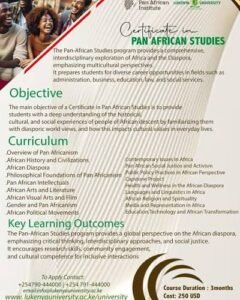
images 35 Download Past Paper On Studies in African Diaspora and Pan-Africanism for Revision

Download Past Paper On Studies in African Diaspora and Pan-Africanism for Revision

Are you looking for Studies in African Diaspora and Pan-Africanism...