Let’s be honest: our smartphones know more about us than our closest friends do. They track our location, store our secrets, and connect us to the world through invisible wireless threads. Mobile and Wireless Forensics and Security is the unit where you learn how to protect those threads—and how to untangle them when a crime has been committed. It is the frontline of modern digital investigation.
Below is the exam paper download link
Past Paper On Mobile And Wireless Forensics And Security For Revision
Above is the exam paper download link
If you’re preparing for your finals, you’ve likely realized that this unit is a complex cocktail of hardware engineering, network protocols, and legal procedures. One minute you’re discussing Physical vs. Logical Acquisition, and the next you’re trying to figure out how to intercept a handshake on a WPA3 network. It is a subject that requires a “detective” brain—one that understands that in the digital world, “deleted” rarely means “gone.”

To help you get into the investigator mindset, we’ve tackled the high-yield questions that define the syllabus. Plus, we’ve provided a direct link to download a full Mobile and Wireless Forensics and Security revision past paper at the bottom of this page.
Your Forensic Revision: The Questions That Define the Investigation
Q: What is the difference between “Manual,” “Logical,” and “Physical” Acquisition? This is the foundation of mobile forensics. Manual acquisition is just scrolling through the phone and taking pictures. Logical acquisition copies the files the operating system “sees” (like your photos or contacts). Physical acquisition is the gold standard; it creates a bit-for-bit copy of the entire flash memory, including deleted data and hidden partitions. In an exam, if you’re asked how to recover a deleted WhatsApp message, you’re looking for a physical acquisition.
Q: Why is the “Faraday Bag” the first tool a forensic examiner reaches for? A mobile phone is a moving target. If it stays connected to a network, it can be remotely wiped by a suspect or receive new data that overwrites evidence. A Faraday Bag blocks all incoming and outgoing wireless signals (cellular, Wi-Fi, Bluetooth). If a past paper asks how to maintain Chain of Custody and prevent data alteration, isolation is your first step.
Q: What are the security vulnerabilities of “Public Wi-Fi,” and how does WPA3 fix them? Wireless signals are broadcast through the air for anyone to “sniff.” Older protocols like WEP or WPA2 are vulnerable to “Deauthentication attacks” and “Dictionary attacks.” WPA3 introduces Simultaneous Authentication of Equals (SAE), which makes it much harder for hackers to crack passwords even if they are weak.
Q: How do forensic investigators bypass a locked smartphone? This is where the “Security” side meets “Forensics.” Examiners use techniques like NAND Mirroring (copying the memory chip to try infinite password guesses) or exploiting vulnerabilities in the Bootloader. In your revision, make sure you understand the difference between File-Based Encryption (FBE) and Full-Disk Encryption (FDE)—it dictates whether an investigator can see anything without that passcode.


Strategy: How to Use the Past Paper for Maximum Gain
Don’t just memorize definitions; act like you’re in the lab. If you want to move from a passing grade to an A, follow this “Special Agent” protocol:
-
The Evidence Log Drill: Take a scenario from the past paper (e.g., “A phone is found submerged in water at a crime scene”). Practice writing the First Responder steps. How do you dry it without damaging the chips? How do you document the state of the device?
-
The Protocol Audit: Look for questions about GSM vs. CDMA or LTE security. Practice explaining how a “Stingray” (IMSI Catcher) works to intercept mobile traffic.
-
The Legal Check: Be ready to define Daubert policy-page-at-mpya-news/" title="Standards">Standards or the Fourth Amendment (or local equivalents). In forensics, if you collect evidence illegally, it doesn’t matter how “guilty” it looks—it won’t stand up in court.
Ready to Secure the Evidence?
Mobile and Wireless Forensics and Security is a discipline of absolute precision and technical bravery. It is the art of finding the truth in a world of encrypted signals and locked screens. By working through a past paper, you’ll start to see the recurring patterns—the specific ways that acquisition methods, wireless vulnerabilities, and legal standards are tested year after year.
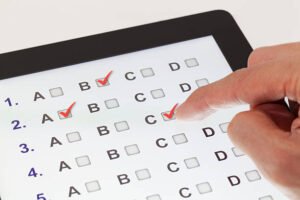
We’ve curated a comprehensive revision paper that covers everything from SIM Card Anatomy and SQLite Database Analysis to Zigbee Security and Cloud Forensic integration.
Back to Mpya News Home page: Education, Fashion, Law, business and sports
Last updated on: March 14, 2026
New information gained / new value takehome
- Let’s be honest: our smartphones know more about us than our closest friends do.
- They track our location, store our secrets, and connect us to the world through invisible wireless threads.
- Mobile and Wireless Forensics and Security is the unit where you learn how to protect those threads—and how to untangle them when a crime has been committed.
- It is the frontline of modern digital investigation.
- Below is the exam paper download link Past Paper On Mobile And Wireless Forensics And Security For Revision Above is the exam paper download linkRelated Read: Download PDF Past Paper On Labour Economics For Revision If you’re preparing for your finals, you’ve likely realized that this unit is a complex cocktail of hardware engineering, network protocols, and legal procedures.
This content was developed using AI as part of our research process. To ensure absolute accuracy, all information has been rigorously fact-checked and validated by our human editor, Alex Munene.
External resource 1: Google Scholar Academic Papers
External resource 2: Khan Academy Test Prep
Reference 1: KNEC National Examinations
Reference 2: JSTOR Academic Archive
Reference 3: Shulefiti Revision Materials
Photo credit: instagram.com