If you’ve ever looked at a word like “antidisestablishmentarianism” and wondered how on earth we got there, you’re already practicing Morphology. In the world of linguistics, morphology is the study of the internal structure of words—the “atoms” and “molecules” that combine to create meaning.
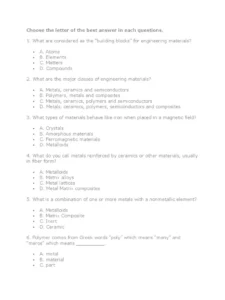
Below is the exam paper download link
Past Paper On a study Of English Morphology For Revision
Above is the exam paper download link
However, moving from casual observation to academic analysis is a steep climb. You have to juggle free and bound morphemes, distinguish between derivational and inflectional processes, and solve the riddle of allomorphy. The most effective way to stop feeling overwhelmed is to move away from the theory books for a moment and look at the actual puzzles examiners set.
To help you find your footing, we’ve put together a specialized Q&A session based on common exam hurdles, followed by a link to download a full revision paper.
Master the Structure: Revision Q&A
Q1: What is the fundamental difference between a “Morpheme” and a “Morphe”?
A: This is a classic “Section A” trick question.
-
Morpheme: This is the abstract, mental concept of the smallest unit of meaning. For example, the idea of “plurality.”
-
Morph: This is the actual physical shape that represents that morpheme in speech or writing. In an exam, you’ll likely be asked to provide examples of how one morpheme (like the past tense) can be realized by different morphs (like /-ed/ in walked or /-t/ in slept).
Q2: How do “Inflectional” and “Derivational” morphemes differ in their impact on a word?
A: Think of Inflectional morphemes as “maintenance.” They change the grammatical form (like adding -s to make a word plural) but never change the part of speech. Derivational morphemes are “builders.” They create new words, often changing the category (like adding -ness to the adjective kind to make it the noun kindness). Examiners love asking you to categorize suffixes in a provided paragraph.
Q3: What is “Allomorphy,” and can you provide a common English example?
A: Allomorphy occurs when a single morpheme has multiple pronunciations depending on the sounds around it. A perfect example is the English plural suffix /-s/.
-
In cats, it sounds like /s/.
-
In dogs, it sounds like /z/.
-
In buses, it sounds like /ɪz/. Identifying these phonologically conditioned variations is a high-mark area in most morphology papers.
Q4: Explain “Back-formation” versus “Clipping” in word formation processes.
A: These are often confused. Clipping is simply shortening a word without changing its meaning or part of speech (e.g., advertisement becomes ad). Back-formation is more complex; it involves “deleting” a supposed affix to create a new word. For example, the noun editor existed before the verb edit. People assumed -or was a suffix and stripped it away to create the verb.
Why You Should Practice with This Past Paper
In a Morphology exam, the examiner isn’t just looking for definitions; they want to see Morphological Trees. Here is why downloading the resource below is a game-changer:
-
Tree Diagram Precision: You will likely be asked to “Draw a tree diagram for the word unhappiness.” Practicing this helps you understand the hierarchy—did the un- attach to happy first, or did -ness attach to happy first?
-
Root vs. Stem vs. Base: Can you identify the difference? A past paper forces you to label these correctly in complex words.
-
Timing the Analysis: Linguistic analysis takes time. Practicing with a real paper helps you learn how to break down a word into its constituent parts without getting stuck on one tricky prefix.
Your Free Revision Resource
Ready to stop “guessing” and start “analyzing”? We have curated a comprehensive Study of English Morphology Past Paper to help you test your structural knowledge and analytical speed.
[Download: English Morphology Revision Past Paper (PDF)]
(Pro-tip: When revising, don’t just look at English! Try to find a few examples of “Infixes” or “Circumfixes” from other languages. Even if the exam is on English, understanding how other languages build words will make your understanding of the universal principles of morphology much deeper.)

Final Thoughts
Morphology is the architectural plan of our language. By mastering these papers, you are learning how to take words apart and see exactly how they function. Download the paper, grab your highlighters, and start mapping out those word trees.
Back to Mpya News Home page: Education, Fashion, Law, business and sports
Last updated on: January 28, 2026
New information gained / new value takehome
- ” They create new words, often changing the category (like adding -ness to the adjective kind to make it the noun kindness).
- A: Allomorphy occurs when a single morpheme has multiple pronunciations depending on the sounds around it.
- Back-formation is more complex; it involves “deleting” a supposed affix to create a new word.
- [Download: English Morphology Revision Past Paper (PDF)] (Pro-tip: When revising, don’t just look at English!
- Back to Mpya News Home page: Education, Fashion, Law, business and sports Last updated on: January 28, 2026Mpya News Sitemap .
- News Education Rankings Reference 2: SNHU Distance Learning Reference 3: GCU University Programs Photo credit: instagram.
This content was developed using AI as part of our research process. To ensure absolute accuracy, all information has been rigorously fact-checked and validated by our human editor, Collins Murithi.