Let’s be honest: knowing how to calculate the escape velocity of a rocket is one thing, but explaining the concept of “Inertia” to a room full of teenagers who think Physics is a foreign language is a completely different challenge. If you are a student-teacher, Physics Subject Methods is the unit that bridges that gap. It’s where you stop being just a scientist and start being an architect of understanding.
Below is the exam paper download link
Past Paper on Physics Subject Methods For Revision
Above is the exam paper download link
The syllabus for Physics pedagogy is notoriously dense. It demands that you not only master the laws of thermodynamics but also the psychological theories of how students perceive those laws. To move from a state of “information overload” to exam-readiness, you need to see how these theories are applied in a testing environment.
To help you get into the right headspace, we’ve put together a specialized Q&A session based on high-frequency exam themes, followed by a link to download a full revision paper.
The Pedagogy of Force and Motion: Revision Q&A
Q1: What is the “Discovery Method” in Physics, and why is it superior for teaching electricity?
A: The discovery method (or inquiry-based learning) puts the student in the role of the investigator. Instead of drawing a circuit diagram on the board and asking them to memorize it, you give them a battery, a bulb, and some wires. By letting them find out what makes the bulb light up, you are fostering “active learning.” In an exam, emphasize that this leads to better conceptual retention than a standard lecture.
Q2: How do you handle “Mathematical Phobia” in a Physics classroom?
A: This is a common “affective domain” question. Examiners look for strategies like:
-
Scaffolding: Breaking a multi-step problem (like projectile motion) into smaller, manageable chunks.
-
Physicalization: Using real-world analogies, like comparing voltage to water pressure in a pipe.
-
Concept First: Teaching the physical principle qualitatively before introducing the mathematical formula.
Q3: What are the safety protocols for a practical involving “Radioactive Sources”?
A: Safety is a non-negotiable area in Physics methods. A high-scoring answer must mention:
-
Time, Distance, and Shielding: Minimizing exposure time, maximizing distance using long forceps, and using lead-lined containers.
-
Source Management: Never pointing the source at anyone and ensuring it is signed in and out of a secure locker.
Q4: Why is “Set Induction” crucial for a topic like ‘Static Electricity’?
A: Set induction is your “hook.” In Physics, this is best done with a startling demonstration—like using a Van de Graaff generator to make someone’s hair stand on end. This creates “Cognitive Conflict,” where the student’s curiosity is piqued because they see something they cannot yet explain, making them much more receptive to the subsequent lesson.
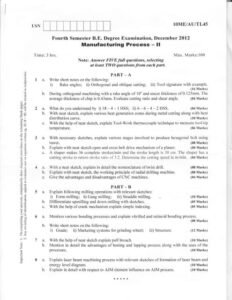
Why You Should Practice with This Past Paper
In a Physics Methods paper, the examiner isn’t checking your ability to solve for $V = IR$; they are checking your Instructional Design. Here is why downloading the resource below is a game-changer:
-
Mastering the Lesson Plan: You will almost certainly be asked to “Draft a 40-minute lesson on [Topic X].” Practicing this ensures you include the Rationale, Objectives, and Evaluation sections.
-
Identifying High-Mark Skills: Notice how many marks are allocated to “Instructional Aids.” Past papers teach you to suggest simulations (like PhET), stroboscopes, or ticker-timer tapes.
-
Bloom’s Taxonomy: You will learn how to write questions that move students from “Remembering” (stating Newton’s Laws) to “Creating” (designing an experiment to prove them).
Your Free Revision Resource
Ready to stop “reading about teaching” and start “preparing to teach”? We have curated a high-standard Physics Subject Methods Past Paper to help you refine your pedagogical approach and boost your exam confidence.
[Download: Physics Subject Methods Revision Past Paper (PDF)]
(Pro-tip: When revising, practice sketching “Ray Diagrams” or “Magnetic Field Lines” quickly. Clear, labeled sketches on your exam script are a surefire way to show the marker you have mastered the art of visual instruction!)

Final Thoughts
Physics is the study of how the universe works, and your job is to make that universe less intimidating for your students. By mastering these methods, you are preparing to inspire the next generation of engineers and innovators. Download the paper, test your timing, and walk into that exam room ready to lead.
Back to Mpya News Home page: Education, Fashion, Law, business and sports

Last updated on: January 27, 2026
New information gained / new value takehome
- ” Practicing this ensures you include the Rationale, Objectives, and Evaluation sections.
- [Download: Physics Subject Methods Revision Past Paper (PDF)] (Pro-tip: When revising, practice sketching “Ray Diagrams” or “Magnetic Field Lines” quickly.
- Back to Mpya News Home page: Education, Fashion, Law, business and sports Last updated on: January 27, 2026Mpya News Sitemap .
- News Education Rankings Reference 2: SNHU Distance Learning Reference 3: GCU University Programs Photo credit: instagram.
This content was developed using AI as part of our research process. To ensure absolute accuracy, all information has been rigorously fact-checked and validated by our human editor, Collins Murithi.