Studying the New Testament at an academic level is vastly different from a Sunday school session. It’s a rigorous academic discipline that involves peeling back layers of history, language, and culture to understand how these 27 books came to be. From the “Q Source” to the “Johannine Problem,” the Critical Study of the New Testament requires a sharp mind and a solid grasp of literary and historical criticism.
Below is the exam paper download link
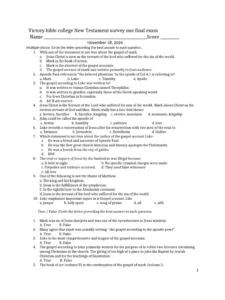
Past Paper On Critical Study Of The New Testament For Revision
Above is the exam paper download link
When the exam room beckons, the challenge isn’t just knowing the parables; it’s being able to analyze the Sitz im Leben (setting in life) of the early church. The most effective way to transition from a reader to a critic is by practicing with past papers. To help you find your footing, we’ve put together a specialized Q&A session based on common exam hurdles, followed by a link to download a full revision paper.
Master the Text: Revision Q&A
Q1: What exactly is the “Synoptic Problem” and why does it keep appearing in exams?
A: This is the “big one” in New Testament studies. It refers to the literary relationship between Matthew, Mark, and Luke. They are so similar in sequence and wording that they must have a shared source. Most scholars use the Two-Source Hypothesis, suggesting that Matthew and Luke used Mark as a template, along with a lost collection of sayings known as “Q” (from the German Quelle). In an exam, you’ll likely be asked to provide evidence for why Mark is considered the earliest Gospel.
Q2: What is the significance of ‘Form Criticism’ (Formgeschichte)?
A: Form criticism looks at the period of oral tradition before the Gospels were written. It tries to identify the specific “shape” or “form” of a passage—like a miracle story, a parable, or a passion narrative—to determine how it was used in the early church. If a question asks about the Sitz im Leben, they are asking you to explain the social and religious situation that gave rise to that specific text.
Q3: How do scholars distinguish between the ‘Authentic’ and ‘Deutero-Pauline’ Epistles?
A: This is about authorship. While 13 letters are attributed to Paul, critical scholars generally agree on seven “undisputed” letters (like Romans and Galatians). The others, such as the Pastoral Epistles (Timothy and Titus), are often debated based on differences in vocabulary, theology, and the complexity of the church structure described. Expect a question asking you to compare the linguistic style of these two groups.
Q4: What is ‘Redaction Criticism’ and how does it help us understand the Evangelists?
A: If Form Criticism looks at the pieces, Redaction Criticism looks at the “editor.” It examines how the Gospel writers (the redactors) altered their sources to suit their specific theological agendas. For example, why does Matthew emphasize the Jewish law more than Luke does? Understanding the unique “theological lens” of each writer is a high-mark area in any paper.
Why You Should Practice with This Past Paper
Theology and Biblical studies require a specific type of critical writing—you must move beyond “devotional” language and use “academic” evidence. Here is why downloading the resource below is a must:
-
Mastering the Jargon: Can you use terms like Eschatology, Hermeneutics, and Exegesis in their proper context? Past papers help you integrate this vocabulary naturally.
-
Structuring the Comparison: Many questions ask you to compare the Christology of the Gospel of John with the Synoptics. Practicing with a past paper helps you learn how to balance these complex comparisons.
-
Managing Your Time: Biblical studies exams are often essay-heavy. Practicing with a timer ensures you don’t spend two hours on the “Synoptic Problem” and leave no time for the “Book of Revelation.”
Download Your Revision Material
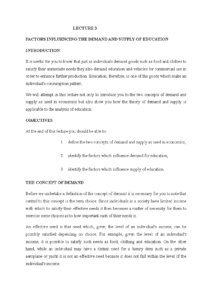
Ready to dive deep into the Greek and the History? We have curated a comprehensive past paper on the Critical Study of the New Testament to help you refine your arguments and broaden your perspective.
[Download: Critical Study of the New Testament Revision Past Paper (PDF)]
(Pro-tip: When revising, try to create a table comparing the four Gospels’ opening and closing scenes. It’s a great way to visualize the unique theological start and finish lines of each writer!)
Final Thoughts
Critical study isn’t about weakening your faith; it’s about strengthening your understanding of the foundational texts of Western civilization. Use this paper to identify where your knowledge is “thin” and go back to your commentaries for those specific chapters.
Back to Mpya News Home page: Education, Fashion, Law, business and sports
Last updated on: January 27, 2026
New information gained / new value takehome
- Studying the New Testament at an academic level is vastly different from a Sunday school session.
- From the “Q Source” to the “Johannine Problem,” the Critical Study of the New Testament requires a sharp mind and a solid grasp of literary and historical criticism.
- A: This is the “big one” in New Testament studies.
- Understanding the unique “theological lens” of each writer is a high-mark area in any paper.
- Practicing with a timer ensures you don’t spend two hours on the “Synoptic Problem” and leave no time for the “Book of Revelation.
- We have curated a comprehensive past paper on the Critical Study of the New Testament to help you refine your arguments and broaden your perspective.
- [Download: Critical Study of the New Testament Revision Past Paper (PDF)] (Pro-tip: When revising, try to create a table comparing the four Gospels’ opening and closing scenes.
- It’s a great way to visualize the unique theological start and finish lines of each writer!
- Back to Mpya News Home page: Education, Fashion, Law, business and sports Last updated on: January 27, 2026Mpya News Sitemap .
- News Education Rankings Reference 2: SNHU Distance Learning Reference 3: GCU University Programs Photo credit: instagram.
This content was developed using AI as part of our research process. To ensure absolute accuracy, all information has been rigorously fact-checked and validated by our human editor, Collins Murithi.
