Studying religion is a journey into the heart of human culture, but the Comparative Study of Religion takes it a step further. It isn’t just about knowing what people believe; it’s about finding the threads that connect the world’s great traditions—and the distinct boundaries that make them unique.
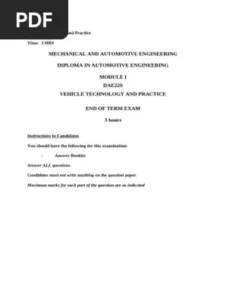
Below is the exam paper download link
Past Paper on Comparative Study Of Religion For Revision
Above is the exam paper download link
Whether you are analyzing the concept of “The Divine,” comparing rites of passage, or looking at different approaches to policy-page-at-mpya-news/" title="Ethics">ethics, the subject matter is vast. When the exam room beckons, the challenge is often how to organize these complex ideas into a coherent essay. This is where past papers become your most valuable scripture.
To help you find your rhythm, we’ve put together a specialized Q&A session based on common exam themes, followed by a link to download a full revision paper.
Understanding Faiths: Key Revision Q&A
Q1: What is the primary focus of a “Comparative” approach to religion?
A: This is a fundamental starting point for any paper. A comparative approach doesn’t aim to prove which religion is “true.” Instead, it looks at the Phenomenology of religion—how different faiths manifest through rituals, myths, doctrines, and social structures. The goal is to identify Universal themes (like the quest for salvation) and Particular expressions (like the specific laws of Kosher or Halal).
Q2: Compare and contrast the concept of ‘Salvation’ in Christianity and ‘Moksha’ in Hinduism.
A: This is a classic essay prompt.
-
In Christianity, salvation is often seen as a gift of grace through faith in Jesus Christ, resulting in eternal life with God.
-
In Hinduism, Moksha is the liberation from Samsara (the cycle of birth and death). It is achieved through knowledge (Jnana), devotion (Bhakti), or right action (Karma), leading to the realization of the soul’s unity with Brahman.
Q3: What are ‘Rites of Passage’ and why are they central to religious studies?
A: Popularized by Arnold van Gennep, rites of passage are ceremonies that mark a person’s transition from one social status to another (e.g., birth, puberty, marriage, and death). In an exam, you should mention the three stages: Separation, Liminality (the in-between state), and Incorporation. Comparing the Jewish Bar Mitzvah to a Christian Confirmation or an African traditional initiation is a great way to demonstrate your comparative skills.
Q4: How do different religions view ‘The Problem of Evil’?
A: This involves the study of Theodicy. For example, Dualistic religions like Zoroastrianism see an equal struggle between good and evil spirits. In contrast, Monotheistic faiths often grapple with how a good God allows suffering, frequently pointing to human “Free Will.” Meanwhile, Eastern traditions like Buddhism might view suffering (Dukkha) as an inherent part of existence caused by attachment.
Why You Should Practice with This Past Paper
Theology and religious studies papers require a specific type of academic writing—you must be objective, respectful, and analytical. Here is why downloading the resource below is a must:
-
Decoding the “Compare” Prompt: When a question says “Compare,” it doesn’t just mean “list the similarities.” It means you must weave the two subjects together throughout your essay. Past papers help you practice this “ping-pong” style of writing.
-
Spotting Recurring Themes: You’ll notice that topics like Religious Pluralism, Sacred Texts, and Secularization appear frequently.
-
Perfecting Your Citations: Whether you are quoting the Quran, the Bible, or the Vedas, practicing how to integrate these texts into an argument is vital for high marks.
Download Your Revision Material
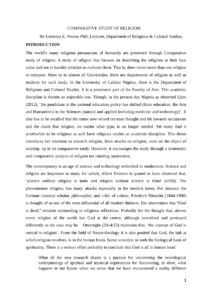
Ready to bridge the gap between different worlds? We’ve provided a comprehensive past paper on the Comparative Study of Religion to help you refine your arguments and broaden your perspective.
[Download: Comparative Study of Religion Revision Past Paper (PDF)]
(Pro-tip: When revising, try to create a table for each major religion with columns for their Origin, Sacred Text, Key Deity, and View of the Afterlife. It makes for a great quick-reference sheet!)
Final Thoughts
The study of religion is ultimately the study of humanity. By mastering the comparative method, you develop a level of cultural intelligence that is valuable far beyond the exam room. Use this paper to identify where your knowledge is “thin” and go back to those specific chapters.
Back to Mpya News Home page: Education, Fashion, Law, business and sports
Last updated on: January 26, 2026
New information gained / new value takehome
- It isn’t just about knowing what people believe; it’s about finding the threads that connect the world’s great traditions—and the distinct boundaries that make them unique.
- Understanding Faiths: Key Revision Q&A Q1: What is the primary focus of a “Comparative” approach to religion?
- In Christianity, salvation is often seen as a gift of grace through faith in Jesus Christ, resulting in eternal life with God.
- Back to Mpya News Home page: Education, Fashion, Law, business and sports Last updated on: January 26, 2026Mpya News Sitemap .
- News Education Rankings Reference 2: SNHU Distance Learning Reference 3: GCU University Programs Photo credit: instagram.
This content was developed using AI as part of our research process. To ensure absolute accuracy, all information has been rigorously fact-checked and validated by our human editor, Collins Murithi.