If you are training to be a technical instructor—whether in Woodwork, Metalwork, Electrical Engineering, or Building Construction—you know that your classroom isn’t just a room; it’s a workshop. Methods of Teaching Technical Subjects is the unit that defines how you transition from being a skilled technician to a skilled educator.
Below is the exam paper download link
Past Paper On Methods Of Teaching Techinical Subjects for Revision
Above is the exam paper download link
The challenge with technical pedagogy is that it requires a unique blend of safety management, demonstration skills, and theoretical assessment. How do you teach a student to weld safely while ensuring they understand the metallurgy behind the spark? To bridge the gap between “knowing” and “teaching,” practicing with past papers is your most reliable tool.
To help you get into the instructor mindset, we’ve put together a specialized Q&A session below, followed by a link to download a full revision paper.
Master the Workshop: Key Revision Q&A
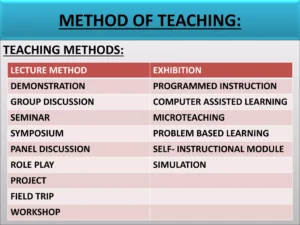
Q1: What is the “Demonstration Method” and why is it the “Gold Standard” in technical education?
A: The Demonstration Method involves the teacher performing a task while students observe, followed by student practice. It is the gold standard because technical subjects are psycho-motor intensive. You cannot learn to use a lathe machine simply by reading a book; you must see the posture, the speed, and the safety precautions in real-time.
Q2: How does Competency-Based Education and Training (CBET) differ from traditional teaching?
A: Traditional teaching often focuses on “Time”—how many hours you sat in class. CBET focuses on “Outcome.” A student only progresses once they can demonstrate a specific skill (competency) to a set industry standard. In your exam, remember to emphasize that CBET is learner-centered and industry-aligned.
Q3: What are the three pillars of “Workshop Management” for a technical teacher?
A: 1. Safety (Occupational Health and Safety): Ensuring all guards are in place and PPE is worn. 2. Tool Maintenance: Implementing a “check-out” system and ensuring tools are sharp and calibrated. 3. Material Control: Budgeting and reducing waste during practical projects.
Q4: How do you assess a “Practical Project” fairly?
A: This is where many student-teachers lose marks. A fair assessment requires a Marking Rubric. You aren’t just looking at the final product; you are marking the process (safety, tool handling), the accuracy (measurements), and the finish (aesthetics and functionality).
Why You Should Practice with This Past Paper
In a technical methods exam, you are often asked to “Prepare a Lesson Plan for a 2-hour Practical.” You cannot wing this. Here is why downloading the resource below is vital:
-
-
Timing the Steps: A 2-hour practical requires precise timing—15 minutes for the intro/demo, 90 minutes for practice, and 15 minutes for clean-up. Past papers help you visualize this flow.
-
Safety Scenarios: Many papers present a scenario (e.g., a student is using a faulty plug) and ask for your immediate instructional response. Practicing these sharpens your “Safety Eye.”
-
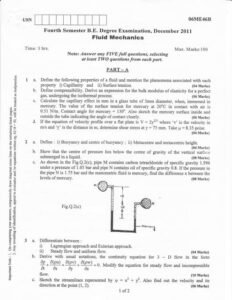
Equipment Identification: Some papers include diagrams of tools or workshop layouts and ask for their pedagogical use. Identifying these early prevents “brain-fade” during the exam.
-
Download Your Revision Material
Ready to move from the theory books to the workshop floor? We have curated a high-quality past paper on Methods of Teaching Technical Subjects that covers instructional objectives, workshop organization, and assessment strategies.
[Download: Methods of Teaching Technical Subjects Past Paper (PDF)]
(Pro-tip: When revising, try drafting a ‘Job Sheet’ for a simple task, like joining two pieces of wood or wiring a simple circuit. It’s a common exam task that carries significant marks!)
Final Thoughts
Technical education is the engine of any developing economy. By mastering the methods of teaching these skills, you are becoming a builder of builders. Use this past paper to identify your weak spots—whether it’s the lesson plan format or the CBET terminology—and walk into that exam hall with confidence.
Back to Mpya News Home page: Education, Fashion, Law, business and sports
Last updated on: January 26, 2026
New information gained / new value takehome
- Master the Workshop: Key Revision Q&A Q1: What is the “Demonstration Method” and why is it the “Gold Standard” in technical education?
- It is the gold standard because technical subjects are psycho-motor intensive.
- It’s a common exam task that carries significant marks!
- Back to Mpya News Home page: Education, Fashion, Law, business and sports Last updated on: January 26, 2026Mpya News Sitemap .
- News Education Rankings Reference 2: SNHU Distance Learning Reference 3: GCU University Programs Photo credit: instagram.
This content was developed using AI as part of our research process. To ensure absolute accuracy, all information has been rigorously fact-checked and validated by our human editor, Collins Murithi.