If you are a student-teacher or an education professional, you know that the modern classroom is no longer just about a chalkboard and a duster. Educational Communication and Information Technology (ECIT) is the bridge that connects traditional teaching methods with the digital age. It’s about understanding how information flows from the teacher to the learner and how tools—from basic flashcards to complex Learning Management Systems (LMS)—can make that flow more effective.
Below is the exam paper download link
Past Paper On Educational Communication And Information Technology For Revision
Above is the exam paper download link
However, when exam time rolls around, the sheer breadth of the syllabus can feel like a digital overload. Are you ready to explain the “Shannon-Weaver model” of communication? Can you justify the use of “Assure” in lesson planning? The best way to move from confusion to clarity is to test yourself with real exam scenarios.
To help you get into the right headspace, we’ve tackled some high-frequency Q&A from recent ECIT modules, followed by a direct link to download a full revision paper.
Master the Tech: ECIT Revision Q&A
Q1: What is the difference between “Technology in Education” and “Educational Technology”?
A: This is a classic “gotcha” question.
-
Technology in Education refers to the hardware—the physical tools like laptops, projectors, and tablets used in a school.
-
Educational Technology is a much broader concept. It is the theory and practice of design, development, utilization, and management of processes and resources for learning. It’s the strategy behind the tools, not just the tools themselves.
Q2: Explain the “Noise” factor in the Communication Process.

A: In the context of the classroom, “noise” isn’t just a loud construction site outside the window. It is any interference that prevents the learner from receiving the message. This can be Physical (loud sounds), Physiological (a hungry or tired student), Psychological (a student’s bias against a subject), or Semantic (the teacher using jargon the student doesn’t understand).
Q3: Why is the “ASSURE” model important for a modern teacher?
A: The ASSURE model is a blueprint for integrating technology into a lesson plan. It stands for:
-
Analyze learners.
-
State objectives.
-
Select methods and media.
-
Utilize media and materials.
-
Require learner participation.
-
Evaluate and revise. Without this structure, tech in the classroom becomes a distraction rather than a tool.
Q4: Mention the advantages of using “Visual Aids” during a lesson.
A: Human beings are visual creatures. Effective visual aids:
-
Increase Retention: Students remember what they see more than what they only hear.
-
Clarify Complex Concepts: A diagram of a cell is much easier to understand than a five-minute verbal description.
-
Encourage Engagement: It breaks the monotony of “talk and chalk.”
Why You Need to Practice with This Past Paper
Reading through your lecture notes gives you a false sense of security. You think you know it until you see it phrased as a “Critically Evaluate” question. Here is why downloading the resource below is a game-changer:
-
Mastering the Terminology: Do you know the difference between Synchronous and Asynchronous learning? Can you define Instructional Design? Past papers help you practice using these terms correctly.
-
Identifying Trends: You’ll notice that questions on the Ethics of ICT (copyright, cyberbullying, and privacy) are becoming much more common in recent years.
-
Structuring Your Answers: Most ECIT papers require you to show how you would apply a specific technology to a specific subject (like using a simulation for a Biology class). Practicing these “application” questions is the only way to score full marks.
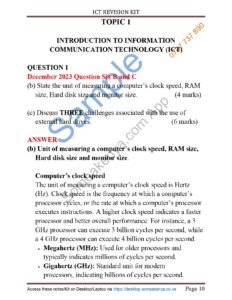
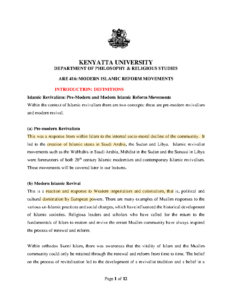
Download Your Revision Material Here
We’ve made it simple. No more hunting through dusty library archives or broken links. Access a comprehensive Educational Communication and Information Technology Past Paper by clicking the link below.
[Download: Educational Communication and IT Revision Past Paper (PDF)]
(Pro-tip: Set a timer for 3 hours, put your phone on ‘Do Not Disturb,’ and attempt this paper in one sitting. It’s the best way to build your exam stamina!)
Final Thoughts
Technology isn’t meant to replace the teacher; it’s meant to empower them. Mastering this unit means you are one step closer to becoming a teacher who can inspire students in any environment—digital or physical.
Back to Mpya News Home page: Education, Fashion, Law, business and sports
Last updated on: January 26, 2026
New information gained / new value takehome
- Getty Images Q3: Why is the “ASSURE” model important for a modern teacher?
- ” Why You Need to Practice with This Past Paper Reading through your lecture notes gives you a false sense of security.
- [Download: Educational Communication and IT Revision Past Paper (PDF)] (Pro-tip: Set a timer for 3 hours, put your phone on ‘Do Not Disturb,’ and attempt this paper in one sitting.
- Back to Mpya News Home page: Education, Fashion, Law, business and sports Last updated on: January 26, 2026Mpya News Sitemap .
- News Education Rankings Reference 2: SNHU Distance Learning Reference 3: GCU University Programs Photo credit: instagram.
This content was developed using AI as part of our research process. To ensure absolute accuracy, all information has been rigorously fact-checked and validated by our human editor, Collins Murithi.