Whether you are a student preparing for national examinations or a university student tackling a regional geography module, The Geography of Kenya is a unit that demands more than just rote memorization. It requires a deep understanding of how our physical landscape—from the Great Rift Valley to the Indian Ocean—shapes our economy, climate, and social structures.
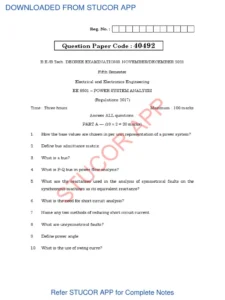
Below is the exam paper download link
Past Paper on The Geography Of Kenya
Above is the exam paper download link
The challenge? The syllabus is vast. You might be asked about the volcanic features of the Central Highlands in one question and the intricacies of the horticultural industry in the next. To help you navigate this policy-for-editorial-content-mpya-news/" title="Diversity">diversity, we’ve put together a conversational Q&A guide, followed by a direct link to download a past paper for your revision.
Deep Dive: Geography of Kenya Revision Q&A
Q1: How did the formation of the Great Rift Valley influence Kenya’s drainage system?
A: This is a classic “Physical Geography” question. The uplift and subsequent faulting created a central trough that redirected many rivers. Some rivers now flow into the floor of the Rift, forming endorheic lakes (lakes with no outlet) like Lake Nakuru and Lake Elementaita. Others, like the Tana and Athi, were forced to find paths toward the Indian Ocean. Understanding the “faulting” process is key to answering this accurately.
Q2: What are the main factors contributing to the growth of the Dairy Industry in the Kenya Highlands?
A: High-scoring answers usually focus on four areas:
-
Climate: Cool, moist conditions ideal for exotic breeds like Friesians.
-
Vegetation: Abundant natural pasture and the ability to grow fodder crops.
-
Market: Proximity to high-population urban centers like Nairobi and Nakuru.
-
Infrastructure: Better road networks and the presence of processing plants (like KCC).
Q3: Explain why the Kenyan coast experiences a “Tropical Marine” climate.
A: It’s all about the influence of the Indian Ocean. The Monsoon Winds (Southeast and Northeast) bring moisture and regulate temperatures, preventing the extreme heat found in the northern deserts. In your exam, remember to mention the “Maritime Influence” and the role of the prevailing winds in determining the rainfall patterns in Mombasa and Malindi.
Q4: What is the significance of the “Blue Economy” to Kenya’s future development?
A: This is a modern “Human Geography” favorite. It refers to the sustainable use of ocean resources. In a Kenyan context, this includes deep-sea fishing, maritime transport through the Port of Lamu (LAPSSET project), tourism, and the potential for offshore oil and gas.
Why You Should Practice with This Past Paper
Reading a textbook gives you the “what,” but a past paper shows you the “how.” Here is why downloading the resource below is a game-changer for your grades:
-
Decoding the Mapwork: Kenyan geography papers almost always include a map of a specific region (like the Magadi or Kericho sheets). Practicing with past papers helps you get used to identifying human-made features versus natural landforms at a glance.
-
Connecting the Dots: Geography is about relationships. A past paper forces you to connect Physical features (like soil type) to Human activities (like tea farming).
-
Managing “Question Choice”: Most papers offer options. Practicing helps you realize whether you are stronger in Physical Geography (rocks, weather, soils) or Human/Economic Geography (population, industry, trade).
Your Free Revision Resource
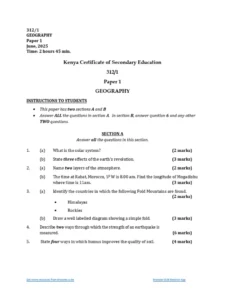
Ready to put your knowledge to the test? We have curated a comprehensive past paper on The Geography of Kenya that covers both physical landscapes and economic activities.
[Download: The Geography of Kenya Revision Past Paper (PDF)]
(Pro-tip: When revising, try to sketch the map of Kenya from memory, marking the major relief features and the 5-major water towers. It’s a great way to visualize the answers before you write them!)
Final Thoughts
Kenya is a land of incredible geographical contrast. Mastering this subject isn’t just about passing an exam; it’s about understanding the environment we live in. Use this past paper to find your weak spots, then go back to your notes and fill in the gaps.
Back to Mpya News Home page: Education, Fashion, Law, business and sports
Last updated on: January 26, 2026
New information gained / new value takehome
- Understanding the “faulting” process is key to answering this accurately.
- [Download: The Geography of Kenya Revision Past Paper (PDF)] (Pro-tip: When revising, try to sketch the map of Kenya from memory, marking the major relief features and the 5-major water towers.
- Use this past paper to find your weak spots, then go back to your notes and fill in the gaps.
- Back to Mpya News Home page: Education, Fashion, Law, business and sports Last updated on: January 26, 2026Mpya News Sitemap .
- News Education Rankings Reference 2: SNHU Distance Learning Reference 3: GCU University Programs Photo credit: instagram.
This content was developed using AI as part of our research process. To ensure absolute accuracy, all information has been rigorously fact-checked and validated by our human editor, Collins Murithi.