There is a common saying in student circles: “I wish school taught me how to actually live.” Well, if you are enrolled in a Life Skills in Education course, that is exactly what you are doing. Unlike a traditional history or chemistry class, this subject isn’t just about passing an exam; it’s about surviving the real world with your sanity and relationships intact.
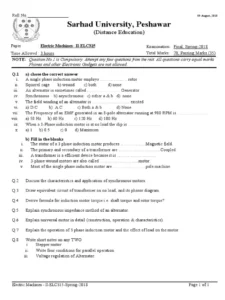
Below is the exam paper download link
Past Paper on Life Skills in Education for Revision
Above is the exam paper download link
However, come finals week, the “common sense” nature of the subject can be deceptive. Many students fail to realize that Life Skills has its own formal vocabulary and psychological frameworks. To bridge the gap between “knowing what to do” and “knowing how to answer the examiner,” you need to practice.
FAQ: Navigating the Life Skills Curriculum
Q: Why do I need a past paper for a subject that seems so practical? A: Because Life Skills is a “competency-based” subject. An examiner won’t just ask, “Is stress bad?” They will ask you to evaluate specific stress-management strategies or analyze the impact of low self-esteem on academic performance. A past paper helps you move from general opinions to structured, academic responses that earn marks.
Q: What are the “Big Five” topics that always appear in these exams? A: Regardless of your specific school or college, these core pillars of the WHO-recommended curriculum are high-yield:
-
Self-Awareness & Self-Esteem: Identifying your strengths and recognizing the triggers for low self-confidence.
-
Empathy & Relationships: Distinguishing between sympathy and empathy, and managing peer pressure.
-
Effective Communication: Understanding non-verbal cues and practicing assertiveness over aggression.
-
Decision-Making & Problem-Solving: Learning the steps of a rational decision-making model.
-
Coping with Emotions & Stress: Identifying the physiological signs of stress and the healthy “outlets” for intense emotions.
Q: How do I answer “Situational Questions” without sounding vague? A: Past papers often use case studies—for example, “Anyango is being bullied and has started skipping class. What life skills should she apply?” To answer this, don’t just say “she should be brave.” Instead, use the formal terms: “Anyango needs to practice assertive communication and use conflict resolution strategies while seeking support from a mentor to boost her self-efficacy.”
Q: Can Life Skills revision actually help me in my other subjects? A: Absolutely. Revision topics like Time Management and Creative Thinking are universal. When you study a Life Skills past paper, you are essentially learning how to be a better student. The critical thinking skills you sharpen here will help you analyze a poem in English or a complex theory in Science.
Get Your Revision Underway
The best time to start was yesterday; the second best time is right now. Don’t wait until the exam room to realize you don’t know the formal definition of “Negotiation” or “Interpersonal Relationships.”
[Click Here to Download the Life Skills in Education Exam Past Paper & Revision Guide]
Quick Tip: Try role-playing the situational questions with a friend. If you can explain a conflict resolution strategy out loud, you can definitely write it down on paper!
Back to Mpya News Home page: Education, Fashion, Law, business and sports
Last updated on: January 26, 2026
External resource 1: Coursera Online Degrees
External resource 2: edX Professional Programs
Reference 1: U.S. News Education Rankings
Reference 2: SNHU Distance Learning
Reference 3: GCU University Programs
Photo credit: instagram.com
New information gained / new value takehome
- A: Because Life Skills is a “competency-based” subject.
- When you study a Life Skills past paper, you are essentially learning how to be a better student.
- ” [Click Here to Download the Life Skills in Education Exam Past Paper & Revision Guide] Quick Tip: Try role-playing the situational questions with a friend.
- Back to Mpya News Home page: Education, Fashion, Law, business and sports Last updated on: January 26, 2026Mpya News Sitemap .
- News Education Rankings Reference 2: SNHU Distance Learning Reference 3: GCU University Programs Photo credit: instagram.
This content was developed using AI as part of our research process. To ensure absolute accuracy, all information has been rigorously fact-checked and validated by our human editor, Alex Munene.