Rosa Parks:  Is often remembered as the woman who refused to give up her bus seat, sparking the Montgomery Bus Boycott and igniting the Civil Rights Movement. While this act is undoubtedly a pivotal moment in her life, Rosa Parks’s legacy extends far beyond that singular event. In this blog, we’ll delve into 13 aspects that contribute to the multifaceted fame of Rosa Parks.

Rosa-Parks-bus-Montgomery-Alabama-1956

1. The Montgomery Bus Boycott Pioneer:

Rosa Parks became a symbol of resistance when, on December 1, 1955, she refused to yield her seat to a white man on a segregated bus. This act of civil disobedience set in motion the Montgomery Bus Boycott, a year-long protest that eventually led to the desegregation of public transportation in Montgomery, Alabama.

2. Long-time NAACP Activist:

Before the bus boycott, Parks was an active member of the National Association for the Advancement of Colored People (NAACP). Her dedication to civil rights started long before her famous bus stand, as she worked as a secretary for the NAACP in Montgomery.

3. Champion for Voting Rights:

Parks played a crucial role in the Voter Education Project, a campaign focused on registering African Americans to vote. Her commitment to ensuring equal voting rights was instrumental in the broader fight against racial discrimination.

4. Educational Advocate:

Parks recognized the importance of education in overcoming systemic racism. She worked as a youth adviser for the NAACP, encouraging young people to pursue their education and resist the inequalities they faced.

5. Inspirational Speaker:

Throughout her life, Rosa Parks delivered powerful speeches on civil rights, encouraging others to stand up against injustice. Her eloquence and passion inspired generations of activists and ordinary individuals alike.

6. The Rosa and Raymond Parks Institute for Self-Development:

Parks co-founded the Rosa and Raymond Parks Institute for Self-Development, an organization committed to educating young people about their history and inspiring them to reach their full potential.

7. Presidential Medal of Freedom Recipient:

In 1996, Rosa Parks was awarded the Presidential Medal of Freedom, the highest civilian honor in the United States, by President Bill Clinton. This recognition highlighted her lifelong commitment to social justice.

8. Author and Memoirist:

Parks wrote her autobiography, “Rosa Parks: My Story,” in which she reflected on her life and the struggles for civil rights. Through her writing, she shared her experiences and provided a personal perspective on the challenges faced by African Americans.

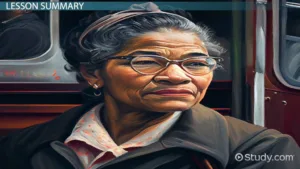
Rosa-Parks-bus-Montgomery-Alabama-1956

9. International Symbol of Freedom:

Rosa Parks’s impact wasn’t confined to the United States. Her courageous act resonated globally, making her an international symbol of freedom and resistance against oppression.

10. Statue in the U.S. Capitol:

In 2013, Rosa Parks became the first African American woman to be honored with a statue in the U.S. Capitol. The statue stands as a tribute to her contributions to the civil rights movement and the enduring fight for equality.

11. Legacy in Music and Film:

Rosa Parks’s story has been immortalized in various forms of art. Numerous songs and films, including the famous song “Rosa Parks” by OutKast, pay homage to her indomitable spirit and the impact of her actions.

12. Human Rights Activist:

Parks extended her activism beyond racial issues and became an advocate for broader human rights causes. She spoke out against apartheid in South Africa and supported various international struggles for justice.

13. Symbol of Strength and Resilience:

Above all, Rosa Parks is celebrated as a symbol of strength, resilience, and the power of one individual to spark transformative change. Her legacy endures as a reminder that ordinary people can have an extraordinary impact on the course of history.

Conclusion:

Rosa Parks’s fame extends far beyond the bus seat incident, encompassing a lifetime of activism and advocacy for civil rights. By exploring these 13 facets of her remarkable life, we gain a more comprehensive understanding of the woman behind the iconic image, a woman whose courage and commitment to justice left an indelible mark on the world.
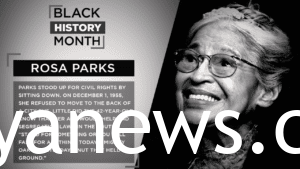
10132760_012921-ktrk-BHM-Rosa-Parks.png

PHOTO CREDIT

OTHER ARTICLES OF THE DAY

WRITTEN  BY ALEX

FAQs and answers

1. What Is Rosa Parks Most Famous For?

Rosa Parks is most famous for her role in the American Civil Rights Movement, particularly for her act of defiance on December 1, 1955, when she refused to give up her seat to a white man on a segregated bus in Montgomery, Alabama. Her arrest sparked the Montgomery Bus Boycott, a pivotal event in the movement that led to the desegregation of public buses.

Reference: History.com – Rosa Parks


2. Why Did Rosa Parks Refuse to Give Up Her Seat?

Rosa Parks refused to give up her seat as an act of protest against the unjust laws of racial segregation that were deeply embedded in the Southern United States. By not complying with the bus driver’s order, she became a symbol of resistance to institutionalized racism.

Reference: National Women’s History Museum – Rosa Parks


3. How Did Rosa Parks’ Arrest Affect the Civil Rights Movement?

Rosa Parks’ arrest sparked the Montgomery Bus Boycott, which lasted for over a year. The boycott, led by figures such as Dr. Martin Luther King Jr., eventually resulted in a Supreme Court ruling that declared segregation on public buses unconstitutional. This event became a catalyst for the larger Civil Rights Movement.

Reference: National Archives – Rosa Parks


4. Was Rosa Parks the First Person to Refuse to Give Up Her Seat?

No, Rosa Parks was not the first person to resist segregation laws on public buses. Prior to Parks, several individuals, including Claudette Colvin, had been arrested for similar acts. However, Parks’ case gained national attention due to her involvement in the larger movement and her status as a respected member of the community.

Reference: PBS – Rosa Parks: Biography


5. What Other Contributions Did Rosa Parks Make to the Civil Rights Movement?

Apart from her involvement in the Montgomery Bus Boycott, Rosa Parks continued to fight for civil rights throughout her life. She worked alongside other activists to combat racial inequality in the workplace, education, and housing. Parks also worked as a secretary for the NAACP and was active in various protests and campaigns.

Reference: Biography – Rosa Parks


6. When Was Rosa Parks Awarded the Congressional Gold Medal?

Rosa Parks was awarded the Congressional Gold Medal in 1999, in recognition of her courageous act of defiance and her lasting impact on the Civil Rights Movement. This honor is one of the highest awards given by the United States Congress.

Reference: The Library of Congress – Congressional Gold Medal


7. How Did Rosa Parks’ Legacy Impact Future Generations?

Rosa Parks’ legacy continues to inspire generations of individuals fighting for justice and equality. Her act of courage in the face of racial segregation helped pave the way for the Civil Rights Act of 1964 and the Voting Rights Act of 1965. She remains a symbol of dignity, strength, and resistance.

Reference: Rosa Parks Foundation

Back to Mpya News Home page: Education, Fashion, Law, business and sports

Last updated on: February 13, 2025

New information gained / new value takehome

  • Rosa Parks:  Is often remembered as the woman who refused to give up her bus seat, sparking the Montgomery Bus Boycott and igniting the Civil Rights Movement.
  • While this act is undoubtedly a pivotal moment in her life, Rosa Parks’s legacy extends far beyond that singular event.
  • In this blog, we’ll delve into 13 aspects that contribute to the multifaceted fame of Rosa Parks.
  • 1.
  • The Montgomery Bus Boycott Pioneer: Rosa Parks became a symbol of resistance when, on December 1, 1955, she refused to yield her seat to a white man on a segregated bus.
Verified Content

This content was developed using AI as part of our research process. To ensure absolute accuracy, all information has been rigorously fact-checked and validated by our human editor, mpyanews.

External resource 1: BBC World News Coverage

External resource 2: Reuters Global Agency

Reference 1: The New York Times International

Reference 2: Al Jazeera News Updates

Reference 3: Associated Press Official


Photo credit: instagram.com

About

Mpya News is the winner of global website of the year

Latest Posts

Download Past Past Ujifunzaji wa Lugha ya Pili For Revision

Are you looking for Ujifunzaji wa Lugha ya Pili past...

Download Past Paper On Educational Communication and Information Technology For Revision

Educational Communication and Information Technology is an important subject for...

Educational Communication and Information Technology is an essential subject for students pursuing education and teaching-related courses. It explores how communication skills, instructional resources, and modern technologies contribute to effective teaching and learning. Students preparing for examinations can use Educational Communication and Information Technology past papers alongside lecture notes, textbooks, and revision questions to strengthen their understanding. What is Educational Communication and Information Technology? Educational Communication and Information Technology refers to the application of communication principles and technological tools in educational settings. It helps teachers deliver information effectively and enables learners to access, process, and share knowledge through different channels. The subject includes communication processes, instructional media, computer applications, internet services, multimedia, e-learning, and digital educational resources. Why are Educational Communication and Information Technology past papers important? Past papers help students practise answering examination questions and become familiar with different question formats. They can also help learners identify areas that need more revision and improve their ability to manage examination time. Practising Educational Communication and Information Technology past exam papers alongside course notes can make preparation more organised. Which topics should students revise? Students should revise the main topics covered in their syllabus. These may include: Meaning and importance of communication in education Elements and models of communication Barriers to effective communication Verbal and non-verbal communication Instructional media and teaching aids Computer applications in education Internet services and digital learning resources Multimedia and e-learning Educational broadcasting Advantages and challenges of educational technology These topics provide a useful starting point for Educational Communication and Information Technology revision questions. What is the communication process? The communication process involves the exchange of information between a sender and a receiver. The sender develops a message, selects a channel, and transmits the information. The receiver interprets the message and may provide feedback. In a classroom, for example, a teacher explains a concept, learners listen and interpret the information, and their questions or responses provide feedback. What are the main elements of communication? The main elements include the sender, message, encoding, channel, receiver, decoding, feedback, and context. Noise can interfere with the process and affect understanding. Students should know the functions of these elements because they are useful when answering Educational Communication and Information Technology exam questions. What is the difference between verbal and non-verbal communication? Verbal communication uses spoken or written words to convey information. Examples include classroom discussions, lectures, textbooks, and written instructions. Non-verbal communication involves conveying meaning through gestures, facial expressions, posture, eye contact, and other visual signals. Teachers often use both forms to explain concepts and interact with learners. What are the barriers to effective communication? Communication barriers are factors that prevent a message from being transmitted or understood clearly. Examples include language differences, poor listening, unclear explanations, excessive classroom noise, cultural differences, and technical difficulties. Teachers can reduce these barriers by using clear language, encouraging questions, choosing suitable communication channels, and checking learners’ understanding. What is instructional media? Instructional media refers to materials and resources used to support teaching and learning. Examples include charts, diagrams, maps, models, photographs, audio recordings, videos, projectors, and computers. The appropriate teaching aid depends on the lesson objectives, subject content, learners’ needs, and available resources. How does information technology support education? Information technology supports education by helping users create, store, process, retrieve, and share information. Computers, mobile devices, digital platforms, and internet services can support research, classroom teaching, communication, assessment, and access to learning materials. However, effective use requires suitable resources, digital skills, and appropriate planning. What is e-learning? E-learning is the delivery or support of learning through electronic and digital technologies. It may involve virtual classrooms, online lessons, learning management systems, electronic textbooks, recorded lectures, and online assignments. Students preparing Educational Communication and Information Technology questions and answers should understand the meaning, benefits, and limitations of e-learning. What are the advantages and disadvantages of educational technology? Educational technology can improve access to information, support interactive lessons, encourage collaboration, and provide flexible learning opportunities. It can also help teachers present complex concepts through images, audio, and video. Possible disadvantages include high equipment costs, unreliable internet connections, unequal access to devices, technical problems, and distractions. Students should be able to discuss both benefits and challenges. How can students use past papers effectively? Students should attempt Educational Communication and Information Technology past papers before looking at their notes. After completing a paper, they can review mistakes, revisit difficult topics, and practise similar questions. Searching for Educational Communication and Information Technology past papers PDF can help students locate additional revision resources through authorised educational sources. How should students answer examination questions? Students should read each question carefully and identify the instruction. Words such as “define,” “explain,” “discuss,” “outline,” and “compare” require different responses. For essay questions, students should introduce the topic, explain each main point clearly, provide relevant examples where appropriate, and finish with a conclusion. Conclusion Preparing with Educational Communication and Information Technology past papers, exam questions, revision notes, and textbooks can help students develop a better understanding of the subject. Consistent revision and timed practice can improve knowledge, answer organisation, and examination skills.Educational Communication and Information Technology is an essential subject for students pursuing education and teaching-related courses. It explores how communication skills, instructional resources, and modern technologies contribute to effective teaching and learning. Students preparing for examinations can use Educational Communication and Information Technology past papers alongside lecture notes, textbooks, and revision questions to strengthen their understanding. What is Educational Communication and Information Technology? Educational Communication and Information Technology refers to the application of communication principles and technological tools in educational settings. It helps teachers deliver information effectively and enables learners to access, process, and share knowledge through different channels. The subject includes communication processes, instructional media, computer applications, internet services, multimedia, e-learning, and digital educational resources. Why are Educational Communication and Information Technology past papers important? Past papers help students practise answering examination questions and become familiar with different question formats. They can also help learners identify areas that need more revision and improve their ability to manage examination time. Practising Educational Communication and Information Technology past exam papers alongside course notes can make preparation more organised. Which topics should students revise? Students should revise the main topics covered in their syllabus. These may include: Meaning and importance of communication in education Elements and models of communication Barriers to effective communication Verbal and non-verbal communication Instructional media and teaching aids Computer applications in education Internet services and digital learning resources Multimedia and e-learning Educational broadcasting Advantages and challenges of educational technology These topics provide a useful starting point for Educational Communication and Information Technology revision questions. What is the communication process? The communication process involves the exchange of information between a sender and a receiver. The sender develops a message, selects a channel, and transmits the information. The receiver interprets the message and may provide feedback. In a classroom, for example, a teacher explains a concept, learners listen and interpret the information, and their questions or responses provide feedback. What are the main elements of communication? The main elements include the sender, message, encoding, channel, receiver, decoding, feedback, and context. Noise can interfere with the process and affect understanding. Students should know the functions of these elements because they are useful when answering Educational Communication and Information Technology exam questions. What is the difference between verbal and non-verbal communication? Verbal communication uses spoken or written words to convey information. Examples include classroom discussions, lectures, textbooks, and written instructions. Non-verbal communication involves conveying meaning through gestures, facial expressions, posture, eye contact, and other visual signals. Teachers often use both forms to explain concepts and interact with learners. What are the barriers to effective communication? Communication barriers are factors that prevent a message from being transmitted or understood clearly. Examples include language differences, poor listening, unclear explanations, excessive classroom noise, cultural differences, and technical difficulties. Teachers can reduce these barriers by using clear language, encouraging questions, choosing suitable communication channels, and checking learners’ understanding. What is instructional media? Instructional media refers to materials and resources used to support teaching and learning. Examples include charts, diagrams, maps, models, photographs, audio recordings, videos, projectors, and computers. The appropriate teaching aid depends on the lesson objectives, subject content, learners’ needs, and available resources. How does information technology support education? Information technology supports education by helping users create, store, process, retrieve, and share information. Computers, mobile devices, digital platforms, and internet services can support research, classroom teaching, communication, assessment, and access to learning materials. However, effective use requires suitable resources, digital skills, and appropriate planning. What is e-learning? E-learning is the delivery or support of learning through electronic and digital technologies. It may involve virtual classrooms, online lessons, learning management systems, electronic textbooks, recorded lectures, and online assignments. Students preparing Educational Communication and Information Technology questions and answers should understand the meaning, benefits, and limitations of e-learning. What are the advantages and disadvantages of educational technology? Educational technology can improve access to information, support interactive lessons, encourage collaboration, and provide flexible learning opportunities. It can also help teachers present complex concepts through images, audio, and video. Possible disadvantages include high equipment costs, unreliable internet connections, unequal access to devices, technical problems, and distractions. Students should be able to discuss both benefits and challenges. How can students use past papers effectively? Students should attempt Educational Communication and Information Technology past papers before looking at their notes. After completing a paper, they can review mistakes, revisit difficult topics, and practise similar questions. Searching for Educational Communication and Information Technology past papers PDF can help students locate additional revision resources through authorised educational sources. How should students answer examination questions? Students should read each question carefully and identify the instruction. Words such as “define,” “explain,” “discuss,” “outline,” and “compare” require different responses. For essay questions, students should introduce the topic, explain each main point clearly, provide relevant examples where appropriate, and finish with a conclusion. Conclusion Preparing with Educational Communication and Information Technology past papers, exam questions, revision notes, and textbooks can help students develop

Educational Communication and Information Technology is an important subject for...

Download Past Paper On Introduction to the Study of Language For Revision

Are you looking for Introduction to the Study of Language...