Jenna Ortega: Jenna Ortega, the talented actress known for her roles in popular TV shows and movies, has been making headlines not just for her professional accomplishments but also for her intriguing love life. Fans have been curious about the actress’s dating history and current relationship status. In this blog post, we will take a deep dive into Jenna Ortega’s relationship timeline, exploring the highs and lows of her romantic journey. Additionally, we’ll uncover seven interesting facts about the rising star.

Relationship Timeline:

1. Isaak Presley (2019-2020):

Jenna Ortega’s first notable relationship in the public eye was with actor Isaak Presley. The couple was often seen together at events and shared adorable pictures on social media. However, their romance came to an end in 2020, leaving fans speculating about the reasons behind their breakup.

2. Asher Angel (2020):

Following her split from Isaak Presley, Jenna was briefly linked to actor and singer Asher Angel. The pair seemed to enjoy each other’s company, but their romance was short-lived, and both moved on to focus on their respective careers.

Jenna-ortega-dating-history04.web

3. Ben Azelart (2020):

Jenna’s dating life took another turn when she was linked to social media influencer Ben Azelart. The two shared glimpses of their relationship on social media, keeping fans engaged with their sweet moments. However, the couple eventually parted ways, and the reasons behind their breakup remained private.

4. Jordan Fisher (2020-2021):

Rumors circulated about Jenna Ortega and actor Jordan Fisher being an item after they were spotted together at various events. Despite the speculation, neither confirmed nor denied their relationship. The mystery surrounding their status left fans intrigued, but eventually, the buzz faded away.

5. Ava Jalali (2022):

In a surprising turn of events, Jenna Ortega was spotted spending time with Ava Jalali, a model and social media influencer. The two appeared to be close, sparking rumors about a potential romantic relationship. However, Jenna and Ava have maintained privacy about their personal lives, leaving fans to speculate about the nature of their connection.

jenna-ortega-and-asher-angel-arrive-at-the-premiere-of-news-photo-1676481074-scaled.web

Interesting Facts:

1. Early Start in Acting:

Jenna Ortega’s passion for acting emerged at a young age. Born on September 27, 2002, in Coachella Valley, California, she began her career with small roles before landing breakthrough roles in popular shows like “Jane the Virgin” and “Stuck in the Middle.”

2. Bilingual Talents:

One of Jenna’s remarkable attributes is her bilingual fluency. The actress is fluent in both English and Spanish, allowing her to navigate roles in projects that cater to diverse audiences seamlessly.

3. Advocate for Mental Health:

Jenna has been an outspoken advocate for mental health awareness. She uses her platform to destigmatize mental health issues, encouraging open conversations and promoting self-care.

4. Authorial Aspirations:

Jenna Ortega is an aspiring author in addition to her acting career. In 2021, she released her debut book, “It’s All Love: Reflections for Your Heart & Soul,” where she shares personal stories, reflections, and advice for young readers.

jenna-ortega-and-asher-angel-arrive-at-the-premiere-of-news-photo-1676481074-scaled.web

5. Philanthropic Endeavors:

Jenna actively participates in philanthropy, supporting various charitable causes. She uses her influence to raise awareness and funds for organizations working towards positive social change.

6. Style Icon:

With a keen sense of fashion, Jenna Ortega has become a style icon for many. Her red carpet appearances and everyday looks often make headlines for their chic appeal.

7. Rising Star:

Despite her young age, Jenna Ortega has already established herself as a rising star in the entertainment industry. Her versatility and talent have garnered critical acclaim, paving the way for a promising career ahead.

jenna-ortega-and-asher-angel-arrive-at-the-premiere-of-news-photo-1676481074-scaled.web

Conclusion:

Jenna Ortega’s journey in the entertainment industry and her romantic endeavors have kept fans intrigued and invested in her life. As she continues to shine onscreen and off, followers eagerly anticipate the next chapter in her personal and professional story. The actress’s openness about her experiences, combined with her advocacy work and talent, makes her a role model for many aspiring artists and fans alike.

PHOTO CREDIT

OTHER ARTICLES OF THE DAY

WRITTEN BY ALEX

FAQs and answers

FAQ 1: Who is Jenna Ortega currently dating?

As of October 2023, Jenna Ortega has not publicly confirmed any romantic relationships. She has kept her personal life private, focusing on her acting career. While there have been rumors and speculation, no official statements or evidence have confirmed her dating status.
Reference: E! Online


FAQ 2: Has Jenna Ortega ever been in a public relationship?

Jenna Ortega has not been in any publicly confirmed relationships. She has often emphasized the importance of privacy and has chosen to keep her romantic life out of the spotlight.
Reference: People Magazine


FAQ 3: What has Jenna Ortega said about dating?

Jenna Ortega has mentioned in interviews that she prioritizes her career and personal growth over dating. She has also expressed her desire to keep her private life separate from her public persona.
Reference: Teen Vogue


FAQ 4: Are there any rumors about Jenna Ortega dating co-stars?

There have been occasional rumors linking Jenna Ortega to her co-stars, such as Percy Hynes White from “Wednesday.” However, these rumors remain unconfirmed, and Jenna has not addressed them publicly.
Reference: Just Jared


FAQ 5: Does Jenna Ortega share details about her personal life on social media?

Jenna Ortega uses social media primarily to connect with fans about her work and advocacy efforts. She rarely shares details about her personal life, including her dating status.
Reference: Instagram – Jenna Ortega


FAQ 6: What are Jenna Ortega’s views on relationships?

Jenna Ortega has stated that she values independence and self-growth. She believes in focusing on her career and personal development before committing to a relationship.
Reference: Seventeen Magazine


FAQ 7: What interesting facts are there about Jenna Ortega’s personal life?

Jenna Ortega is known for her advocacy work, including supporting LGBTQ+ rights and mental health awareness. She is also a talented dancer and has a close-knit relationship with her family, often sharing moments with them on social media.
Reference: BuzzFeed

Back to Mpya News Home page: Education, Fashion, Law, business and sports

Last updated on: February 15, 2025

New information gained / new value takehome

  • Jenna Ortega: Jenna Ortega, the talented actress known for her roles in popular TV shows and movies, has been making headlines not just for her professional accomplishments but also for her intriguing love life.
  • Fans have been curious about the actress’s dating history and current relationship status.
  • In this blog post, we will take a deep dive into Jenna Ortega’s relationship timeline, exploring the highs and lows of her romantic journey.
  • Additionally, we’ll uncover seven interesting facts about the rising star.
  • Relationship Timeline: 1.
Verified Content

This content was developed using AI as part of our research process. To ensure absolute accuracy, all information has been rigorously fact-checked and validated by our human editor, mpyanews.

External resource 1: BBC World News Coverage

External resource 2: Reuters Global Agency

Reference 1: The New York Times International

Reference 2: Al Jazeera News Updates

Reference 3: Associated Press Official


Photo credit: instagram.com

About

Mpya News is the winner of global website of the year

Latest Posts

Download Past Paper On Educational Communication and Information Technology For Revision

Educational Communication and Information Technology is an important subject for...

Educational Communication and Information Technology is an essential subject for students pursuing education and teaching-related courses. It explores how communication skills, instructional resources, and modern technologies contribute to effective teaching and learning. Students preparing for examinations can use Educational Communication and Information Technology past papers alongside lecture notes, textbooks, and revision questions to strengthen their understanding. What is Educational Communication and Information Technology? Educational Communication and Information Technology refers to the application of communication principles and technological tools in educational settings. It helps teachers deliver information effectively and enables learners to access, process, and share knowledge through different channels. The subject includes communication processes, instructional media, computer applications, internet services, multimedia, e-learning, and digital educational resources. Why are Educational Communication and Information Technology past papers important? Past papers help students practise answering examination questions and become familiar with different question formats. They can also help learners identify areas that need more revision and improve their ability to manage examination time. Practising Educational Communication and Information Technology past exam papers alongside course notes can make preparation more organised. Which topics should students revise? Students should revise the main topics covered in their syllabus. These may include: Meaning and importance of communication in education Elements and models of communication Barriers to effective communication Verbal and non-verbal communication Instructional media and teaching aids Computer applications in education Internet services and digital learning resources Multimedia and e-learning Educational broadcasting Advantages and challenges of educational technology These topics provide a useful starting point for Educational Communication and Information Technology revision questions. What is the communication process? The communication process involves the exchange of information between a sender and a receiver. The sender develops a message, selects a channel, and transmits the information. The receiver interprets the message and may provide feedback. In a classroom, for example, a teacher explains a concept, learners listen and interpret the information, and their questions or responses provide feedback. What are the main elements of communication? The main elements include the sender, message, encoding, channel, receiver, decoding, feedback, and context. Noise can interfere with the process and affect understanding. Students should know the functions of these elements because they are useful when answering Educational Communication and Information Technology exam questions. What is the difference between verbal and non-verbal communication? Verbal communication uses spoken or written words to convey information. Examples include classroom discussions, lectures, textbooks, and written instructions. Non-verbal communication involves conveying meaning through gestures, facial expressions, posture, eye contact, and other visual signals. Teachers often use both forms to explain concepts and interact with learners. What are the barriers to effective communication? Communication barriers are factors that prevent a message from being transmitted or understood clearly. Examples include language differences, poor listening, unclear explanations, excessive classroom noise, cultural differences, and technical difficulties. Teachers can reduce these barriers by using clear language, encouraging questions, choosing suitable communication channels, and checking learners’ understanding. What is instructional media? Instructional media refers to materials and resources used to support teaching and learning. Examples include charts, diagrams, maps, models, photographs, audio recordings, videos, projectors, and computers. The appropriate teaching aid depends on the lesson objectives, subject content, learners’ needs, and available resources. How does information technology support education? Information technology supports education by helping users create, store, process, retrieve, and share information. Computers, mobile devices, digital platforms, and internet services can support research, classroom teaching, communication, assessment, and access to learning materials. However, effective use requires suitable resources, digital skills, and appropriate planning. What is e-learning? E-learning is the delivery or support of learning through electronic and digital technologies. It may involve virtual classrooms, online lessons, learning management systems, electronic textbooks, recorded lectures, and online assignments. Students preparing Educational Communication and Information Technology questions and answers should understand the meaning, benefits, and limitations of e-learning. What are the advantages and disadvantages of educational technology? Educational technology can improve access to information, support interactive lessons, encourage collaboration, and provide flexible learning opportunities. It can also help teachers present complex concepts through images, audio, and video. Possible disadvantages include high equipment costs, unreliable internet connections, unequal access to devices, technical problems, and distractions. Students should be able to discuss both benefits and challenges. How can students use past papers effectively? Students should attempt Educational Communication and Information Technology past papers before looking at their notes. After completing a paper, they can review mistakes, revisit difficult topics, and practise similar questions. Searching for Educational Communication and Information Technology past papers PDF can help students locate additional revision resources through authorised educational sources. How should students answer examination questions? Students should read each question carefully and identify the instruction. Words such as “define,” “explain,” “discuss,” “outline,” and “compare” require different responses. For essay questions, students should introduce the topic, explain each main point clearly, provide relevant examples where appropriate, and finish with a conclusion. Conclusion Preparing with Educational Communication and Information Technology past papers, exam questions, revision notes, and textbooks can help students develop a better understanding of the subject. Consistent revision and timed practice can improve knowledge, answer organisation, and examination skills.Educational Communication and Information Technology is an essential subject for students pursuing education and teaching-related courses. It explores how communication skills, instructional resources, and modern technologies contribute to effective teaching and learning. Students preparing for examinations can use Educational Communication and Information Technology past papers alongside lecture notes, textbooks, and revision questions to strengthen their understanding. What is Educational Communication and Information Technology? Educational Communication and Information Technology refers to the application of communication principles and technological tools in educational settings. It helps teachers deliver information effectively and enables learners to access, process, and share knowledge through different channels. The subject includes communication processes, instructional media, computer applications, internet services, multimedia, e-learning, and digital educational resources. Why are Educational Communication and Information Technology past papers important? Past papers help students practise answering examination questions and become familiar with different question formats. They can also help learners identify areas that need more revision and improve their ability to manage examination time. Practising Educational Communication and Information Technology past exam papers alongside course notes can make preparation more organised. Which topics should students revise? Students should revise the main topics covered in their syllabus. These may include: Meaning and importance of communication in education Elements and models of communication Barriers to effective communication Verbal and non-verbal communication Instructional media and teaching aids Computer applications in education Internet services and digital learning resources Multimedia and e-learning Educational broadcasting Advantages and challenges of educational technology These topics provide a useful starting point for Educational Communication and Information Technology revision questions. What is the communication process? The communication process involves the exchange of information between a sender and a receiver. The sender develops a message, selects a channel, and transmits the information. The receiver interprets the message and may provide feedback. In a classroom, for example, a teacher explains a concept, learners listen and interpret the information, and their questions or responses provide feedback. What are the main elements of communication? The main elements include the sender, message, encoding, channel, receiver, decoding, feedback, and context. Noise can interfere with the process and affect understanding. Students should know the functions of these elements because they are useful when answering Educational Communication and Information Technology exam questions. What is the difference between verbal and non-verbal communication? Verbal communication uses spoken or written words to convey information. Examples include classroom discussions, lectures, textbooks, and written instructions. Non-verbal communication involves conveying meaning through gestures, facial expressions, posture, eye contact, and other visual signals. Teachers often use both forms to explain concepts and interact with learners. What are the barriers to effective communication? Communication barriers are factors that prevent a message from being transmitted or understood clearly. Examples include language differences, poor listening, unclear explanations, excessive classroom noise, cultural differences, and technical difficulties. Teachers can reduce these barriers by using clear language, encouraging questions, choosing suitable communication channels, and checking learners’ understanding. What is instructional media? Instructional media refers to materials and resources used to support teaching and learning. Examples include charts, diagrams, maps, models, photographs, audio recordings, videos, projectors, and computers. The appropriate teaching aid depends on the lesson objectives, subject content, learners’ needs, and available resources. How does information technology support education? Information technology supports education by helping users create, store, process, retrieve, and share information. Computers, mobile devices, digital platforms, and internet services can support research, classroom teaching, communication, assessment, and access to learning materials. However, effective use requires suitable resources, digital skills, and appropriate planning. What is e-learning? E-learning is the delivery or support of learning through electronic and digital technologies. It may involve virtual classrooms, online lessons, learning management systems, electronic textbooks, recorded lectures, and online assignments. Students preparing Educational Communication and Information Technology questions and answers should understand the meaning, benefits, and limitations of e-learning. What are the advantages and disadvantages of educational technology? Educational technology can improve access to information, support interactive lessons, encourage collaboration, and provide flexible learning opportunities. It can also help teachers present complex concepts through images, audio, and video. Possible disadvantages include high equipment costs, unreliable internet connections, unequal access to devices, technical problems, and distractions. Students should be able to discuss both benefits and challenges. How can students use past papers effectively? Students should attempt Educational Communication and Information Technology past papers before looking at their notes. After completing a paper, they can review mistakes, revisit difficult topics, and practise similar questions. Searching for Educational Communication and Information Technology past papers PDF can help students locate additional revision resources through authorised educational sources. How should students answer examination questions? Students should read each question carefully and identify the instruction. Words such as “define,” “explain,” “discuss,” “outline,” and “compare” require different responses. For essay questions, students should introduce the topic, explain each main point clearly, provide relevant examples where appropriate, and finish with a conclusion. Conclusion Preparing with Educational Communication and Information Technology past papers, exam questions, revision notes, and textbooks can help students develop

Educational Communication and Information Technology is an important subject for...

Download Past Paper On Introduction to the Study of Language For Revision

Are you looking for Introduction to the Study of Language...

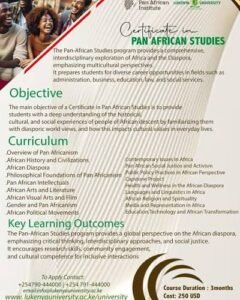
images 35 Download Past Paper On Studies in African Diaspora and Pan-Africanism for Revision

Download Past Paper On Studies in African Diaspora and Pan-Africanism for Revision

Are you looking for Studies in African Diaspora and Pan-Africanism...