Kelly McGillis: In the glittering realm of Hollywood, few names shine as brightly as Kelly McGillis. The celebrated actress, renowned for her captivating performances and timeless charm, has not only left an indelible mark on the silver screen but has also amassed substantial wealth throughout her illustrious career. As we step into 2024, let’s delve into the financial landscape of this iconic actress and explore the top sources contributing to Kelly McGillis’s net worth.

Kelly McGillis in black

The Rise to Stardom

Kelly McGillis first captured the hearts of audiences worldwide with her breakout role in the 1985 classic “Top Gun,” where she starred alongside Tom Cruise. Her compelling portrayal of Charlotte “Charlie” Blackwood catapulted her to international fame, marking the beginning of a career that would span decades.

Kelly McGillis’s Net Worth: A Closer Look

As of 2024, Kelly McGillis’s net worth stands as a testament to her enduring success in the entertainment industry. While specific figures may vary, reputable sources estimate her wealth to be in the multimillion-dollar range. This impressive financial standing is a culmination of her prolific acting career, strategic investments, and various business ventures.

Kelly McGillis looking good

Top Income Sources

1. Acting Career: Kelly McGillis

Undoubtedly, a significant portion of Kelly McGillis’s net worth is derived from her extensive filmography. With a career that spans over three decades, she has graced the screen in a variety of roles across genres. While “Top Gun” remains a pivotal point in her career, McGillis continued to secure leading roles in successful films like “Witness” and “The Accused.”

2. Television Appearances

In addition to her success in film, Kelly McGillis has made noteworthy contributions to the small screen. Television appearances in popular series and made-for-TV movies have not only expanded her fan base but have also added to her financial portfolio.

3. Endorsements and Brand Collaborations: Kelly McGillis

As a recognized figure in the entertainment industry, Kelly McGillis has been sought after by brands for endorsements and collaborations. These lucrative partnerships contribute significantly to her overall net worth.

4. Real Estate Investments

Beyond the realm of entertainment, Kelly McGillis has ventured into real estate investments. Strategic property acquisitions and sales have proven to be a lucrative side venture for the actress, enhancing her financial standing.

Kelly McGillis looking young

5. Entrepreneurial Pursuits: Kelly McGillis

Her entrepreneurial spirit is evident in her involvement in various business ventures. Whether it’s a line of products, a production company, or other entrepreneurial pursuits, these endeavors play a role in diversifying and strengthening her income streams.

As we navigate the intriguing landscape of Kelly McGillis’s net worth in 2024, it’s clear that her financial success is a result of a multifaceted career and astute business decisions. From the silver screen to strategic investments, McGillis has crafted a legacy that extends beyond her acting prowess. As the year unfolds, fans and industry enthusiasts alike will undoubtedly continue to witness the enduring impact of this Hollywood icon, both on and off the screen.

PHOTO CREDIT

WRITTEN BY COLLINS

OTHER ARTICLES OF THE DAY

FAQs and answers

What are Kelly McGillis’s primary sources of income?

Her primary income sources include her work in films, television series, and theater performances. Notably, her roles in “Witness” and “Top Gun” significantly contributed to her earnings.

Additionally, she has been involved in stage productions with the Shakespeare Theatre Company and has taken on roles in various independent films.

Has Kelly McGillis received any awards or nominations that boosted her earnings?

Yes, Kelly received critical acclaim for her role in “Witness,” earning both Golden Globe and BAFTA nominations, which enhanced her industry reputation and likely led to more lucrative roles.

How did her role in “Top Gun” impact her net worth?

Her portrayal of Charlie in “Top Gun” (1986) significantly elevated her status in Hollywood, leading to increased demand and higher-paying roles, thereby boosting her net worth.

Has Kelly McGillis pursued any careers outside of acting?

Yes, beyond acting, she has worked as a stage actress with the Shakespeare Theatre Company and has taken on roles in various independent films.

What is Kelly McGillis’s estimated annual salary?

While specific annual earnings can fluctuate, some sources estimate her annual salary to be around $1 million, though this figure may vary based on her projects and engagements.

How does Kelly McGillis’s net worth compare to her “Top Gun” co-stars?

Her net worth is approximately $4 million, which is modest compared to her “Top Gun” co-stars. For instance, Tom Cruise’s net worth is estimated at $600 million, and Val Kilmer’s at around $25 million.

Has Kelly McGillis’s net worth changed over the years?

Her net worth has seen fluctuations over the years, influenced by her acting projects, personal choices, and time away from mainstream Hollywood. As of 2025, her net worth is estimated at approximately $4 million.

Back to Mpya News Home page: Education, Fashion, Law, business and sports

Last updated on: March 5, 2025

New information gained / new value takehome

  • Acting Career: Kelly McGillis Undoubtedly, a significant portion of Kelly McGillis’s net worth is derived from her extensive filmography.
  • Television Appearances In addition to her success in film, Kelly McGillis has made noteworthy contributions to the small screen.
  • These lucrative partnerships contribute significantly to her overall net worth.
  • As we navigate the intriguing landscape of Kelly McGillis’s net worth in 2024, it’s clear that her financial success is a result of a multifaceted career and astute business decisions.
  • Notably, her roles in “Witness” and “Top Gun” significantly contributed to her earnings.
  • Her portrayal of Charlie in “Top Gun” (1986) significantly elevated her status in Hollywood, leading to increased demand and higher-paying roles, thereby boosting her net worth.
  • Back to Mpya News Home page: Education, Fashion, Law, business and sports taddlr.
Verified Content

This content was developed using AI as part of our research process. To ensure absolute accuracy, all information has been rigorously fact-checked and validated by our human editor, Collins Murithi.

External resource 1: BBC World News Coverage

External resource 2: Reuters Global Agency

Reference 1: The New York Times International

Reference 2: Al Jazeera News Updates

Reference 3: Associated Press Official


Photo credit: instagram.com

About

Digital entrepreneur and content specialist at MPYA News, focused on delivering high-quality insights and resources.

Latest Posts

Download Past Paper On Educational Communication and Information Technology For Revision

Educational Communication and Information Technology is an important subject for...

Educational Communication and Information Technology is an essential subject for students pursuing education and teaching-related courses. It explores how communication skills, instructional resources, and modern technologies contribute to effective teaching and learning. Students preparing for examinations can use Educational Communication and Information Technology past papers alongside lecture notes, textbooks, and revision questions to strengthen their understanding. What is Educational Communication and Information Technology? Educational Communication and Information Technology refers to the application of communication principles and technological tools in educational settings. It helps teachers deliver information effectively and enables learners to access, process, and share knowledge through different channels. The subject includes communication processes, instructional media, computer applications, internet services, multimedia, e-learning, and digital educational resources. Why are Educational Communication and Information Technology past papers important? Past papers help students practise answering examination questions and become familiar with different question formats. They can also help learners identify areas that need more revision and improve their ability to manage examination time. Practising Educational Communication and Information Technology past exam papers alongside course notes can make preparation more organised. Which topics should students revise? Students should revise the main topics covered in their syllabus. These may include: Meaning and importance of communication in education Elements and models of communication Barriers to effective communication Verbal and non-verbal communication Instructional media and teaching aids Computer applications in education Internet services and digital learning resources Multimedia and e-learning Educational broadcasting Advantages and challenges of educational technology These topics provide a useful starting point for Educational Communication and Information Technology revision questions. What is the communication process? The communication process involves the exchange of information between a sender and a receiver. The sender develops a message, selects a channel, and transmits the information. The receiver interprets the message and may provide feedback. In a classroom, for example, a teacher explains a concept, learners listen and interpret the information, and their questions or responses provide feedback. What are the main elements of communication? The main elements include the sender, message, encoding, channel, receiver, decoding, feedback, and context. Noise can interfere with the process and affect understanding. Students should know the functions of these elements because they are useful when answering Educational Communication and Information Technology exam questions. What is the difference between verbal and non-verbal communication? Verbal communication uses spoken or written words to convey information. Examples include classroom discussions, lectures, textbooks, and written instructions. Non-verbal communication involves conveying meaning through gestures, facial expressions, posture, eye contact, and other visual signals. Teachers often use both forms to explain concepts and interact with learners. What are the barriers to effective communication? Communication barriers are factors that prevent a message from being transmitted or understood clearly. Examples include language differences, poor listening, unclear explanations, excessive classroom noise, cultural differences, and technical difficulties. Teachers can reduce these barriers by using clear language, encouraging questions, choosing suitable communication channels, and checking learners’ understanding. What is instructional media? Instructional media refers to materials and resources used to support teaching and learning. Examples include charts, diagrams, maps, models, photographs, audio recordings, videos, projectors, and computers. The appropriate teaching aid depends on the lesson objectives, subject content, learners’ needs, and available resources. How does information technology support education? Information technology supports education by helping users create, store, process, retrieve, and share information. Computers, mobile devices, digital platforms, and internet services can support research, classroom teaching, communication, assessment, and access to learning materials. However, effective use requires suitable resources, digital skills, and appropriate planning. What is e-learning? E-learning is the delivery or support of learning through electronic and digital technologies. It may involve virtual classrooms, online lessons, learning management systems, electronic textbooks, recorded lectures, and online assignments. Students preparing Educational Communication and Information Technology questions and answers should understand the meaning, benefits, and limitations of e-learning. What are the advantages and disadvantages of educational technology? Educational technology can improve access to information, support interactive lessons, encourage collaboration, and provide flexible learning opportunities. It can also help teachers present complex concepts through images, audio, and video. Possible disadvantages include high equipment costs, unreliable internet connections, unequal access to devices, technical problems, and distractions. Students should be able to discuss both benefits and challenges. How can students use past papers effectively? Students should attempt Educational Communication and Information Technology past papers before looking at their notes. After completing a paper, they can review mistakes, revisit difficult topics, and practise similar questions. Searching for Educational Communication and Information Technology past papers PDF can help students locate additional revision resources through authorised educational sources. How should students answer examination questions? Students should read each question carefully and identify the instruction. Words such as “define,” “explain,” “discuss,” “outline,” and “compare” require different responses. For essay questions, students should introduce the topic, explain each main point clearly, provide relevant examples where appropriate, and finish with a conclusion. Conclusion Preparing with Educational Communication and Information Technology past papers, exam questions, revision notes, and textbooks can help students develop a better understanding of the subject. Consistent revision and timed practice can improve knowledge, answer organisation, and examination skills.Educational Communication and Information Technology is an essential subject for students pursuing education and teaching-related courses. It explores how communication skills, instructional resources, and modern technologies contribute to effective teaching and learning. Students preparing for examinations can use Educational Communication and Information Technology past papers alongside lecture notes, textbooks, and revision questions to strengthen their understanding. What is Educational Communication and Information Technology? Educational Communication and Information Technology refers to the application of communication principles and technological tools in educational settings. It helps teachers deliver information effectively and enables learners to access, process, and share knowledge through different channels. The subject includes communication processes, instructional media, computer applications, internet services, multimedia, e-learning, and digital educational resources. Why are Educational Communication and Information Technology past papers important? Past papers help students practise answering examination questions and become familiar with different question formats. They can also help learners identify areas that need more revision and improve their ability to manage examination time. Practising Educational Communication and Information Technology past exam papers alongside course notes can make preparation more organised. Which topics should students revise? Students should revise the main topics covered in their syllabus. These may include: Meaning and importance of communication in education Elements and models of communication Barriers to effective communication Verbal and non-verbal communication Instructional media and teaching aids Computer applications in education Internet services and digital learning resources Multimedia and e-learning Educational broadcasting Advantages and challenges of educational technology These topics provide a useful starting point for Educational Communication and Information Technology revision questions. What is the communication process? The communication process involves the exchange of information between a sender and a receiver. The sender develops a message, selects a channel, and transmits the information. The receiver interprets the message and may provide feedback. In a classroom, for example, a teacher explains a concept, learners listen and interpret the information, and their questions or responses provide feedback. What are the main elements of communication? The main elements include the sender, message, encoding, channel, receiver, decoding, feedback, and context. Noise can interfere with the process and affect understanding. Students should know the functions of these elements because they are useful when answering Educational Communication and Information Technology exam questions. What is the difference between verbal and non-verbal communication? Verbal communication uses spoken or written words to convey information. Examples include classroom discussions, lectures, textbooks, and written instructions. Non-verbal communication involves conveying meaning through gestures, facial expressions, posture, eye contact, and other visual signals. Teachers often use both forms to explain concepts and interact with learners. What are the barriers to effective communication? Communication barriers are factors that prevent a message from being transmitted or understood clearly. Examples include language differences, poor listening, unclear explanations, excessive classroom noise, cultural differences, and technical difficulties. Teachers can reduce these barriers by using clear language, encouraging questions, choosing suitable communication channels, and checking learners’ understanding. What is instructional media? Instructional media refers to materials and resources used to support teaching and learning. Examples include charts, diagrams, maps, models, photographs, audio recordings, videos, projectors, and computers. The appropriate teaching aid depends on the lesson objectives, subject content, learners’ needs, and available resources. How does information technology support education? Information technology supports education by helping users create, store, process, retrieve, and share information. Computers, mobile devices, digital platforms, and internet services can support research, classroom teaching, communication, assessment, and access to learning materials. However, effective use requires suitable resources, digital skills, and appropriate planning. What is e-learning? E-learning is the delivery or support of learning through electronic and digital technologies. It may involve virtual classrooms, online lessons, learning management systems, electronic textbooks, recorded lectures, and online assignments. Students preparing Educational Communication and Information Technology questions and answers should understand the meaning, benefits, and limitations of e-learning. What are the advantages and disadvantages of educational technology? Educational technology can improve access to information, support interactive lessons, encourage collaboration, and provide flexible learning opportunities. It can also help teachers present complex concepts through images, audio, and video. Possible disadvantages include high equipment costs, unreliable internet connections, unequal access to devices, technical problems, and distractions. Students should be able to discuss both benefits and challenges. How can students use past papers effectively? Students should attempt Educational Communication and Information Technology past papers before looking at their notes. After completing a paper, they can review mistakes, revisit difficult topics, and practise similar questions. Searching for Educational Communication and Information Technology past papers PDF can help students locate additional revision resources through authorised educational sources. How should students answer examination questions? Students should read each question carefully and identify the instruction. Words such as “define,” “explain,” “discuss,” “outline,” and “compare” require different responses. For essay questions, students should introduce the topic, explain each main point clearly, provide relevant examples where appropriate, and finish with a conclusion. Conclusion Preparing with Educational Communication and Information Technology past papers, exam questions, revision notes, and textbooks can help students develop

Educational Communication and Information Technology is an important subject for...

Download Past Paper On Introduction to the Study of Language For Revision

Are you looking for Introduction to the Study of Language...

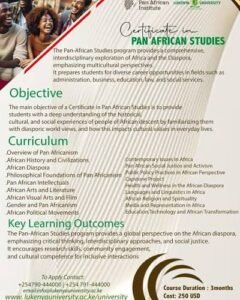
images 35 Download Past Paper On Studies in African Diaspora and Pan-Africanism for Revision

Download Past Paper On Studies in African Diaspora and Pan-Africanism for Revision

Are you looking for Studies in African Diaspora and Pan-Africanism...