Dorothy Lyman: Dorothy Lyman is a prolific actress, director, and playwright whose career spans several decades in the entertainment industry.

While she may not be a household name like some of Hollywood’s biggest stars, Lyman has made a significant impact on both stage and screen.

Her work has earned her critical acclaim and a dedicated following of fans. In this article, we’ll explore 22 of the best movies in which Dorothy Lyman has appeared, showcasing her talent and versatility.

Dorothy Lyman

1. Wishful Drinking (2010): Dorothy Lyman

– In this documentary, Lyman appears alongside the legendary Carrie Fisher, offering an insightful look into Fisher’s life and struggles.

2. The Great Wall Is a Great Wall (1986)

– A comedy-drama that explores the cultural clash between an American family and the Chinese culture as they live in Beijing.

3. The Trial of Bernhard Goetz (1988)

– Lyman delivers a standout performance in this courtroom drama, portraying the mother of a man who shoots four teenagers on a New York City subway.

4. Blind Alleys (1985)

– A made-for-TV drama where Lyman takes on the role of Diane Lawrence, a woman who becomes involved in a life-threatening political conspiracy.

5. You Are the Jury (1986): Dorothy Lyman

– A television movie in which Lyman plays a significant role, exploring the dynamics of a courtroom trial where the audience acts as the jury.
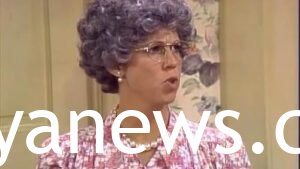
Dorothy Lyman you are the jury (1986)

6. American Playhouse: The Skin of Our Teeth (1983)

– Lyman appears in this adaptation of Thornton Wilder’s Pulitzer Prize-winning play, which explores the resilience of the human spirit.

7. Tapeheads (1988)

– A quirky comedy in which Lyman portrays a record executive, adding her unique charm to the film.

8. To Catch a Killer (1992)

– A gripping thriller where Lyman takes on the role of Gacy’s first wife in a story centered around the real-life serial killer John Wayne Gacy.

9. To Grandmother’s House We Go (1992): Dorothy Lyman

– Lyman stars alongside the Olsen twins in this family comedy, providing a dose of humor and heartwarming moments.

Dorothy Lyman To Grandmother's House we Go

10. A Mother’s Revenge (1993)

– A thriller in which Lyman plays the mother of a daughter who goes missing, leading to a suspenseful quest for answers.

11. The Siege at Ruby Ridge (1996)

– Lyman appears in this TV movie, offering a nuanced portrayal in a drama based on real events involving a standoff between a family and federal agents.

12. A Walton Thanksgiving Reunion (1993)

– For fans of “The Waltons,” this reunion movie brings back the beloved characters, including Lyman’s role as Olivia Walton.

13. Class of ’96 (1993): Dorothy Lyman

– A short-lived television series, Lyman plays the Dean of Students at an elite college, adding her touch to the campus drama.

14. Bellyfruit (1999)

– A dramatic film exploring the struggles of teenage pregnancy, where Lyman delivers a moving performance as a compassionate nurse.

15. Those Secrets (1992)

– A poignant drama where Lyman takes on the role of an aunt who reveals a family’s secrets, uncovering a deep and emotional narrative.

16 . Jack and His Friends (1979)

– A coming-of-age film that explores the ups and downs of friendship, with Lyman in a supporting role.
17. Barn Burning (1980): Dorothy Lyman

– Lyman plays the mother of the protagonist in this television adaptation of William Faulkner’s short story, offering a compelling performance.

18. Haywire (1980)

– A TV movie in which Lyman is part of a star-studded cast, providing a memorable performance in a crime drama.

19. Sweet Revenge (1984)

– Lyman plays a pivotal role in this thriller where a woman seeks justice after being wronged by her husband.

20. Staying Afloat (1993)

– A comedy series in which Lyman portrays a mother trying to keep her family together after her husband’s sudden death.

21. Falling for You (1995): Dorothy Lyman

– A TV movie featuring Lyman as a judge in a story that combines romance and courtroom drama.

22. Step by Step (1991-1998)

– Last but not least, Lyman’s recurring role as the mother-in-law in this popular family sitcom solidified her place in the hearts of viewers.

Dorothy Lyman’s diverse filmography includes a wide range of genres and roles, showcasing her ability to tackle both drama and comedy. Her work in television movies and series has resonated with audiences over the years, earning her a dedicated following. While she may not have reached the same level of fame as some of her peers, her talent and contributions to the entertainment industry are undeniable.

PHOTO CREDIT

OTHER ARTICLES OF THE DAY

WRITTEN BY COLLINS

FAQs and answers

What is Dorothy Lyman’s most acclaimed film role?

Dorothy Lyman is best known for her role as Allison’s mother in the 2006 film “World Trade Center,” directed by Oliver Stone. The movie received positive policy-page-at-mpya-news/" title="Reviews">reviews and was a box office success, grossing over $160 million worldwide.

In which film did Dorothy Lyman star alongside Johnny Depp?

Dorothy Lyman appeared in the 2001 film “Blow,” where she played the role of Ermine Jung, the mother of Johnny Depp’s character, George Jung. The film explores the rise and fall of a cocaine dealer in America.

Has Dorothy Lyman worked in any notable thriller films?

Yes, in 2019, Dorothy Lyman played the role of Ma in the action crime film “Vault.” The movie is based on a true story about a group of small-time criminals who attempt to pull off the biggest heist in American history.

Did Dorothy Lyman have a role in the film “I Love Trouble”?

Yes, in the 1994 romantic comedy “I Love Trouble,” Dorothy Lyman played the character Suzie. The film stars Nick Nolte and Julia Roberts as rival newspaper reporters who team up to uncover a conspiracy.

What character did Dorothy Lyman portray in “Jack the Bear”?

In the 1993 drama “Jack the Bear,” Dorothy Lyman played the role of Mrs. Festinger. The film centers around a single father and his two sons dealing with life’s challenges after the death of their wife and mother.

Has Dorothy Lyman appeared in any films based on true events?

Yes, besides “World Trade Center,” Dorothy Lyman appeared in “The People Across the Lake” (1988), a TV movie where she played the role of Rachel Yoman. The film is a thriller about a family that moves to a seemingly peaceful lakeside community, only to uncover dark secrets.

Did Dorothy Lyman have a role in the film “Night of the Juggler”?

Yes, in the 1980 thriller “Night of the Juggler,” Dorothy Lyman portrayed Nurse Jenny. The film follows a former cop’s desperate search for his kidnapped daughter in New York City.

For a comprehensive list of Dorothy Lyman’s filmography, you can visit her IMDb page.

Back to Mpya News Home page: Education, Fashion, Law, business and sports

Last updated on: February 10, 2025

New information gained / new value takehome

  • While she may not be a household name like some of Hollywood’s biggest stars, Lyman has made a significant impact on both stage and screen.
  • The Trial of Bernhard Goetz (1988) – Lyman delivers a standout performance in this courtroom drama, portraying the mother of a man who shoots four teenagers on a New York City subway.
  • You Are the Jury (1986): Dorothy Lyman – A television movie in which Lyman plays a significant role, exploring the dynamics of a courtroom trial where the audience acts as the jury.
  • Tapeheads (1988) – A quirky comedy in which Lyman portrays a record executive, adding her unique charm to the film.
  • The film stars Nick Nolte and Julia Roberts as rival newspaper reporters who team up to uncover a conspiracy.
  • The film follows a former cop’s desperate search for his kidnapped daughter in New York City.
  • Back to Mpya News Home page: Education, Fashion, Law, business and sports imdb.
Verified Content

This content was developed using AI as part of our research process. To ensure absolute accuracy, all information has been rigorously fact-checked and validated by our human editor, Collins Murithi.

External resource 1: BBC World News Coverage

External resource 2: Reuters Global Agency

Reference 1: The New York Times International

Reference 2: Al Jazeera News Updates

Reference 3: Associated Press Official


Photo credit: instagram.com

About

Digital entrepreneur and content specialist at MPYA News, focused on delivering high-quality insights and resources.

Latest Posts

Download Past Past Ujifunzaji wa Lugha ya Pili For Revision

Are you looking for Ujifunzaji wa Lugha ya Pili past...

Download Past Paper On Educational Communication and Information Technology For Revision

Educational Communication and Information Technology is an important subject for...

Educational Communication and Information Technology is an essential subject for students pursuing education and teaching-related courses. It explores how communication skills, instructional resources, and modern technologies contribute to effective teaching and learning. Students preparing for examinations can use Educational Communication and Information Technology past papers alongside lecture notes, textbooks, and revision questions to strengthen their understanding. What is Educational Communication and Information Technology? Educational Communication and Information Technology refers to the application of communication principles and technological tools in educational settings. It helps teachers deliver information effectively and enables learners to access, process, and share knowledge through different channels. The subject includes communication processes, instructional media, computer applications, internet services, multimedia, e-learning, and digital educational resources. Why are Educational Communication and Information Technology past papers important? Past papers help students practise answering examination questions and become familiar with different question formats. They can also help learners identify areas that need more revision and improve their ability to manage examination time. Practising Educational Communication and Information Technology past exam papers alongside course notes can make preparation more organised. Which topics should students revise? Students should revise the main topics covered in their syllabus. These may include: Meaning and importance of communication in education Elements and models of communication Barriers to effective communication Verbal and non-verbal communication Instructional media and teaching aids Computer applications in education Internet services and digital learning resources Multimedia and e-learning Educational broadcasting Advantages and challenges of educational technology These topics provide a useful starting point for Educational Communication and Information Technology revision questions. What is the communication process? The communication process involves the exchange of information between a sender and a receiver. The sender develops a message, selects a channel, and transmits the information. The receiver interprets the message and may provide feedback. In a classroom, for example, a teacher explains a concept, learners listen and interpret the information, and their questions or responses provide feedback. What are the main elements of communication? The main elements include the sender, message, encoding, channel, receiver, decoding, feedback, and context. Noise can interfere with the process and affect understanding. Students should know the functions of these elements because they are useful when answering Educational Communication and Information Technology exam questions. What is the difference between verbal and non-verbal communication? Verbal communication uses spoken or written words to convey information. Examples include classroom discussions, lectures, textbooks, and written instructions. Non-verbal communication involves conveying meaning through gestures, facial expressions, posture, eye contact, and other visual signals. Teachers often use both forms to explain concepts and interact with learners. What are the barriers to effective communication? Communication barriers are factors that prevent a message from being transmitted or understood clearly. Examples include language differences, poor listening, unclear explanations, excessive classroom noise, cultural differences, and technical difficulties. Teachers can reduce these barriers by using clear language, encouraging questions, choosing suitable communication channels, and checking learners’ understanding. What is instructional media? Instructional media refers to materials and resources used to support teaching and learning. Examples include charts, diagrams, maps, models, photographs, audio recordings, videos, projectors, and computers. The appropriate teaching aid depends on the lesson objectives, subject content, learners’ needs, and available resources. How does information technology support education? Information technology supports education by helping users create, store, process, retrieve, and share information. Computers, mobile devices, digital platforms, and internet services can support research, classroom teaching, communication, assessment, and access to learning materials. However, effective use requires suitable resources, digital skills, and appropriate planning. What is e-learning? E-learning is the delivery or support of learning through electronic and digital technologies. It may involve virtual classrooms, online lessons, learning management systems, electronic textbooks, recorded lectures, and online assignments. Students preparing Educational Communication and Information Technology questions and answers should understand the meaning, benefits, and limitations of e-learning. What are the advantages and disadvantages of educational technology? Educational technology can improve access to information, support interactive lessons, encourage collaboration, and provide flexible learning opportunities. It can also help teachers present complex concepts through images, audio, and video. Possible disadvantages include high equipment costs, unreliable internet connections, unequal access to devices, technical problems, and distractions. Students should be able to discuss both benefits and challenges. How can students use past papers effectively? Students should attempt Educational Communication and Information Technology past papers before looking at their notes. After completing a paper, they can review mistakes, revisit difficult topics, and practise similar questions. Searching for Educational Communication and Information Technology past papers PDF can help students locate additional revision resources through authorised educational sources. How should students answer examination questions? Students should read each question carefully and identify the instruction. Words such as “define,” “explain,” “discuss,” “outline,” and “compare” require different responses. For essay questions, students should introduce the topic, explain each main point clearly, provide relevant examples where appropriate, and finish with a conclusion. Conclusion Preparing with Educational Communication and Information Technology past papers, exam questions, revision notes, and textbooks can help students develop a better understanding of the subject. Consistent revision and timed practice can improve knowledge, answer organisation, and examination skills.Educational Communication and Information Technology is an essential subject for students pursuing education and teaching-related courses. It explores how communication skills, instructional resources, and modern technologies contribute to effective teaching and learning. Students preparing for examinations can use Educational Communication and Information Technology past papers alongside lecture notes, textbooks, and revision questions to strengthen their understanding. What is Educational Communication and Information Technology? Educational Communication and Information Technology refers to the application of communication principles and technological tools in educational settings. It helps teachers deliver information effectively and enables learners to access, process, and share knowledge through different channels. The subject includes communication processes, instructional media, computer applications, internet services, multimedia, e-learning, and digital educational resources. Why are Educational Communication and Information Technology past papers important? Past papers help students practise answering examination questions and become familiar with different question formats. They can also help learners identify areas that need more revision and improve their ability to manage examination time. Practising Educational Communication and Information Technology past exam papers alongside course notes can make preparation more organised. Which topics should students revise? Students should revise the main topics covered in their syllabus. These may include: Meaning and importance of communication in education Elements and models of communication Barriers to effective communication Verbal and non-verbal communication Instructional media and teaching aids Computer applications in education Internet services and digital learning resources Multimedia and e-learning Educational broadcasting Advantages and challenges of educational technology These topics provide a useful starting point for Educational Communication and Information Technology revision questions. What is the communication process? The communication process involves the exchange of information between a sender and a receiver. The sender develops a message, selects a channel, and transmits the information. The receiver interprets the message and may provide feedback. In a classroom, for example, a teacher explains a concept, learners listen and interpret the information, and their questions or responses provide feedback. What are the main elements of communication? The main elements include the sender, message, encoding, channel, receiver, decoding, feedback, and context. Noise can interfere with the process and affect understanding. Students should know the functions of these elements because they are useful when answering Educational Communication and Information Technology exam questions. What is the difference between verbal and non-verbal communication? Verbal communication uses spoken or written words to convey information. Examples include classroom discussions, lectures, textbooks, and written instructions. Non-verbal communication involves conveying meaning through gestures, facial expressions, posture, eye contact, and other visual signals. Teachers often use both forms to explain concepts and interact with learners. What are the barriers to effective communication? Communication barriers are factors that prevent a message from being transmitted or understood clearly. Examples include language differences, poor listening, unclear explanations, excessive classroom noise, cultural differences, and technical difficulties. Teachers can reduce these barriers by using clear language, encouraging questions, choosing suitable communication channels, and checking learners’ understanding. What is instructional media? Instructional media refers to materials and resources used to support teaching and learning. Examples include charts, diagrams, maps, models, photographs, audio recordings, videos, projectors, and computers. The appropriate teaching aid depends on the lesson objectives, subject content, learners’ needs, and available resources. How does information technology support education? Information technology supports education by helping users create, store, process, retrieve, and share information. Computers, mobile devices, digital platforms, and internet services can support research, classroom teaching, communication, assessment, and access to learning materials. However, effective use requires suitable resources, digital skills, and appropriate planning. What is e-learning? E-learning is the delivery or support of learning through electronic and digital technologies. It may involve virtual classrooms, online lessons, learning management systems, electronic textbooks, recorded lectures, and online assignments. Students preparing Educational Communication and Information Technology questions and answers should understand the meaning, benefits, and limitations of e-learning. What are the advantages and disadvantages of educational technology? Educational technology can improve access to information, support interactive lessons, encourage collaboration, and provide flexible learning opportunities. It can also help teachers present complex concepts through images, audio, and video. Possible disadvantages include high equipment costs, unreliable internet connections, unequal access to devices, technical problems, and distractions. Students should be able to discuss both benefits and challenges. How can students use past papers effectively? Students should attempt Educational Communication and Information Technology past papers before looking at their notes. After completing a paper, they can review mistakes, revisit difficult topics, and practise similar questions. Searching for Educational Communication and Information Technology past papers PDF can help students locate additional revision resources through authorised educational sources. How should students answer examination questions? Students should read each question carefully and identify the instruction. Words such as “define,” “explain,” “discuss,” “outline,” and “compare” require different responses. For essay questions, students should introduce the topic, explain each main point clearly, provide relevant examples where appropriate, and finish with a conclusion. Conclusion Preparing with Educational Communication and Information Technology past papers, exam questions, revision notes, and textbooks can help students develop

Educational Communication and Information Technology is an important subject for...

Download Past Paper On Introduction to the Study of Language For Revision

Are you looking for Introduction to the Study of Language...