Mona Lisa: The Mona Lisa, painted by the legendary artist Leonardo da Vinci, is arguably one of the most famous and enigmatic pieces of art in the world. While many are familiar with her enigmatic smile, there are numerous untold facts that add layers of intrigue to this iconic painting. Let’s delve into the secrets and mysteries that surround the Mona Lisa.

Mona Lisa About The Mona Lisa Paint 4 20 Untold Facts About The Mona Lisa Paint" srcset="https://mpyanews.com/wp-content/uploads/2024/01/Gioconda_copia_del_Museo_del_Prado_restaurada-230x300.jpg 230w, https://mpyanews.com/wp-content/uploads/2024/01/Gioconda_copia_del_Museo_del_Prado_restaurada-786x1024.jpg 786w, https://mpyanews.com/wp-content/uploads/2024/01/Gioconda_copia_del_Museo_del_Prado_restaurada-768x1000.jpg 768w, https://mpyanews.com/wp-content/uploads/2024/01/Gioconda_copia_del_Museo_del_Prado_restaurada-1179x1536.jpg 1179w, https://mpyanews.com/wp-content/uploads/2024/01/Gioconda_copia_del_Museo_del_Prado_restaurada-1573x2048.jpg 1573w, https://mpyanews.com/wp-content/uploads/2024/01/Gioconda_copia_del_Museo_del_Prado_restaurada-scaled.jpg 1966w" sizes="(max-width: 230px) 100vw, 230px" />

1. Mona Lisa’s Identity Debate

The true identity of the woman depicted in the painting remains a subject of debate among art historians. Some believe she is Lisa del Giocondo, while others speculate on alternative identities.

2. Leonardo’s Unconventional Technique

Leonardo da Vinci employed an unconventional technique called sfumato, blending colors and tones seamlessly to create the illusion of depth and three-dimensionality in the Mona Lisa’s features.

3. Mona Lisa’s Gaze

One of the most captivating aspects of the painting is Mona Lisa’s gaze, which seems to follow viewers as they move around the room. This optical illusion is known as the “sfumato gaze.”

4. Mysterious Background Landscape

The landscape depicted behind the Mona Lisa has sparked curiosity. Some art historians claim it represents an amalgamation of various landscapes, while others propose specific locations in Italy.
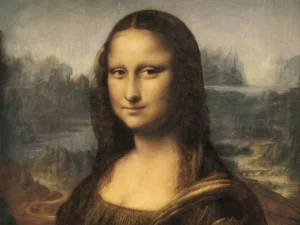
Mona Lisa: painting

5. Leonardo’s Prolonged Work

Leonardo worked on the Mona Lisa for over four years, and it is believed that he continued refining and enhancing the painting until the end of his life.

6. Hidden Numbers and Letters

Examinations using infrared technology have revealed hidden numbers and letters in the eyes of the Mona Lisa, adding to the speculation about hidden meanings within the artwork.

7. Mona Lisa’s Missing Eyebrows and Eyelashes

The painting’s lack of eyebrows and eyelashes has been a subject of fascination. Some suggest that it was a Renaissance fashion trend, while others believe they were intentionally omitted.

8. Small Size, Big Impact

Measuring just 30 inches by 20 inches, the Mona Lisa’s modest size contrasts with its colossal impact on art and culture, making it a symbol of artistic brilliance.

9. Attempted Theft

In 1911, the Mona Lisa was stolen from the Louvre Museum in Paris. The painting was recovered two years later, and the incident significantly increased its fame.

10. Bulletproof Glass Protection

The painting resides behind bulletproof glass at the Louvre to protect it from potential damage. This security measure was implemented after an incident in 1956 when someone threw acid at the painting.

11. Copycat Paintings

Numerous artists have created their versions of the Mona Lisa, attempting to capture the essence of Leonardo’s masterpiece. Some even added their unique twists to the iconic image.
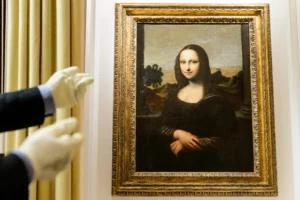
Mona Lisa copycat painting

12. Mona Lisa’s Fame During the French Revolution

During the French Revolution, the Mona Lisa was temporarily displayed in Napoleon’s bedroom. Its popularity surged as people flocked to see it, recognizing its cultural significance.

13. Napoleon’s Love for Mona Lisa

Napoleon, an admirer of the Mona Lisa, had the painting displayed in his bedroom, further solidifying its reputation as a treasured masterpiece.

14. Mona Lisa’s Symbolism

Art historians and scholars continue to debate the symbolism behind the Mona Lisa’s smile, with theories ranging from pregnancy to hidden messages.

15. Mona Lisa’s World Record

In 1962, the Mona Lisa was assessed for insurance purposes and was assigned a world-record valuation of $100 million, equivalent to over $800 million today.

16. Hidden Drawing Underneath

High-resolution scans have revealed a hidden drawing beneath the paint of the Mona Lisa, suggesting that Leonardo initially sketched a different pose.

17. Mona Lisa’s Restoration Controversy

The restoration efforts on the Mona Lisa in 1956 sparked controversy as some critics argued that the process altered the original appearance of the painting.

18. Mona Lisa’s Influence on Pop Culture

The painting has been a subject of inspiration for countless artists, writers, and filmmakers, solidifying its status as a cultural phenomenon.

19. Scientific Studies

Scientific analyses, including X-rays and infrared imaging, have unveiled details about Leonardo’s creative process, such as changes made during the painting’s development.

20. Unfinished Background

The background of the Mona Lisa is deliberately left unfinished, contributing to the mystique surrounding the painting and leaving room for interpretation.

The Mona Lisa continues to captivate the world with its mystique, subtle nuances, and historical significance. These untold facts add layers to the enigma, ensuring that Leonardo da Vinci’s masterpiece remains a timeless symbol of artistic brilliance and intrigue.

PHOTO CREDIT

WRITTEN BY COLLINS

OTHER ARTICLES OF THE DAY

FAQs and answers

1. Who painted the Mona Lisa?

The Mona Lisa was painted by the renowned Italian artist Leonardo da Vinci during the Renaissance period. It is believed to have been created between 1503 and 1506, though some estimates suggest da Vinci continued working on it until 1517.
Reference: Louvre Museum

2. Who is the woman in the Mona Lisa?

The subject of the Mona Lisa is widely believed to be Lisa Gherardini, the wife of Florentine merchant Francesco del Giocondo. The painting is also known as “La Gioconda” in Italian, which is a play on her married name.
Reference: National Geographic

3. Why is the Mona Lisa so famous?

The Mona Lisa is famous for several reasons: Leonardo da Vinci’s masterful use of sfumato (a painting technique), the subject’s enigmatic smile, and its historical significance. Additionally, its theft in 1911 and subsequent recovery added to its global notoriety.
Reference: History.com

4. What is the size of the Mona Lisa painting?

The Mona Lisa is relatively small, measuring 77 cm × 53 cm (30 in × 21 in). Despite its modest size, its impact on art and culture is immense.
Reference: Britannica

5. Why does the Mona Lisa have no eyebrows?

It is believed that the Mona Lisa originally had eyebrows and eyelashes, but they have faded over time due to restoration efforts and natural wear. Some experts also suggest that Leonardo da Vinci may have intentionally painted them faintly.
Reference: Live Science

6. Where is the Mona Lisa currently displayed?

The Mona Lisa is housed in the Louvre Museum in Paris, France. It is displayed in a climate-controlled, bulletproof glass case to protect it from damage and theft.
Reference: Louvre Museum

7. How much is the Mona Lisa worth?

The Mona Lisa is considered priceless, but its estimated insurance value is over $850 million as of 2023. Its cultural and historical significance makes it one of the most valuable paintings in the world.
Reference: CNBC

Back to Mpya News Home page: Education, Fashion, Law, business and sports

Last updated on: March 19, 2025

New information gained / new value takehome

  • Mona Lisa: The Mona Lisa, painted by the legendary artist Leonardo da Vinci, is arguably one of the most famous and enigmatic pieces of art in the world.
  • While many are familiar with her enigmatic smile, there are numerous untold facts that add layers of intrigue to this iconic painting.
  • Let’s delve into the secrets and mysteries that surround the Mona Lisa.
  • 1.
  • Mona Lisa’s Identity Debate The true identity of the woman depicted in the painting remains a subject of debate among art historians.
Verified Content

This content was developed using AI as part of our research process. To ensure absolute accuracy, all information has been rigorously fact-checked and validated by our human editor, Collins Murithi.

External resource 1: BBC World News Coverage

External resource 2: Reuters Global Agency

Reference 1: The New York Times International

Reference 2: Al Jazeera News Updates

Reference 3: Associated Press Official


Photo credit: instagram.com

About

Digital entrepreneur and content specialist at MPYA News, focused on delivering high-quality insights and resources.

Latest Posts

Download Past Past Ujifunzaji wa Lugha ya Pili For Revision

Are you looking for Ujifunzaji wa Lugha ya Pili past...

Download Past Paper On Educational Communication and Information Technology For Revision

Educational Communication and Information Technology is an important subject for...

Educational Communication and Information Technology is an essential subject for students pursuing education and teaching-related courses. It explores how communication skills, instructional resources, and modern technologies contribute to effective teaching and learning. Students preparing for examinations can use Educational Communication and Information Technology past papers alongside lecture notes, textbooks, and revision questions to strengthen their understanding. What is Educational Communication and Information Technology? Educational Communication and Information Technology refers to the application of communication principles and technological tools in educational settings. It helps teachers deliver information effectively and enables learners to access, process, and share knowledge through different channels. The subject includes communication processes, instructional media, computer applications, internet services, multimedia, e-learning, and digital educational resources. Why are Educational Communication and Information Technology past papers important? Past papers help students practise answering examination questions and become familiar with different question formats. They can also help learners identify areas that need more revision and improve their ability to manage examination time. Practising Educational Communication and Information Technology past exam papers alongside course notes can make preparation more organised. Which topics should students revise? Students should revise the main topics covered in their syllabus. These may include: Meaning and importance of communication in education Elements and models of communication Barriers to effective communication Verbal and non-verbal communication Instructional media and teaching aids Computer applications in education Internet services and digital learning resources Multimedia and e-learning Educational broadcasting Advantages and challenges of educational technology These topics provide a useful starting point for Educational Communication and Information Technology revision questions. What is the communication process? The communication process involves the exchange of information between a sender and a receiver. The sender develops a message, selects a channel, and transmits the information. The receiver interprets the message and may provide feedback. In a classroom, for example, a teacher explains a concept, learners listen and interpret the information, and their questions or responses provide feedback. What are the main elements of communication? The main elements include the sender, message, encoding, channel, receiver, decoding, feedback, and context. Noise can interfere with the process and affect understanding. Students should know the functions of these elements because they are useful when answering Educational Communication and Information Technology exam questions. What is the difference between verbal and non-verbal communication? Verbal communication uses spoken or written words to convey information. Examples include classroom discussions, lectures, textbooks, and written instructions. Non-verbal communication involves conveying meaning through gestures, facial expressions, posture, eye contact, and other visual signals. Teachers often use both forms to explain concepts and interact with learners. What are the barriers to effective communication? Communication barriers are factors that prevent a message from being transmitted or understood clearly. Examples include language differences, poor listening, unclear explanations, excessive classroom noise, cultural differences, and technical difficulties. Teachers can reduce these barriers by using clear language, encouraging questions, choosing suitable communication channels, and checking learners’ understanding. What is instructional media? Instructional media refers to materials and resources used to support teaching and learning. Examples include charts, diagrams, maps, models, photographs, audio recordings, videos, projectors, and computers. The appropriate teaching aid depends on the lesson objectives, subject content, learners’ needs, and available resources. How does information technology support education? Information technology supports education by helping users create, store, process, retrieve, and share information. Computers, mobile devices, digital platforms, and internet services can support research, classroom teaching, communication, assessment, and access to learning materials. However, effective use requires suitable resources, digital skills, and appropriate planning. What is e-learning? E-learning is the delivery or support of learning through electronic and digital technologies. It may involve virtual classrooms, online lessons, learning management systems, electronic textbooks, recorded lectures, and online assignments. Students preparing Educational Communication and Information Technology questions and answers should understand the meaning, benefits, and limitations of e-learning. What are the advantages and disadvantages of educational technology? Educational technology can improve access to information, support interactive lessons, encourage collaboration, and provide flexible learning opportunities. It can also help teachers present complex concepts through images, audio, and video. Possible disadvantages include high equipment costs, unreliable internet connections, unequal access to devices, technical problems, and distractions. Students should be able to discuss both benefits and challenges. How can students use past papers effectively? Students should attempt Educational Communication and Information Technology past papers before looking at their notes. After completing a paper, they can review mistakes, revisit difficult topics, and practise similar questions. Searching for Educational Communication and Information Technology past papers PDF can help students locate additional revision resources through authorised educational sources. How should students answer examination questions? Students should read each question carefully and identify the instruction. Words such as “define,” “explain,” “discuss,” “outline,” and “compare” require different responses. For essay questions, students should introduce the topic, explain each main point clearly, provide relevant examples where appropriate, and finish with a conclusion. Conclusion Preparing with Educational Communication and Information Technology past papers, exam questions, revision notes, and textbooks can help students develop a better understanding of the subject. Consistent revision and timed practice can improve knowledge, answer organisation, and examination skills.Educational Communication and Information Technology is an essential subject for students pursuing education and teaching-related courses. It explores how communication skills, instructional resources, and modern technologies contribute to effective teaching and learning. Students preparing for examinations can use Educational Communication and Information Technology past papers alongside lecture notes, textbooks, and revision questions to strengthen their understanding. What is Educational Communication and Information Technology? Educational Communication and Information Technology refers to the application of communication principles and technological tools in educational settings. It helps teachers deliver information effectively and enables learners to access, process, and share knowledge through different channels. The subject includes communication processes, instructional media, computer applications, internet services, multimedia, e-learning, and digital educational resources. Why are Educational Communication and Information Technology past papers important? Past papers help students practise answering examination questions and become familiar with different question formats. They can also help learners identify areas that need more revision and improve their ability to manage examination time. Practising Educational Communication and Information Technology past exam papers alongside course notes can make preparation more organised. Which topics should students revise? Students should revise the main topics covered in their syllabus. These may include: Meaning and importance of communication in education Elements and models of communication Barriers to effective communication Verbal and non-verbal communication Instructional media and teaching aids Computer applications in education Internet services and digital learning resources Multimedia and e-learning Educational broadcasting Advantages and challenges of educational technology These topics provide a useful starting point for Educational Communication and Information Technology revision questions. What is the communication process? The communication process involves the exchange of information between a sender and a receiver. The sender develops a message, selects a channel, and transmits the information. The receiver interprets the message and may provide feedback. In a classroom, for example, a teacher explains a concept, learners listen and interpret the information, and their questions or responses provide feedback. What are the main elements of communication? The main elements include the sender, message, encoding, channel, receiver, decoding, feedback, and context. Noise can interfere with the process and affect understanding. Students should know the functions of these elements because they are useful when answering Educational Communication and Information Technology exam questions. What is the difference between verbal and non-verbal communication? Verbal communication uses spoken or written words to convey information. Examples include classroom discussions, lectures, textbooks, and written instructions. Non-verbal communication involves conveying meaning through gestures, facial expressions, posture, eye contact, and other visual signals. Teachers often use both forms to explain concepts and interact with learners. What are the barriers to effective communication? Communication barriers are factors that prevent a message from being transmitted or understood clearly. Examples include language differences, poor listening, unclear explanations, excessive classroom noise, cultural differences, and technical difficulties. Teachers can reduce these barriers by using clear language, encouraging questions, choosing suitable communication channels, and checking learners’ understanding. What is instructional media? Instructional media refers to materials and resources used to support teaching and learning. Examples include charts, diagrams, maps, models, photographs, audio recordings, videos, projectors, and computers. The appropriate teaching aid depends on the lesson objectives, subject content, learners’ needs, and available resources. How does information technology support education? Information technology supports education by helping users create, store, process, retrieve, and share information. Computers, mobile devices, digital platforms, and internet services can support research, classroom teaching, communication, assessment, and access to learning materials. However, effective use requires suitable resources, digital skills, and appropriate planning. What is e-learning? E-learning is the delivery or support of learning through electronic and digital technologies. It may involve virtual classrooms, online lessons, learning management systems, electronic textbooks, recorded lectures, and online assignments. Students preparing Educational Communication and Information Technology questions and answers should understand the meaning, benefits, and limitations of e-learning. What are the advantages and disadvantages of educational technology? Educational technology can improve access to information, support interactive lessons, encourage collaboration, and provide flexible learning opportunities. It can also help teachers present complex concepts through images, audio, and video. Possible disadvantages include high equipment costs, unreliable internet connections, unequal access to devices, technical problems, and distractions. Students should be able to discuss both benefits and challenges. How can students use past papers effectively? Students should attempt Educational Communication and Information Technology past papers before looking at their notes. After completing a paper, they can review mistakes, revisit difficult topics, and practise similar questions. Searching for Educational Communication and Information Technology past papers PDF can help students locate additional revision resources through authorised educational sources. How should students answer examination questions? Students should read each question carefully and identify the instruction. Words such as “define,” “explain,” “discuss,” “outline,” and “compare” require different responses. For essay questions, students should introduce the topic, explain each main point clearly, provide relevant examples where appropriate, and finish with a conclusion. Conclusion Preparing with Educational Communication and Information Technology past papers, exam questions, revision notes, and textbooks can help students develop

Educational Communication and Information Technology is an important subject for...

Download Past Paper On Introduction to the Study of Language For Revision

Are you looking for Introduction to the Study of Language...