Download Labour-Economics-Exam-Past-Paper-Mpya-News
Mastering the Labour Economics Exam: Why Past Papers Are Essential
Are you preparing for your Labour Economics exam and wondering how to focus your revision? Do concepts like labor supply, wage determination, unemployment, and human capital sometimes feel abstract or difficult to apply? You’re not alone! Labour Economics can be challenging because it blends theory, statistics, and real-world policy applications. The best way to prepare effectively is by practicing past exam papers.
Past papers aren’t just old exams — they’re a window into what examiners expect. They show you the types of questions that are frequently asked, the depth of analysis required, and the way problems are structured. Have you noticed recurring themes in Labour Economics exams? Topics like minimum wage effects, labor market discrimination, wage elasticity, unemployment policies, and collective bargaining often appear repeatedly. Reviewing past papers helps you identify these patterns so you can prioritize your study efficiently.
Labour Economics exams often test both theoretical understanding and analytical application. For instance, a common question might be: “Explain the impact of minimum wage legislation on employment and firm behavior.” Answering such questions requires more than memorization — you need to explain theory, illustrate it with examples, and sometimes interpret graphs or statistical data. Practicing past papers allows you to develop this skill, combining clarity, analysis, and evidence in your responses.
One of the key advantages of using past papers is enhancing problem-solving skills. Many questions involve diagrams, labor supply curves, or calculations like wage elasticity and labor productivity measures. Have you tried working through these types of questions under timed conditions? Doing so helps you apply theoretical concepts, interpret data correctly, and present your answers in a structured, concise way. The more you practice, the faster and more confident you become.
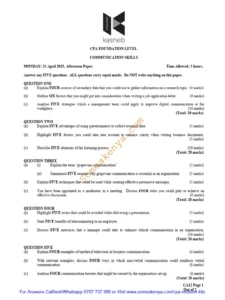
Past papers also teach you exam strategy and time management. Labour Economics exams typically include a mix of short-answer questions, essays, and data-based problems. Knowing how much time to allocate to each question is crucial. For example, short theoretical questions may only need a few lines, while an essay on labor market policies requires careful structuring and supporting examples. Practicing under timed conditions ensures you can complete all sections without rushing, reducing errors and boosting your score.
Another benefit of past papers is reducing exam anxiety. Walking into an exam without knowing what to expect can be stressful. Have you ever felt that your mind blanks when you see a question for the first time? Familiarity with past papers builds confidence, as you’ll recognize question patterns, mark allocation, and expected answers. This makes the exam environment feel much more manageable.
Many universities and professional bodies provide access to Labour Economics past papers along with marking schemes. Examiner reports often highlight common mistakes students make, such as misinterpreting graphs, failing to link theory to policy, or neglecting assumptions in economic models. Have you reviewed these insights yet? Learning from past mistakes helps you improve your answers and avoid common pitfalls.

Additionally, working through past papers strengthens your ability to apply Labour Economics concepts to real-world issues. Understanding labor market dynamics is not just academic — it’s practical. Governments, firms, and international organizations rely on labor economics to design policies, assess employment programs, and predict labor market responses. By practicing past papers, you learn to think like an economist, analyzing real-world problems and providing evidence-based solutions.
Download Link
Back to Mpya News Home page: Education, Fashion, Law, business and sports

Last updated on: November 11, 2025
New information gained / new value takehome
- Labour Economics can be challenging because it blends theory, statistics, and real-world policy applications.
- One of the key advantages of using past papers is enhancing problem-solving skills.
- Practicing under timed conditions ensures you can complete all sections without rushing, reducing errors and boosting your score.
- Another benefit of past papers is reducing exam anxiety.
This content was developed using AI as part of our research process. To ensure absolute accuracy, all information has been rigorously fact-checked and validated by our human editor, Wycklliff Muthinja.
