Phonetic and Phonological Analysis is an advanced course that builds on foundational knowledge of phonetics and phonology. It moves beyond simple transcription and classification to teach the practical and theoretical skills needed to analyze real speech data. This course often involves acoustic analysis using software like Praat, developing rule-based arguments, and applying different theoretical approaches to explain phonological patterns .
Below is the past paper download link:
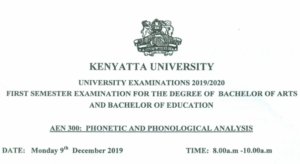
Past Paper on Phonetic and Phonological Analysis
Above is the past paper download link:
Having access to authentic past examination papers is a powerful way to prepare for assessments that test these analytical skills. This guide provides you with verified sources for downloading past papers in PDF format and answers the most frequently asked questions about the subject.
Frequently Asked Questions (FAQs) About Phonetic and Phonological Analysis Past Papers
1. What are the major topics covered in these exams?
Based on course outlines and exam structures, the exams typically assess your understanding of:
-
Acoustic Phonetics: You will be expected to understand concepts like waveforms, spectrograms, formants, and how articulatory properties map onto the acoustic signal .
-
Advanced Phonological Analysis: This includes identifying and analyzing phonological patterns in data, formalizing rules, and understanding concepts such as rule ordering and phonological features .
-
Segmental and Suprasegmental Phonology: Analyzing patterns at the level of individual segments (consonants and vowels) and larger units like syllables, stress, and tone .
-
Data Analysis & Problem-Solving: Many exam questions present you with novel linguistic data (often from an unfamiliar language) and ask you to identify patterns, formulate rules, or propose a phonological analysis .



2. What types of questions can I expect?
Past papers show a mix of question types designed to test both theoretical knowledge and practical analytical skills. These often include:
-
Data Analysis Questions: You may be given a set of words from a language with transcriptions and asked to identify phonemes and allophones, formulate a phonological rule, or explain a sound pattern .
-
Transcription and Production: You may be asked to transcribe words or sentences using the International Phonetic Alphabet (IPA) or to describe the articulation of specific sounds .
-
Theoretical Questions: You might be asked to define and differentiate key concepts, such as “complementary distribution” and “free variation,” or to discuss the relationship between phonetics and phonology .
-
Acoustic Analysis: Some questions may ask you to interpret a spectrogram or explain the acoustic properties of different classes of sounds .


3. What are the key skills tested in this course?
Past papers show that the course goes beyond memorization and tests several key skills :
-
Analytical Skills: The ability to look at raw linguistic data, identify patterns, and draw conclusions.
-
Practical Skills: The ability to use acoustic analysis tools (like Praat) to analyze recordings and create images for documents .
-
Theoretical Application: The ability to use different theoretical frameworks to evaluate and explain phonological phenomena.
4. How can I effectively use past papers to study?
Using past papers strategically can significantly boost your exam performance:


-
Practice with Data: The best way to prepare for data analysis questions is to practice. Attempt all questions that require you to look at language data and identify patterns.
-
Simulate Exam Conditions: Attempt the paper under timed conditions without your notes. This helps you manage time and identify weak spots .
-
Check Your Work: Use your textbooks and lecture notes to verify your answers. For practical skills like IPA transcription and rule formalization, ensure your reasoning is accurate and consistent.
Back to Mpya News Home page: Education, Fashion, Law, business and sports
Last updated on: August 11, 2026
New information gained / new value takehome
- What are the key skills tested in this course?
- Past papers show that the course goes beyond memorization and tests several key skills : Analytical Skills: The ability to look at raw linguistic data, identify patterns, and draw conclusions.
- Using past papers strategically can significantly boost your exam performance: Practice with Data: The best way to prepare for data analysis questions is to practice.
- Simulate Exam Conditions: Attempt the paper under timed conditions without your notes.
- Check Your Work: Use your textbooks and lecture notes to verify your answers.
- For practical skills like IPA transcription and rule formalization, ensure your reasoning is accurate and consistent.
This content was developed using AI as part of our research process. To ensure absolute accuracy, all information has been rigorously fact-checked and validated by our human editor, Alex Munene.
External resource 1: Google Scholar Academic Papers
External resource 2: Khan Academy Test Prep
Reference 1: KNEC National Examinations
Reference 2: JSTOR Academic Archive
Reference 3: Shulefiti Revision Materials
Photo credit: instagram.com