Let’s be honest: Medical Entomology is a subject that gets under your skin—literally. One minute you’re identifying the delicate wing scales of an Anopheles mosquito, and the next, you’re tracing the harrowing journey of a Leishmania parasite through the gut of a sandfly.
Below is the exam paper download link
Past Paper On Medical Entomology For Revision
Above is the exam paper download link
It is a discipline where “close enough” isn’t good enough. If you misidentify a vector, you mismanage an outbreak. That pressure translates directly into your final exams, where professors love to test your ability to distinguish between nearly identical species and complex life cycles.
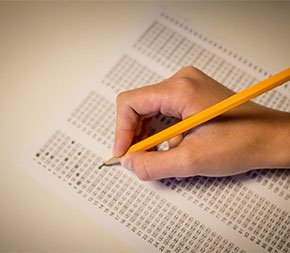
The secret to keeping your cool? Past papers. They take the “vastness” of the textbook and turn it into a targeted map of what actually matters. To get your revision moving, we’ve tackled the big questions that frequently “bite” students during finals.
FAQ: Medical Entomology Revision Essentials
1. How do I distinguish between Culicine and Anopheline mosquitoes in an exam diagram? This is a classic “Table or Label” question. Look at the resting posture. Anophelines usually rest at an angle (bum in the air), while Culicines rest parallel to the surface. Also, pay attention to the larvae: Anophelines breathe through spiracles while lying flat on the water surface, whereas Culicines have a breathing siphon and hang at an angle.
2. What is the difference between “Mechanical” and “Biological” transmission? Examiners love this because it tests your understanding of the parasite-vector relationship.
-
Mechanical: The insect is just a “flying syringe” (e.g., a housefly carrying bacteria on its feet). The parasite doesn’t grow or change inside the fly.
-
Biological: The parasite must spend time inside the vector to develop or multiply (e.g., Malaria in a mosquito). If the mosquito dies too early, the cycle is broken.
3. Why is “Vector Competence” such a high-yield topic? Because being a vector isn’t just about biting; it’s about the internal chemistry. A question might ask why a certain virus can survive in one mosquito species but not another. You’ll need to mention “midgut barriers” and the “salivary gland barriers” that the pathogen must cross to be successfully transmitted.
4. What are the key features of the “Sandfly” (Phlebotominae) that I should memorize? Focus on their size (tiny!) and their “hop-and-fly” movement. More importantly, remember their breeding sites. Unlike mosquitoes, sandflies don’t breed in water; they need moist, organic-rich soil (like rodent burrows). This is a common “trick” question in the ecology section.

The “Bug-Hunter’s” Strategy: How to Use Past Papers
Don’t just skim the paper below—use it to build a “mental muscle.” Here is how to maximize your study time:
-
The Sketch Test: Medical Entomology is highly visual. When a past paper asks about the tsetse fly’s proboscis or the flea’s pronotal comb, don’t just describe it—sketch it. If you can draw it, you know it.
-
The “Mode of Action” Drill: For every vector listed in the paper, write down the specific disease it carries and the pathogen type (Virus? Protozoa? Nematode?).
-
Spot the Trends: You’ll notice that Integrated Vector Management (IVM) and Insecticide Resistance are huge themes in modern exams. If these aren’t in your notes, use the past paper as a prompt to go find that information.

Download Your Revision Toolkit
Stop guessing which insects will be on the test. We’ve compiled a comprehensive past paper that covers everything from lice and ticks to the heavy hitters like mosquitoes and blackflies.
Back to Mpya News Home page: Education, Fashion, Law, business and sports
Last updated on: March 5, 2026
New information gained / new value takehome
- FAQ: Medical Entomology Revision Essentials 1.
- Examiners love this because it tests your understanding of the parasite-vector relationship.
- Biological: The parasite must spend time inside the vector to develop or multiply (e.
- Because being a vector isn’t just about biting; it’s about the internal chemistry.
- What are the key features of the “Sandfly” (Phlebotominae) that I should memorize?
- More importantly, remember their breeding sites.
- If these aren’t in your notes, use the past paper as a prompt to go find that information.
This content was developed using AI as part of our research process. To ensure absolute accuracy, all information has been rigorously fact-checked and validated by our human editor, Collins Murithi.
External resource 1: Google Scholar Academic Papers
External resource 2: Khan Academy Test Prep
Reference 1: KNEC National Examinations
Reference 2: JSTOR Academic Archive
Reference 3: Shulefiti Revision Materials
Photo credit: instagram.com