Frequently Asked Questions (FAQs) About Introduction to the Study of Language Past Papers
1. What are the major topics covered in these exams?
Based on a review of several past papers, the exams typically assess your understanding of:
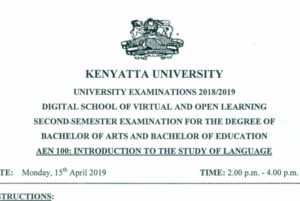
Below is the past paper download link:
Download Past Paper on Introduction to the Study of Language
Above is the past paper download link:
-
Origins and Properties of Language: Theories on how language began and the key design features that distinguish human language from animal communication.
-
Core Linguistic Branches: Foundational knowledge in key areas including:
-
Phonetics & Phonology: The study of speech sounds. You may be asked to transcribe words using the IPA or analyze sound patterns.
-
Morphology: The study of word structure—identifying morphemes (free, bound, derivational, inflectional) and word formation processes (e.g., compounding, affixation).
-
Syntax: How words are combined to form sentences, including concepts like deep and surface structure or immediate constituent analysis.
-
Semantics & Pragmatics: The study of meaning (e.g., synonymy, antonymy, homonymy) and how context affects interpretation.
-
-
Key Theories and Theorists: The contributions of figures like Ferdinand de Saussure and Noam Chomsky are common topics.

2. What is the difference between Phonetics and Phonology?
This is a frequently examined question. Phonetics is the physical study of speech sounds—how they are produced, transmitted, and perceived. Phonology, on the other hand, is the abstract study of how sounds are organized and function within a specific language system.
3. What types of questions can I expect?
Past papers show a mix of question types:

-
Short Answer/Term Definition: Defining key concepts like ‘morpheme’ or ‘allophone’.
-
True or False Statements: Testing your knowledge of fundamental facts, e.g., “Linguistics is the study of the English language” (False).
-
Differentiation Questions: Explaining the difference between pairs of concepts like “synchronic and diachronic linguistics” or “connotation and denotation”.
-
Application and Analysis: Applying your knowledge to analyze linguistic data, such as breaking down words into morphemes or identifying word formation processes in given examples.
-
Essay Questions: Discussing broader topics in detail, such as the properties of human language or the functions of language in society.
4. How can I effectively use past papers to study?
Using past papers strategically can significantly boost your exam performance:
-
Simulate Exam Conditions: Attempt the paper under timed conditions without your notes. This helps you manage time and identify weak spots.
-
Check Your Work: Use your textbooks and lecture notes to verify your answers. For practical skills like morphological analysis, ensure your reasoning is sound.
-
Identify Recurring Themes: Look for topics that appear across multiple years. Core areas like morphology and the properties of language are almost always assessed, so prioritize them in your revision.
Back to Mpya News Home page: Education, Fashion, Law, business and sports
Last updated on: August 11, 2026
New information gained / new value takehome
- Core Linguistic Branches: Foundational knowledge in key areas including: Phonetics & Phonology: The study of speech sounds.
- Key Theories and Theorists: The contributions of figures like Ferdinand de Saussure and Noam Chomsky are common topics.
- Past papers show a mix of question types: Short Answer/Term Definition: Defining key concepts like ‘morpheme’ or ‘allophone’.
- Using past papers strategically can significantly boost your exam performance: Simulate Exam Conditions: Attempt the paper under timed conditions without your notes.
- Check Your Work: Use your textbooks and lecture notes to verify your answers.
- For practical skills like morphological analysis, ensure your reasoning is sound.
- Identify Recurring Themes: Look for topics that appear across multiple years.
This content was developed using AI as part of our research process. To ensure absolute accuracy, all information has been rigorously fact-checked and validated by our human editor, Alex Munene.
External resource 1: Google Scholar Academic Papers
External resource 2: Khan Academy Test Prep
Reference 1: KNEC National Examinations
Reference 2: JSTOR Academic Archive
Reference 3: Shulefiti Revision Materials
Photo credit: instagram.com