If you’ve ever sat in a studio and felt that rush when the “On Air” light flickers red, you know that broadcasting is more than just talking into a microphone or standing in front of a lens. It is a technical dance of timing, legal boundaries, and storytelling.
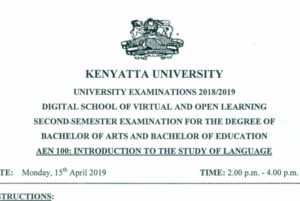
Below is the exam paper download link
Past Paper On Introduction On Broadcasting For Revision
Above is the exam paper download link
But when exam season rolls around, that excitement can turn into “dead air” in your brain. To help you find your frequency, we’ve put together a specialized Q&A session based on common hurdles found in introductory broadcasting units.
The Q&A: Cracking the Broadcast Code
1. “What is the fundamental difference between AM and FM, and why does it matter for a broadcaster?”
This is a classic technical starter.

-
The Answer: AM (Amplitude Modulation) carries information by changing the height of the wave. It travels further and can bounce off the atmosphere, but it’s prone to static. FM (Frequency Modulation) changes the speed of the wave. It has a shorter range but provides “High Fidelity” sound. For a broadcaster, FM is for music and crisp audio; AM is for news and talk radio where reach matters more than bass.
2. How does the “Gatekeeping” theory apply to a modern newsroom?
-
The Answer: A gatekeeper is anyone who has the power to decide what “news” makes it to the public. In a traditional TV station, this is the Editor-in-Chief. In the digital age, the “gate” has widened, but the responsibility has increased. You need to understand that every story you air is a choice—and those choices shape public perception.
3. What are the “Big Three” in a TV Studio Floor?
-
The Answer: You’ll likely be asked about the core roles.
-
The Floor Manager: The Director’s eyes and ears on the ground.
-
The Vision Mixer: The person at the “switcher” choosing which camera goes live.
-
The Talent: The person in front of the camera (who needs to follow the Floor Manager’s hand signals!).
-
4. “Is ‘Libel’ the same as ‘Slander’ in a broadcast context?”
-
The Answer: Legally, they both fall under defamation, but there’s a nuance. Slander is spoken; Libel is written or recorded. However, because a broadcast is “published” to a mass audience and usually scripted or recorded, it is often treated as Libel. Rule of thumb: If you can’t prove it, don’t air it.


Why Using Past Papers is Your “Secret Weapon”
Broadcasting exams aren’t just about what you know; they are about how you apply it under the pressure of a ticking clock—much like a live show. By downloading the past paper below, you can practice:
-
Scriptwriting Formats: Can you write for the ear and not just the eye?
-
Technical Signal Flow: Do you know how a sound travels from a microphone to a transmitter?
-
Regulatory Frameworks: Are you familiar with your country’s broadcasting authority and their “Decency” policy-page-at-mpya-news/" title="Standards">standards?
Access the Resource
Don’t walk into the exam hall blind. The following link contains a compiled list of questions from previous years, covering everything from the invention of the Marconi wireless to the rise of digital streaming.
[Link: Download Introduction to Broadcasting Past Paper (PDF)]


Pro-Tip: The “Golden Rule” of the Mic
When answering questions about presentation, always remember the 15-second rule. In broadcasting, you have roughly 15 seconds to hook a listener before they “twirl the dial” or click away. Your exam answers should be just as punchy and direct


Back to Mpya News Home page: Education, Fashion, Law, business and sports
Last updated on: March 3, 2026
New information gained / new value takehome
- For a broadcaster, FM is for music and crisp audio; AM is for news and talk radio where reach matters more than bass.
- How does the “Gatekeeping” theory apply to a modern newsroom?
- The Answer: A gatekeeper is anyone who has the power to decide what “news” makes it to the public.
- However, because a broadcast is “published” to a mass audience and usually scripted or recorded, it is often treated as Libel.
- [Link: Download Introduction to Broadcasting Past Paper (PDF)] Pro-Tip: The “Golden Rule” of the Mic When answering questions about presentation, always remember the 15-second rule.
This content was developed using AI as part of our research process. To ensure absolute accuracy, all information has been rigorously fact-checked and validated by our human editor, Alex Munene.
External resource 1: Google Scholar Academic Papers
External resource 2: Khan Academy Test Prep
Reference 1: KNEC National Examinations
Reference 2: JSTOR Academic Archive
Reference 3: Shulefiti Revision Materials
Photo credit: instagram.com