If you are a student of public health or clinical medicine, you’ve likely noticed that the world is currently facing a “double burden.” We haven’t finished the fight against infectious germs, yet we are already being overwhelmed by lifestyle-related illnesses. That is why your Fundamentals of Communicable and Non-Communicable Diseases exam is so critical—it tests your ability to juggle two completely different medical philosophies.
Below is the exam paper download link
Past Paper On Fundamentals Of Communicable And Non-Communicable Diseases For Revision
Above is the exam paper download link
Communicable diseases are about speed, outbreaks, and breaking the chain of transmission. Non-communicable diseases (NCDs) are about the long game—behavioral change, chronic management, and policy. To pass this unit, you can’t just be a “germ hunter”; you have to be a strategist.
To help you get into the right headspace, we’ve provided a Past Paper on Fundamentals of Communicable and Non-Communicable Diseases for download. Use it to see if you can switch your brain from “Antibiotics” to “Advocacy” in a single sitting.
High-Yield Revision Q&A: Bridging the Gap
Try your hand at these three high-frequency questions that bridge the two worlds of disease study.
Q1: What is the ‘Chain of Infection,’ and how does it differ from the NCD ‘Risk Factor’ model?


A: This is a foundation question.
-
Communicable Diseases: They follow a linear Chain of Infection—Infectious Agent $\rightarrow$ Reservoir $\rightarrow$ Portal of Exit $\rightarrow$ Mode of Transmission $\rightarrow$ Portal of Entry $\rightarrow$ Susceptible Host. To stop the disease, you must break just one link.
-
Non-Communicable Diseases: These don’t have a “portal of entry.” Instead, they rely on the Web of Causation. This includes modifiable risk factors (smoking, diet, inactivity) and non-modifiable factors (age, genetics).
Q2: Differentiate between ‘Endemic,’ ‘Epidemic,’ and ‘Pandemic’—and can an NCD be a Pandemic?
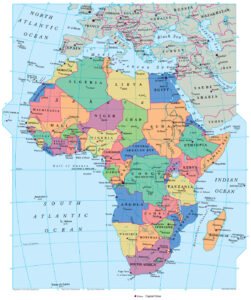
A: * Endemic: The constant presence of a disease in a geographic area (e.g., Malaria in parts of Africa).
-
Epidemic: A sudden increase in cases above what is normally expected.
-
Pandemic: An epidemic that has spread over several countries or continents.
-
The NCD Twist: While traditionally used for infections, many experts now refer to the “Global Obesity Pandemic.” It fits the scale, even if it isn’t “contagious” in the biological sense.
Q3: What are the WHO ‘Best Buys’ for NCD control?


A: These are highly cost-effective interventions that every health manager must know:
-
Tobacco: Increasing taxes and banning smoking in public places.
-
Alcohol: Restricting access and increasing excise duties.
-
Diet: Reducing salt intake and eliminating trans-fats in the food supply.
-
Physical Activity: Public awareness campaigns to get people moving.
How to Use This Past Paper for Revision Success
Don’t just look at the questions—interrogate them. Here is a strategy to ensure you’re ready:
-
The “Comparison” Exercise: Pick one infectious disease (like TB) and one NCD (like Type 2 Diabetes). Use the past paper to see how the exam asks about their “Prevention.” You’ll notice TB is about Isolation/Vaccination, while Diabetes is about Education/Screening.
-
The Levels of Prevention Drill: For every disease mentioned in the download, categorize the intervention.
-
Primary: Vaccines or exercise.
-
Secondary: HIV testing or Pap smears.
-
Tertiary: Stroke rehabilitation.
-
-
The Timed Mock: This mixed paper can be exhausting. Set a 2-hour timer and attempt the whole PDF. It will train your brain to stay sharp when moving between “Microbiology” and “Social Science.”




Final Thoughts: Health is Holistic
In your exam, the highest marks go to students who realize that these two categories often overlap. For example, some communicable diseases (like HPV) can cause non-communicable diseases (like Cervical Cancer). Mentioning these “intersections” shows the examiner you have a deep, professional understanding of the subject.
Back to Mpya News Home page: Education, Fashion, Law, business and sports
Last updated on: March 7, 2026
New information gained / new value takehome
- If you are a student of public health or clinical medicine, you’ve likely noticed that the world is currently facing a “double burden.
- ” We haven’t finished the fight against infectious germs, yet we are already being overwhelmed by lifestyle-related illnesses.
- That is why your Fundamentals of Communicable and Non-Communicable Diseases exam is so critical—it tests your ability to juggle two completely different medical philosophies.
- Below is the exam paper download link Past Paper On Fundamentals Of Communicable And Non-Communicable Diseases For Revision Above is the exam paper download linkRelated Read: Download Past Paper On Inventory Management For Revision Communicable diseases are about speed, outbreaks, and breaking the chain of transmission.
- Non-communicable diseases (NCDs) are about the long game—behavioral change, chronic management, and policy.
This content was developed using AI as part of our research process. To ensure absolute accuracy, all information has been rigorously fact-checked and validated by our human editor, Collins Murithi.
External resource 1: Google Scholar Academic Papers
External resource 2: Khan Academy Test Prep
Reference 1: KNEC National Examinations
Reference 2: JSTOR Academic Archive
Reference 3: Shulefiti Revision Materials
Photo credit: instagram.com