Let’s be honest: most medical exams test your memory, but a First Aid and Basic Life Support (BLS) exam tests your composure. It is one thing to know the theory of a heartbeat; it is quite another to be the person responsible for keeping one going while waiting for an ambulance.
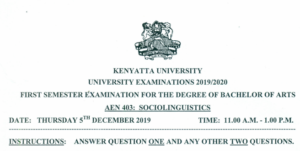
Below is the exam paper download link
HPP-3224-HPR-3222-FIRST-AID-AND-HEALTH-CARE-PRACTICE-FIRST
Above is the exam paper download link
In the exam hall, the professors aren’t just looking for clinical terminology. They are looking for sequence and speed. Can you differentiate between a heart attack and cardiac arrest? Do you know the exact depth of a chest compression for an infant versus an adult? Can you identify when a scene is too dangerous to enter?
The secret to moving from “panic” to “preparedness” is active revision. Using past papers allows you to see the high-stakes scenarios—from massive bleeds to drowning—that examiners use to test your split-second judgment. To help you find your rhythm, we’ve tackled the high-yield questions that frequently anchor First Aid finals.
FAQ: Master the Life-Saving Essentials
1. What is the “DRSABCD” action plan? This is the “Golden Sequence” of first aid. If you miss a letter in this acronym, you likely fail the question.
-
D (Danger): Ensure the area is safe for you and the casualty.
-
R (Response): Check for a “shout and shake” response.
-
S (Send for help): Call emergency services immediately.
-
A (Airway): Open the airway by tilting the head back.
-
B (Breathing): Look, listen, and feel for normal breathing.
-
C (CPR): Start 30 compressions followed by 2 breaths.
-
D (Defibrillation): Attach an AED as soon as it is available.


2. How do you distinguish between “Cardiac Arrest” and a “Heart Attack”? This is a favorite “Compare and Contrast” question.
-
Heart Attack: A “plumbing” problem where blood flow to the heart is blocked. The person is usually conscious and in pain.
-
Cardiac Arrest: An “electrical” problem where the heart stops pumping entirely. The person is unconscious and not breathing.
-
Exam Tip: CPR is only performed for Cardiac Arrest, not for a conscious person having a heart attack.


3. What are the current “Ratios” for Adult, Child, and Infant CPR? While the ratio of 30 compressions to 2 breaths is the standard for adults, pay attention to the technique in your past paper answers:
-
Adults: Two hands, at least 2 inches deep.
-
Children: One or two hands, about 2 inches deep.
-
Infants: Two fingers, about 1.5 inches deep.
4. How do you manage “Severe Bleeding” according to the latest protocols? Forget the old “elevation” advice. The modern standard is Direct Pressure. If a question asks about a wound with an embedded object, never pull the object out—apply pressure around it and pad it in place. Only use a tourniquet if direct pressure fails to control life-threatening limb bleeding.

Your Revision Strategy: The “Responder” Mindset
Don’t just read the paper provided below; use it to audit your “muscle memory.”

-
The AED Drill: Practice describing exactly how to use an Automated External Defibrillator. Remember: “Power on, Pad up, Plug in.” Mention that you must stay clear of the patient while the machine analyzes the rhythm.
-
The Choking Sequence: Know the “5 and 5” rule. Five back blows followed by five abdominal thrusts (Heimlich maneuver). Be ready to explain how this changes for a pregnant woman or a person with obesity (chest thrusts).
-
Timed Scenarios: Use the past paper below to practice “Triage.” If you arrive at a crash with three victims—one screaming, one bleeding, and one silent—who do you treat first? (Hint: The silent one is the priority).
Download Your Revision Toolkit
Ready to see if you have the cool head required for a First Aid final? We’ve sourced a comprehensive past paper that covers the fundamental principles of BLS, fracture management, burn care, and poisoning.
Back to Mpya News Home page: Education, Fashion, Law, business and sports
Last updated on: March 6, 2026
New information gained / new value takehome
- FAQ: Master the Life-Saving Essentials 1.
- D (Danger): Ensure the area is safe for you and the casualty.
- Exam Tip: CPR is only performed for Cardiac Arrest, not for a conscious person having a heart attack.
This content was developed using AI as part of our research process. To ensure absolute accuracy, all information has been rigorously fact-checked and validated by our human editor, Collins Murithi.
External resource 1: Google Scholar Academic Papers
External resource 2: Khan Academy Test Prep
Reference 1: KNEC National Examinations
Reference 2: JSTOR Academic Archive
Reference 3: Shulefiti Revision Materials
Photo credit: instagram.com

