What is Time Series Analysis I?
Time Series Analysis I is an introductory course that focuses on analyzing data collected over time. It emphasizes identifying trends, cycles, and seasonal patterns in order to build forecasting models.
Download Link
Time-Series-Analysis-1-Exam-Past-Paper-Mpya-news
Why is this course important?
The course is important because time-dependent data is common in many fields, including finance, economics, engineering, and environmental studies. Learning time series equips students with the ability to make accurate predictions and understand underlying data patterns.
What topics are usually examined?
Exams for Time Series Analysis I often cover:
-
Characteristics of time series data
-
Trend and seasonal decomposition
-
Autocorrelation and partial autocorrelation functions (ACF & PACF)
-
Stationarity and differencing
-
Autoregressive (AR) and Moving Average (MA) models
-
Introduction to ARIMA modeling
-
Basic forecasting techniques
How do past papers help students prepare?
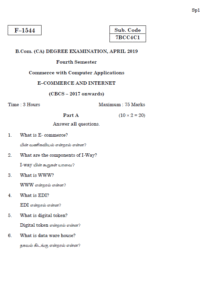
Past papers allow students to practice solving both theory-based and calculation-based questions. They also provide insight into the structure of exams, frequently repeated topics, and the level of detail expected in answers.
What challenges do students face in this course?
Students may struggle with identifying appropriate models, interpreting ACF/PACF plots, and applying differencing correctly. Some also find it difficult to balance theoretical explanations with practical problem-solving.
Are the exams theory-based or calculation-heavy?
The exams usually combine both. Students are expected to explain theoretical concepts of time series and also carry out calculations for forecasting and model identification.
How can students revise effectively with past papers?
The best approach is to attempt past papers under exam-like conditions, focusing on time management. Afterward, reviewing solutions helps in reinforcing concepts and clarifying areas of weakness.
What role does software play in Time Series Analysis I?
Software such as R, Python, or EViews can be used to plot time series data, estimate models, and generate forecasts. While exams often focus on manual work, software knowledge strengthens understanding of practical applications.
What strategies ensure success in exams?
Students should:
-
Revise fundamental AR and MA models thoroughly
-
Practice forecasting problems repeatedly
-
Review past papers for common patterns
-
Strengthen interpretation of results and plots
-
Balance both theory and applied questions during revision
Back to Mpya News Home page: Education, Fashion, Law, business and sports

Last updated on: September 11, 2025
New information gained / new value takehome
- Download Link Time-Series-Analysis-1-Exam-Past-Paper-Mpya-news Why is this course important?
- The course is important because time-dependent data is common in many fields, including finance, economics, engineering, and environmental studies.
- News Education Rankings Reference 2: SNHU Distance Learning Reference 3: GCU University Programs Photo credit: instagram.
This content was developed using AI as part of our research process. To ensure absolute accuracy, all information has been rigorously fact-checked and validated by our human editor, Rodgers Mwenda.