When people think of electrical engineering, they often imagine circuits, electronics, or power systems. However, behind every electrical system lies a physical structure that must be strong, durable, and reliable. This is where Solid Mechanics for Electrical Engineers comes in. It provides the knowledge needed to understand how materials and components behave under forces, ensuring that electrical systems are both safe and efficient.
Download Link
Solid-Mechanics-For-Electrical-Engineers-Exam-Past-Paper-Mpya-news
Solid Mechanics, sometimes referred to as Mechanics of Materials, deals with the study of stress, strain, deformation, and failure of solid bodies. For electrical engineers, this subject is particularly relevant because many devices and systems involve components that must withstand mechanical loads. Examples include transmission towers, electrical machines, circuit boards, and supporting frameworks for power equipment.
The course introduces students to fundamental concepts such as stress-strain relationships, Hooke’s Law, elastic and plastic behavior, bending, torsion, and deflection. By understanding these principles, electrical engineers can design components that remain stable even when subjected to physical forces, vibrations, or thermal expansion.
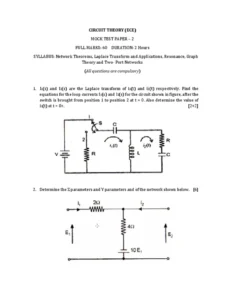
One key area of application is in electromechanical devices such as motors, generators, and transformers. These machines contain shafts, bearings, and casings that experience mechanical stresses during operation. Solid Mechanics equips electrical engineers with the knowledge to evaluate these stresses and prevent mechanical failures.
Another important application lies in structural support systems. Electrical engineers often work with poles, towers, and mounting structures that must withstand wind, weight, and environmental conditions. A solid background in mechanics ensures these structures remain reliable over time.
The subject also enhances skills in problem-solving and analysis. Engineers learn how to calculate loads, evaluate failure points, and select appropriate materials for specific applications. For instance, choosing the right material for a transformer casing or designing a heat sink that can withstand thermal stresses requires an understanding of solid mechanics principles.
In modern engineering, sustainability and safety are equally important. Solid Mechanics teaches engineers how to design with efficiency, ensuring materials are not wasted while maintaining high safety policy-page-at-mpya-news/" title="Standards">standards. This balance is vital in industries where cost, reliability, and performance must all align.
In conclusion, Solid Mechanics for Electrical Engineers is not just a supporting course—it is a critical foundation that ensures electrical systems function safely and effectively. By mastering these principles, electrical engineers gain the ability to design robust devices, analyze real-world problems, and contribute to innovations that blend mechanical strength with electrical performance.
Back to Mpya News Home page: Education, Fashion, Law, business and sports
Last updated on: September 4, 2025
External resource 1: Coursera Online Degrees
External resource 2: edX Professional Programs
Reference 1: U.S. News Education Rankings
Reference 2: SNHU Distance Learning
Reference 3: GCU University Programs
Photo credit: instagram.com
New information gained / new value takehome
- For electrical engineers, this subject is particularly relevant because many devices and systems involve components that must withstand mechanical loads.
- One key area of application is in electromechanical devices such as motors, generators, and transformers.
- Another important application lies in structural support systems.
- A solid background in mechanics ensures these structures remain reliable over time.
- In modern engineering, sustainability and safety are equally important.
- In conclusion, Solid Mechanics for Electrical Engineers is not just a supporting course—it is a critical foundation that ensures electrical systems function safely and effectively.
- Back to Mpya News Home page: Education, Fashion, Law, business and sports Last updated on: September 4, 2025Mpya News Sitemap .
- News Education Rankings Reference 2: SNHU Distance Learning Reference 3: GCU University Programs Photo credit: instagram.
This content was developed using AI as part of our research process. To ensure absolute accuracy, all information has been rigorously fact-checked and validated by our human editor, Rodgers Mwenda.