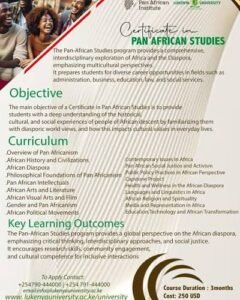
If you are a student-teacher preparing for your final examinations, you know that “Special Methods in Kiswahili” (Mbinu Maalum) is the heart of your professional training. It’s not just about knowing the language; it’s about mastering the art of passing that knowledge to a new generation.
Below is the exam paper download link
Past Paper on Special Methods In Kiswahili for Revision
Above is the exam paper download link
One of the most effective ways to bridge the gap between theory and the exam room is by practicing with actual past papers. To help you succeed, we have curated a detailed Q&A session covering common exam areas, followed by a link to download a full revision paper.
Common Questions & Answers for Revision
Q1: What are the primary language skills (Stadi za Lugha) that a Kiswahili teacher must focus on?
A: There are four fundamental pillars:
-
Kusikiliza (Listening): The ability to comprehend spoken sounds and nuances.
-
Kuzungumza (Speaking): Articulation, pronunciation, and fluency.
-
Kusoma (Reading): Both intensive (undani) and extensive (upana) reading for comprehension.
-
Kuandika (Writing): Creative writing, functional writing, and grammatical accuracy.

Q2: Why is a Lesson Plan (Azimio la Kazi) considered the “compass” of a Kiswahili teacher?
A: A lesson plan is vital because it ensures logical flow, helps in time management, and ensures that the teacher covers the syllabus within the stipulated term. Without it, a teacher is likely to dwell too much on one topic (like Sarufi) and neglect others (like Fasihi Simulizi).
Q3: Mention three challenges students face when writing Kiswahili compositions (Insha).
A: * Athari za Lugha ya Mama: Mother tongue interference affecting sentence structure.
-
Msamiati duni: Limited vocabulary leads to repetitive and dull essays.
-
Mpangilio wa mawazo: Difficulty in organizing points into coherent paragraphs.
Q4: How can a teacher use the “Integrated Approach” (Njia Amilifu) in a Kiswahili lesson?
A: This involves teaching language skills simultaneously rather than in isolation. For instance, a teacher can use a Fasihi (Literature) text to teach Sarufi (Grammar) and Msamiati (Vocabulary) while encouraging Kusikiliza through a class discussion.
Why You Should Use Past Papers
Many students fail not because they don’t know the content, but because they don’t understand the command verbs used by examiners. Words like “Changanua” (Analyze), “Fafanua” (Explain/Elaborate), and “Tathmini” (Evaluate) require different depths of answering.

By going through the paper provided below, you will:
-
Understand the Exam Layout: Most papers are divided into Section A (Compulsory) and Section B (Choice-based).
-
Improve Time Management: Practicing under timed conditions prevents the “exam fever” that leads to unfinished scripts.
-
Identify High-Frequency Topics: You’ll notice that topics like Uandaaji wa Masomo (Lesson Preparation) and Tathmini (Evaluation) appear almost every year.
Download Your Revision Material
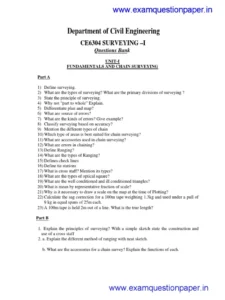
Ready to test your knowledge? We have provided a high-quality PDF containing past questions and a marking guide for the “Special Methods in Kiswahili” unit.
[Click Here to Download: Special Methods In Kiswahili Past Paper PDF]
(Note: Ensure you attempt the questions first without looking at your notes to get a true reflection of your preparedness!)

Final Thoughts
Revision is the bridge between being a student and becoming a professional educator. Don’t leave your success to chance. Use this past paper to sharpen your “Mbinu” and walk into that exam room with confidence.
Back to Mpya News Home page: Education, Fashion, Law, business and sports
Last updated on: January 26, 2026
New information gained / new value takehome
- It’s not just about knowing the language; it’s about mastering the art of passing that knowledge to a new generation.
- A: A lesson plan is vital because it ensures logical flow, helps in time management, and ensures that the teacher covers the syllabus within the stipulated term.
- Why You Should Use Past Papers Many students fail not because they don’t know the content, but because they don’t understand the command verbs used by examiners.
- [Click Here to Download: Special Methods In Kiswahili Past Paper PDF] (Note: Ensure you attempt the questions first without looking at your notes to get a true reflection of your preparedness!
- Back to Mpya News Home page: Education, Fashion, Law, business and sports Last updated on: January 26, 2026Mpya News Sitemap .
- News Education Rankings Reference 2: SNHU Distance Learning Reference 3: GCU University Programs Photo credit: instagram.
This content was developed using AI as part of our research process. To ensure absolute accuracy, all information has been rigorously fact-checked and validated by our human editor, Collins Murithi.