Let’s be honest: Teaching a student how to program a CNC machine, wire a circuit, or master architectural drafting is a completely different ballgame compared to teaching history or literature. In Technical Education, the “classroom” is often a workshop, and the “textbook” is often a piece of machinery.
Below is the exam paper download link
Past Paper On Methods Of Teaching Technical Education For Revision
Above is the exam paper download link
As a technical instructor, your challenge is dual-competency. You must be a master of your craft (the trade) and a master of the mind (the pedagogy). You have to ensure that while students are learning “hands-on,” they are also grasping the “why” behind the physics and mathematics of their work. To help you navigate your upcoming professional exams, we’ve deconstructed the high-frequency questions found in recent Technical Education past papers.
The Revision Q&A: Cracking the Technical Pedagogy Code
Q: Why is the ‘Demonstration Method’ considered the cornerstone of Technical Instruction? In a workshop, “telling” is never as effective as “showing.” The Demonstration Method involves the instructor performing a task step-by-step while students observe.
In an exam, markers look for the “Imitation Stage.” Once you demonstrate, the student must immediately try the task under your supervision. If you’re asked how to teach a high-risk skill (like arc welding), the Demonstration Method—combined with a heavy focus on safety—is your primary answer.
Q: What is ‘Competency-Based Education and Training’ (CBET)? This is the buzzword of 2026. Unlike traditional education, which focuses on how much time you spend in a chair, CBET focuses on whether you can actually perform the task to an industry standard.

-
The Goal: Proficiency, not just a passing grade.
-
The Exam Tip: When discussing CBET, emphasize “Criterion-Referenced Assessment.” This means students are graded against a fixed standard, not against each other.
Q: How do you manage ‘Workshop Safety’ as a pedagogical tool? Safety isn’t just a set of rules; it’s a habit. In a past paper, you might be asked how to integrate safety into a lesson. The best approach is to make safety the “first step” of every technical operation. Discussing the “Safety Audit” or the use of Personal Protective Equipment (PPE) shouldn’t be a separate lesson—it should be part of the demonstration itself.
Q: What is the ‘Project Method’ and how does it foster problem-solving? The Project Method gives students a long-term goal—for example, “Construct a functional hydraulic lift.”
-
Planning: Students draw the blueprints.
-
Execution: They fabricate the parts.
-
Evaluation: They test the lift to see if it meets the weight requirements. This method is vital because it moves students away from “recipe-style” learning and forces them to troubleshoot when things go wrong.
The Power of the Past Paper: Your Workshop Roadmap
You can read about “John Dewey’s Learning by Doing” all day, but technical teaching is a high-stakes environment. You need to know how to design a Lesson Plan for a Practical Session or justify the Layout of a Workshop for maximum visibility and safety under a 45-minute timer.
By downloading our Methods of Teaching Technical Education past paper, you will:
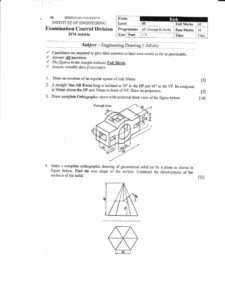
-
Master Instructional Aids: Practice answering questions on when to use a “Cutaway Model” versus a “Digital Simulation.”
-
Refine Your Assessment Skills: Learn how to create a “Rubric for Practical Work” that objectively measures the quality of a student’s finished product.
-
Spot the Trends: You’ll notice that questions on Sustainable Engineering and Industry 4.0 integration are huge in 2026 papers.
Download Your Revision Material Here
Ready to move from a technician to a master educator? Don’t leave your pedagogy grades to “trial and error.” The best way to build your confidence is to tackle the instructional puzzles that have challenged technical teachers for years. Use the link below to download a curated past paper.
[Click Here to Download the Methods of Teaching Technical Education Past Paper PDF]
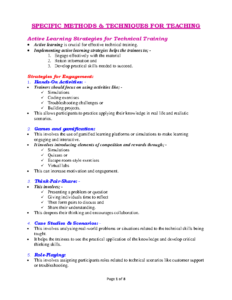
A Quick Parting Tip: The ‘Tool-to-Task’ Rule
Whenever you are asked how to introduce a new tool or machine, always mention the “Orientation Phase.” This is where students handle the tool without power or material to understand its weight, balance, and controls. Mentioning this “dry run” technique is a surefire way to show the examiner you prioritize both learning and safety!
Back to Mpya News Home page: Education, Fashion, Law, business and sports
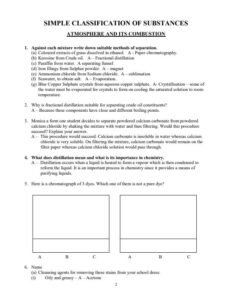
Last updated on: February 6, 2026
New information gained / new value takehome
- You have to ensure that while students are learning “hands-on,” they are also grasping the “why” behind the physics and mathematics of their work.
- The Exam Tip: When discussing CBET, emphasize “Criterion-Referenced Assessment.
- This method is vital because it moves students away from “recipe-style” learning and forces them to troubleshoot when things go wrong.
- Back to Mpya News Home page: Education, Fashion, Law, business and sports Last updated on: February 6, 2026Mpya News Sitemap .
- News Education Rankings Reference 2: SNHU Distance Learning Reference 3: GCU University Programs Photo credit: instagram.
This content was developed using AI as part of our research process. To ensure absolute accuracy, all information has been rigorously fact-checked and validated by our human editor, Collins Murithi.