Let’s be honest: many people think they “know” Africa, but the Geography of Africa is a deep dive into a continent that defies simple labels. It’s a place where you can find permanent glaciers just a few miles from the equator and where some of the world’s fastest-growing cities are emerging from ancient savannahs.
Below is the exam paper download link
Past Paper on Geography Of Africa For Revision
Above is the exam paper download link
Studying the geography of this continent isn’t just about memorizing the length of the Nile or the height of Kilimanjaro. It’s about understanding the interplay between people and the land. It’s about asking why some regions struggle with drought while others are rich in hydroelectric potential. To help you move beyond the basics and prepare for your upcoming exams, we’ve tackled the high-yield questions found in recent Geography of Africa past papers.
The Revision Q&A: Navigating the Mother Continent
Q: How did the ‘Great Rift Valley’ shape the physical landscape of East Africa? The East African Rift System is a prime example of divergent plate tectonics. As the continent literally pulls apart, it has created a series of deep-water lakes (like Lake Tanganyika) and high volcanic peaks.
In an exam, make sure you can explain the difference between the Western Rift (dominated by lakes) and the Eastern Rift (dominated by volcanoes).

Q: What is ‘Desertification’ and why is the Sahel region so vulnerable? Desertification is the process by which fertile land becomes desert, typically as a result of drought, deforestation, or inappropriate agriculture. The Sahel—the transition zone between the Sahara and the Sudanian Savanna—is the “front line” of this crisis.
If you see a question on this, discuss the Great Green Wall initiative as a modern geographic solution to combat soil degradation.
Q: Why is ‘Urbanization’ in Africa unique compared to Europe or North America? While Europe urbanized during the Industrial Revolution, many African nations are urbanizing at a much faster rate without the same industrial base. This “urbanization of poverty” often leads to the growth of informal settlements.
In your revision, focus on the “Push and Pull” factors: Why are people leaving rural farms (push) and what are they hoping to find in cities like Lagos or Nairobi (pull)?
Q: How does the ‘ITCZ’ (Intertropical Convergence Zone) dictate the African climate? The ITCZ is a low-pressure belt where the trade winds of the Northern and Southern Hemispheres meet. As this belt moves north and south throughout the year, it brings the “rainy seasons.”
If an exam asks why the Congo Basin is always wet while the Kalahari is dry, your answer must involve the seasonal movement of the ITCZ.
Q: What is the significance of ‘Transboundary Water Resources’ in Africa? Most of Africa’s major rivers—the Nile, the Zambezi, the Niger—cross international borders. This creates a geographic challenge: how do you share water for dams and irrigation without starting a war? Look for questions specifically on the Grand Ethiopian Renaissance Dam (GERD) as a modern case study in water politics.
The Power of the Past Paper: Your Spatial Roadmap
You can look at a map of Africa all day, but geography is an analytical science. You won’t know if you’ve truly mastered Regional Geography until you try to explain the “Resource Curse” or draw a cross-section of the Atlas Mountains under a 45-minute timer.
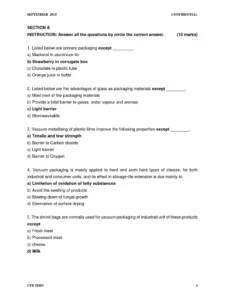
By downloading our Geography of Africa past paper, you will:
-
Master the Map Work: Practice identifying key drainage basins, climatic zones, and mineral belts.
-
Refine Your Logic: Learn how to link the Cold Canary Current to the formation of the Namib Desert.
-
Spot the Trends: You’ll notice that questions on Climate Resilience and The African Continental Free Trade Area (AfCFTA) are becoming standard features in 2026.
Download Your Revision Material Here
Ready to turn your interest in the continent into a distinction? Don’t leave your grades to “general knowledge.” The best way to build your confidence is to tackle the environmental and social puzzles that define 54 diverse nations. Use the link below to download a curated past paper.
[Click Here to Download the Geography of Africa Past Paper PDF]


A Quick Parting Tip: The ‘Relief’ Rule
Whenever you are discussing why a certain part of Africa is cooler than expected (like the Ethiopian Highlands), always mention Altitude. In African geography, altitude often “overrides” latitude. Even on the equator, height can create a temperate or even alpine climate. Mentioning this “Vertical Zonation” is a surefire way to impress your marker!
Back to Mpya News Home page: Education, Fashion, Law, business and sports
Last updated on: February 9, 2026
New information gained / new value takehome
- Desertification is the process by which fertile land becomes desert, typically as a result of drought, deforestation, or inappropriate agriculture.
- Q: Why is ‘Urbanization’ in Africa unique compared to Europe or North America?
- Look for questions specifically on the Grand Ethiopian Renaissance Dam (GERD) as a modern case study in water politics.
- By downloading our Geography of Africa past paper, you will: Master the Map Work: Practice identifying key drainage basins, climatic zones, and mineral belts.
- Back to Mpya News Home page: Education, Fashion, Law, business and sports Last updated on: February 9, 2026Mpya News Sitemap .
- News Education Rankings Reference 2: SNHU Distance Learning Reference 3: GCU University Programs Photo credit: instagram.
This content was developed using AI as part of our research process. To ensure absolute accuracy, all information has been rigorously fact-checked and validated by our human editor, Collins Murithi.

