Let’s be honest: Archaeology is a lot less Indiana Jones and a lot more “meticulous data entry in a muddy trench.” Between memorizing the nuances of lithic typology and understanding the chemistry of radiocarbon decay, it’s easy to feel buried under a mountain of information.
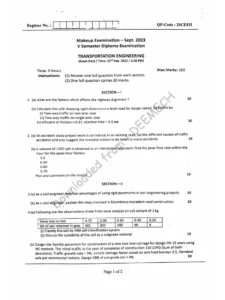
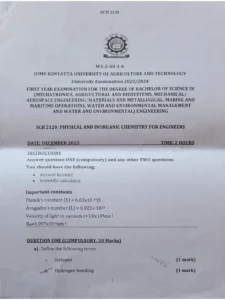
Below is the exam paper download link
Past Paper On Archaeology For Revision
Above is the exam paper download link
The biggest mistake students make is treating Archaeology like a storytelling subject. In reality, it’s a rigorous science. The examiners aren’t just looking for “what” happened in the past; they want to know “how” we proved it. To help you stop guessing and start analyzing, we’ve tackled the burning questions that show up in almost every exam hall.
The Revision Q&A: Thinking Like a Field Director
Q: I always see questions about ‘Stratigraphy.’ How do I explain it without sounding repetitive? Think of stratigraphy as the “laundry basket” of history. The clothes at the bottom were worn first; the ones at the top were worn yesterday. In an exam, use the term Law of Superposition. The trick is to explain disturbances—like a burial pit or a rodent hole (bioturbation)—that move “younger” artifacts into “older” layers. If you can explain why a Roman coin might end up in a Bronze Age layer, you’ve secured the top marks.
Q: What is the most ‘bankable’ dating method to study? Radiocarbon (C-14) dating is the heavy hitter, but don’t stop there. Examiners love to throw a curveball by asking about Dendrochronology (tree-ring dating) or Thermoluminescence.
-
Pro-tip: Always mention the limitations. For C-14, mention it only works on organic material and has a limit of about 50,000 years. Knowing when a tool won’t work is just as important as knowing when it will.
Q: How do I handle a question on ‘Processual’ vs. ‘Post-Processual’ Archaeology? This is the “philosophy” of the dirt.
-
Processual (The New Archaeology): Think of this as the “Science” side. It looks for universal laws and uses the scientific method.
-
Post-Processual: This is the “Human” side. It argues that we can’t be purely objective because our own biases color how we see the past. When in doubt, argue that a modern archaeologist needs a bit of both to get the full picture.
The Power of the Past Paper: Why You Need to Practice
You can’t learn to excavate a site by reading a book, and you can’t learn to pass an Archaeology exam by just highlighting your notes. You need to see how the questions are “framed.”
By downloading our Archaeology past paper, you’ll be able to:
-
Decode the Artifact Analysis: Many papers provide a photo of a tool and ask you to describe its manufacture. Practicing helps you spot the difference between “pressure flaking” and “percussion flaking” at a glance.
-
Master Site Survey Techniques: Do you know when to use Lidar versus a Magnetometer? Past papers often give you a specific landscape (like a forest or a desert) and ask you to pick the best tool for the job.
-
Identify ‘Repeat Offenders’: Topics like the “Origins of Agriculture” or “State Formation” are staples. If you see them in three different past papers, you can bet they’ll be in yours.

Download Your Revision Material Here
Ready to dig deep? Use the link below to access a full Archaeology past paper designed to test your knowledge of both field methods and theory. Put your phone away, set a timer for two hours, and see what you can unearth.
[Click Here to Download the Archaeology Past Paper for Revision]

A Quick Parting Tip: The ‘Context’ Rule
In Archaeology, Context is King. An artifact without its location (provenance) is just a pretty rock. Whenever you’re answering a question about an object, always mention its relationship to the structures, soil, and other objects around it. That is the difference between a looter and an archaeologist!
Back to Mpya News Home page: Education, Fashion, Law, business and sports
Last updated on: January 30, 2026
New information gained / new value takehome
- Knowing when a tool won’t work is just as important as knowing when it will.
- Processual (The New Archaeology): Think of this as the “Science” side.
- It argues that we can’t be purely objective because our own biases color how we see the past.
- The Power of the Past Paper: Why You Need to Practice You can’t learn to excavate a site by reading a book, and you can’t learn to pass an Archaeology exam by just highlighting your notes.
- [Click Here to Download the Archaeology Past Paper for Revision] A Quick Parting Tip: The ‘Context’ Rule In Archaeology, Context is King.
- Back to Mpya News Home page: Education, Fashion, Law, business and sports Last updated on: January 30, 2026Mpya News Sitemap .
- News Education Rankings Reference 2: SNHU Distance Learning Reference 3: GCU University Programs Photo credit: instagram.
This content was developed using AI as part of our research process. To ensure absolute accuracy, all information has been rigorously fact-checked and validated by our human editor, Collins Murithi.