Geotechnical Engineering is a vital branch of civil engineering that deals with the behavior of soil and rock in relation to construction. Every building, bridge, dam, or highway relies on the stability of the ground it stands on, making this field essential for safe and sustainable infrastructure development. The course equips students with both theoretical knowledge and practical skills needed to analyze, design, and manage earth-related engineering projects.
Download Link
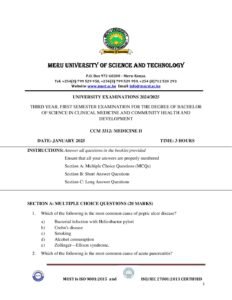
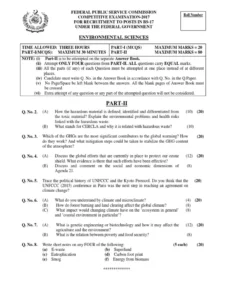
Geotechnical-Engineering-Exam-Past-Paper-Mpya-news
At its foundation, Geotechnical Engineering focuses on soil mechanics—the study of soil properties, classification, and behavior under various conditions. Students learn about permeability, compressibility, shear strength, and consolidation, which are critical factors in determining the suitability of soil for construction. Laboratory testing and field investigations help in evaluating these properties accurately.
Another core component is foundation engineering. Learners are introduced to shallow foundations such as footings and mats, as well as deep foundations like piles and caissons. The course emphasizes how to design foundations that can safely transfer structural loads to the ground without excessive settlement or failure.
Slope stability and earth retaining structures form another crucial aspect. Students study landslides, embankments, and retaining walls, gaining the knowledge to design solutions that prevent slope failures and ensure long-term stability. With urban expansion often pushing construction into challenging terrains, this knowledge is highly valuable.
The course also highlights ground improvement techniques used to enhance soil properties. Methods such as compaction, grouting, and geosynthetics are taught to ensure that even weak soils can support heavy structures. These techniques play an important role in modern construction projects, especially in areas with problematic soils.
Practical exposure is integral to Geotechnical Engineering. Students often participate in site investigations, borehole drilling, and geotechnical reporting. They also learn to use software for soil analysis and foundation design, bridging the gap between classroom theory and real-world applications.
Career opportunities in Geotechnical Engineering are broad and rewarding. Graduates can work as geotechnical engineers, foundation specialists, or consultants in construction companies, government agencies, or research institutions. Their expertise is crucial in infrastructure projects such as tunnels, highways, bridges, dams, and high-rise buildings.
In conclusion, Geotechnical Engineering provides the backbone of safe construction by ensuring that structures are well-supported by the ground beneath them. For students passionate about understanding the Earth and its materials, this course offers a perfect blend of science, engineering, and practical problem-solving.
Back to Mpya News Home page: Education, Fashion, Law, business and sports
Last updated on: September 2, 2025
External resource 1: Coursera Online Degrees
External resource 2: edX Professional Programs

Reference 1: U.S. News Education Rankings
Reference 2: SNHU Distance Learning
Reference 3: GCU University Programs
Photo credit: instagram.com
New information gained / new value takehome
- Every building, bridge, dam, or highway relies on the stability of the ground it stands on, making this field essential for safe and sustainable infrastructure development.
- Students study landslides, embankments, and retaining walls, gaining the knowledge to design solutions that prevent slope failures and ensure long-term stability.
- Methods such as compaction, grouting, and geosynthetics are taught to ensure that even weak soils can support heavy structures.
- These techniques play an important role in modern construction projects, especially in areas with problematic soils.
- Back to Mpya News Home page: Education, Fashion, Law, business and sports Last updated on: September 2, 2025Mpya News Sitemap .
- News Education Rankings Reference 2: SNHU Distance Learning Reference 3: GCU University Programs Photo credit: instagram.
This content was developed using AI as part of our research process. To ensure absolute accuracy, all information has been rigorously fact-checked and validated by our human editor, Rodgers Mwenda.