Analogue electronics is one of the most important subjects in electrical and electronic engineering, as it deals with the behavior of continuous signals and the design of circuits that process them. The Analogue Electronics I course introduces students to diodes, transistors, and amplifiers, forming the foundation for advanced circuit design. However, because the subject blends both theoretical concepts and mathematical analysis, many students find exams in this course demanding. Practicing with Analogue Electronics I Exam Past Papers is one of the most effective strategies for success.
Download Link
Analogue-Electronics-I-Exam-Past-Paper-Mpya-news
The course begins with semiconductor diodes, covering their characteristics and applications in rectifiers, clippers, clampers, and voltage regulators. Students also explore bipolar junction transistors (BJTs) and field-effect transistors (FETs), learning their operation, biasing techniques, and small-signal models. The design and analysis of amplifiers—including common emitter, common base, and common collector configurations—are also central topics.
Another key area is operational amplifiers (op-amps), where students study ideal and practical models, applications in filters, integrators, differentiators, and voltage followers. Frequency response and stability analysis also form part of the curriculum, preparing students for real-world circuit applications.
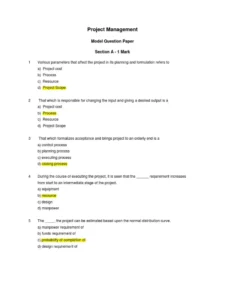
Using exam past papers offers several benefits. First, they help students become familiar with the format and type of questions. Exams usually combine theoretical questions—such as explaining the working of a BJT amplifier—with numerical problems, such as calculating gain, input resistance, or output voltage. Exposure to both formats makes students more confident on exam day.
Another advantage is identifying frequently tested areas. Past papers often emphasize amplifier design, diode applications, transistor biasing, and op-amp circuits. Recognizing these recurring topics allows students to focus revision on high-priority areas, saving time and effort.
Past papers also enhance time management skills. Since questions can be lengthy and calculation-heavy, practicing under timed conditions helps students learn how to balance speed and accuracy, ensuring they complete all sections within the exam duration.
Additionally, working with past papers provides an excellent method of self-assessment. Attempting questions and reviewing solutions highlights areas where improvement is needed, whether in solving circuit equations, sketching characteristic curves, or analyzing amplifier performance.
In conclusion, practicing with Analogue Electronics I Exam Past Papers is one of the best ways to prepare for this subject. It builds problem-solving skills, reinforces theoretical understanding, and boosts exam confidence, ensuring that students perform at their best.

Back to Mpya News Home page: Education, Fashion, Law, business and sports
Last updated on: September 5, 2025
External resource 1: Coursera Online Degrees
External resource 2: edX Professional Programs
Reference 1: U.S. News Education Rankings
Reference 2: SNHU Distance Learning
Reference 3: GCU University Programs
Photo credit: instagram.com
New information gained / new value takehome
- Analogue electronics is one of the most important subjects in electrical and electronic engineering, as it deals with the behavior of continuous signals and the design of circuits that process them.
- However, because the subject blends both theoretical concepts and mathematical analysis, many students find exams in this course demanding.
- Using exam past papers offers several benefits.
- Back to Mpya News Home page: Education, Fashion, Law, business and sports Last updated on: September 5, 2025Mpya News Sitemap .
- News Education Rankings Reference 2: SNHU Distance Learning Reference 3: GCU University Programs Photo credit: instagram.
This content was developed using AI as part of our research process. To ensure absolute accuracy, all information has been rigorously fact-checked and validated by our human editor, Rodgers Mwenda.