Let’s be honest: when you signed up for a career in education, you probably weren’t expecting to spend your nights staring at supply-and-demand curves or calculating the “Rate of Return” on a primary school degree. But here’s the reality: education is the single largest investment most nations make.
Below is the exam paper download link
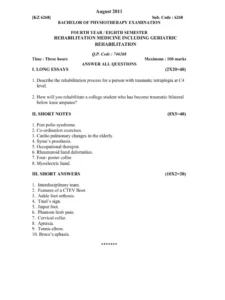
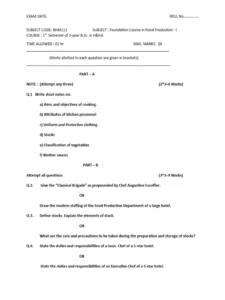
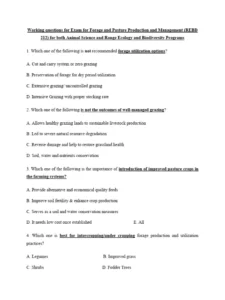
Past Paper On Educational Economic Policies And Strategies For Revision
Above is the exam paper download link
The study of Educational Economic Policies and Strategies is where the idealism of the classroom meets the cold reality of the national budget. It’s about more than just “funding schools”—it’s about how a country uses its human resources to drive growth. To help you stop seeing double when you look at those fiscal tables, we’ve tackled the most persistent questions found in Educational Economics finals.
The Revision Q&A: Deciphering the Economics of Education
Q: Why is ‘Human Capital Theory’ the most important concept in this unit? This is the “North Star” of educational economics. The theory suggests that education is not just a social service, but an investment that increases a person’s productivity. In your exam, if you are asked why governments prioritize STEM over the Arts, the answer lies here: they are betting on which “capital” will yield the highest GDP growth.
Q: How do I distinguish between ‘Social’ and ‘Private’ Rates of Return? This is a classic “trap” question in past papers.
-
Private Rate of Return: This is the benefit to the individual (the student). It’s the increase in their future salary compared to the cost of their tuition and the wages they gave up while studying.
-
Social Rate of Return: This is the benefit to the country. It includes the taxes the student will pay and the “spillover” effects (like lower crime or better health), but it also counts the full cost of government subsidies. Examiners love to ask which one is higher in developing nations (spoiler: it’s usually primary education).
Q: What is the ‘Efficiency-Equity’ trade-off in school funding? It’s the ultimate balancing act. Efficiency asks: “How can we get the highest test scores for the lowest cost?” Equity asks: “Are we providing the same quality of education to the poorest child as the richest?” In your revision, look for policies like Capitation Grants or Voucher Systems and practice arguing whether they favor one side or the other.
Q: What is ‘Cost-Benefit Analysis’ (CBA) in a school context? CBA is the tool policymakers use to decide if a new project—like giving every student a laptop—is worth the money. If the long-term economic gains (better jobs, innovation) don’t outweigh the cost of the laptops and maintenance, the policy fails the CBA test.
The Power of the Past Paper: Your Fiscal Roadmap
You can read about “Macroeconomic Trends” for hours, but Educational Economics is a technical subject. You need to know how to interpret data, justify a budget cut, or argue for a new subsidy under a strict time limit.
By downloading our Educational Economic Policies past paper, you will:
-
Master the Math: Practice calculating the Unit Cost of education.
-
Refine Your Technical Vocabulary: Move beyond “money” and start using terms like Opportunity Cost, Fiscal Space, and Allocative Efficiency.
-
Spot the ‘Case Study’ Trends: Many papers give you a fictional country with a falling GDP and ask you to design an educational strategy to save it. Practicing this prevents “brain-freeze” during the real thing.
Download Your Revision Resource Here
Ready to turn those complex theories into a high grade? Don’t leave your marks to “market fluctuations.” The best way to build your confidence is to tackle the fiscal problems that have challenged students for years. Use the link below to download a curated Educational Economic Policies and Strategies past paper.
[Click Here to Download the Educational Economic Policies and Strategies Past Paper]

A Quick Parting Tip: The ‘Opportunity Cost’ Reality Check
Whenever you are asked why a certain educational policy wasn’t implemented, always mention Opportunity Cost. If a government spends millions on a new university, they are “paying” for it by not building a hundred primary schools. Identifying what was given up is the mark of a true economist!
Back to Mpya News Home page: Education, Fashion, Law, business and sports
Last updated on: February 2, 2026
New information gained / new value takehome
- The Revision Q&A: Deciphering the Economics of Education Q: Why is ‘Human Capital Theory’ the most important concept in this unit?
- Private Rate of Return: This is the benefit to the individual (the student).
- Social Rate of Return: This is the benefit to the country.
- Q: What is ‘Cost-Benefit Analysis’ (CBA) in a school context?
- CBA is the tool policymakers use to decide if a new project—like giving every student a laptop—is worth the money.
- You need to know how to interpret data, justify a budget cut, or argue for a new subsidy under a strict time limit.
- If a government spends millions on a new university, they are “paying” for it by not building a hundred primary schools.
- Back to Mpya News Home page: Education, Fashion, Law, business and sports Last updated on: February 2, 2026Mpya News Sitemap .
- News Education Rankings Reference 2: SNHU Distance Learning Reference 3: GCU University Programs Photo credit: instagram.
This content was developed using AI as part of our research process. To ensure absolute accuracy, all information has been rigorously fact-checked and validated by our human editor, Collins Murithi.