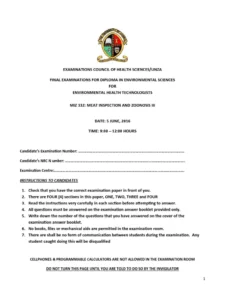
Download Learning And Development Exam Past Paper
Learning and Development Exam Past Papers: Your Essential Guide to Smarter Revision
If you’re preparing for a Learning and Development (L&D) qualification—whether CIPD, ATD, SHRM, a university module, or a vocational diploma—you’ve probably realised that success isn’t just about understanding theory. It’s about being able to apply it clearly and confidently in an exam setting. That’s exactly where Learning and Development exam past papers become one of the most valuable tools in your revision toolkit.
But why do past papers matter so much? How should you use them? And what should you do if you don’t have access to official ones? This blog breaks everything down so you can revise smarter, not harder.
Download Learning And Development Exam Past Paper
Why Past Papers Matter in L&D Exam Preparation
Past papers give you a clear picture of what examiners are really looking for. L&D is a broad field, covering topics like learning theory, digital learning, evaluation models, training needs analysis, organisational behaviour, and performance improvement. Understanding all of these is important—but understanding how they show up in exam questions is even more critical.
Past papers help you to:
1. Understand question patterns
Most L&D exams use a mixture of short-answer questions, essays, case studies, and sometimes multiple-choice questions. By reviewing old papers, you’ll start noticing recurring themes: evaluation frameworks like Kirkpatrick, key concepts like the 70-20-10 model, or common workplace scenarios linked to learning challenges.
2. Practise exam technique
Knowing the content is one thing; explaining it concisely under time pressure is another. Past papers train you to structure answers effectively—especially for longer written questions where you’re expected to analyse, evaluate and apply concepts.
3. Identify knowledge gaps
When a question leaves you stuck, it’s a clear sign that you need to revisit that topic. This is a faster, more realistic way of identifying weak spots than simply rereading notes.

4. Build confidence
Familiarity reduces anxiety. Walking into the exam knowing the style of questions gives you a huge confidence boost.
What If You Don’t Have Access to Official Past Papers?
Official L&D past papers are often copyrighted or restricted, especially for vocational qualifications like CIPD. But that doesn’t mean you’re stuck. You can still build exam-ready practice using:
• Sample questions available online
Many awarding bodies publish sample assessments, even when they don’t release full papers.
• Practice questions created by tutors or training providers
These usually mimic the structure and difficulty of actual exams.
• Mock exam questions written in the same style
(Like the ones I can generate for you on request.)
• Review of marking criteria
Most L&D exams use transparent assessment criteria. Studying these helps you understand exactly what earns marks—things like application of theory, critical evaluation, real workplace examples and clear structure.
How to Use Past Papers Effectively
Simply reading questions isn’t enough. The key is active practice. Here’s a method that works for many L&D students:

1. Start with open-book practice
Attempt a question using your notes. Focus on structuring your answer properly: introduction, core concepts, analysis, application and a brief conclusion.
2. Move on to timed practice
Set a timer and write under exam conditions. This builds confidence and helps you control your pace.
3. Compare your answers to marking guides
Look for evidence of:
-
Application to real workplace situations
-
Use of recognised L&D concepts
-
Clear critical thinking
-
Alignment with the question wording
4. Repeat with harder topics
The more uncomfortable you feel at first, the more valuable the practice will be.
Download Link
Back to Mpya News Home page: Education, Fashion, Law, business and sports
Last updated on: November 16, 2025
New information gained / new value takehome
- Understanding all of these is important—but understanding how they show up in exam questions is even more critical.
- Understand question patternsMost L&D exams use a mixture of short-answer questions, essays, case studies, and sometimes multiple-choice questions.
- This is a faster, more realistic way of identifying weak spots than simply rereading notes.
- Start with open-book practiceAttempt a question using your notes.
This content was developed using AI as part of our research process. To ensure absolute accuracy, all information has been rigorously fact-checked and validated by our human editor, Wycklliff Muthinja.
